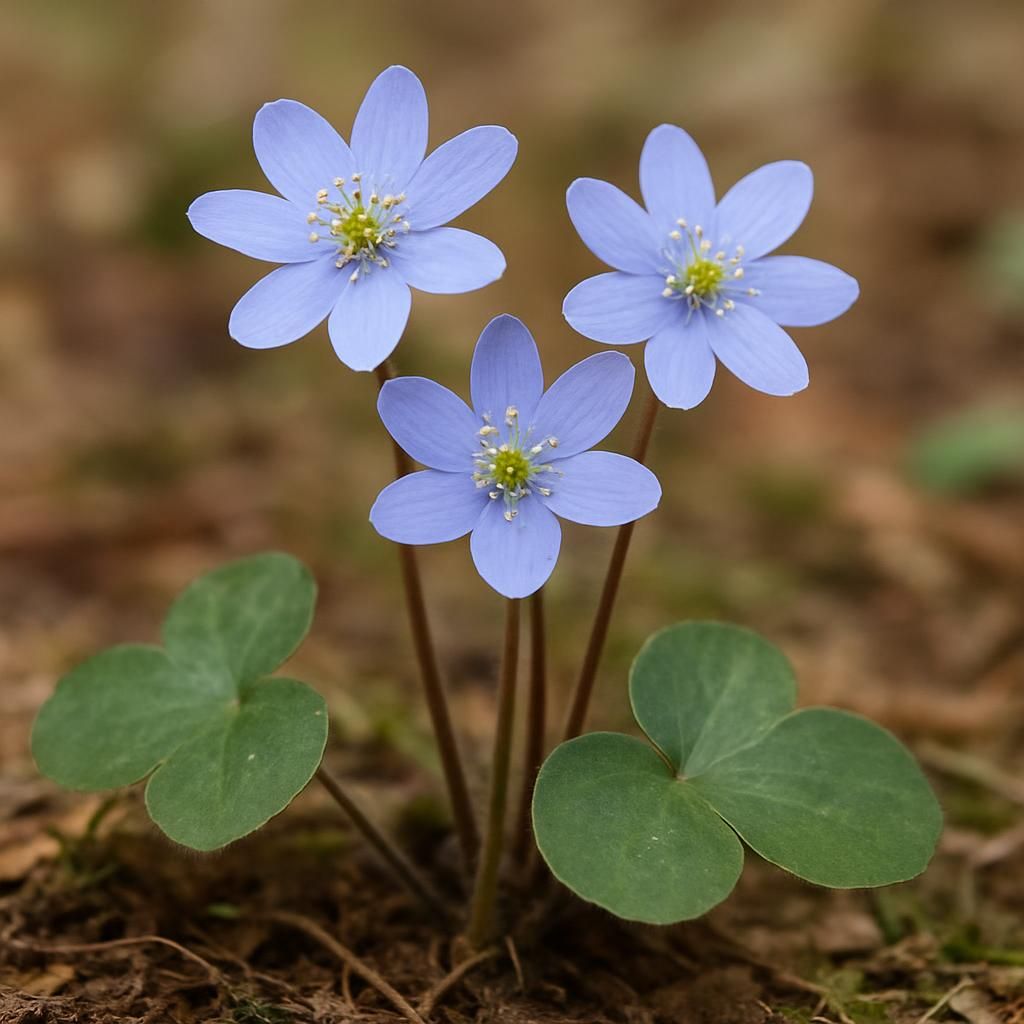
Introduction to hepatica
Hepatica, also known as liverleaf or liverwort, is a charming early-spring ephemeral that has captivated botanists, gardeners, and naturalists for centuries. Native to temperate deciduous woodlands across Europe, Asia, and North America, this diminutive perennial emerges before the forest canopy fully leafs out, producing delicate cup-shaped flowers in shades of blue, lavender, pink, and white. Its common name derives from the ancient doctrine of signatures, as the lobed leaves were once thought to resemble a human liver. Today, hepatica is grown primarily as an ornamental groundcover in shaded garden settings and naturalistic plantings, where it provides valuable early-season nectar for pollinators.
Botanical Profile of hepatica
Hepatica nobilis belongs to the Ranunculaceae family and is characterized by its evergreen, three-lobed basal leaves that persist through winter in many climates. The flowers appear on short scapes before new foliage emerges, typically in March or April depending on latitude and elevation. Each flower consists of 5–10 petal-like sepals surrounding numerous stamens and pistils. After flowering, the plant produces achenes that are dispersed by ants in a mutualistic relationship known as myrmecochory. The species is slow-growing and long-lived, often forming dense colonies over decades in undisturbed woodland habitats.
Soil, pH, and Climate Requirements for hepatica (MUST INCLUDE A MARKDOWN TABLE OF IDEAL CONDITIONS)
Successful cultivation of hepatica requires replicating the cool, moist, humus-rich conditions of its native woodland habitat. The plant performs best in partial to full shade with protection from harsh afternoon sun and drying winds. Soil should be well-drained yet consistently moist, with a high organic matter content. Avoid heavy clay or waterlogged sites, which can lead to crown rot.
| Parameter | Ideal Range | Notes |
|---|---|---|
| Soil Type | Loamy, humus-rich woodland soil | Incorporate leaf mold or well-rotted compost |
| Soil pH | 5.5 – 7.0 | Slightly acidic to neutral |
| Temperature Range | -20°C to 25°C (-4°F to 77°F) | Hardy in USDA zones 3–8 |
| Moisture | Consistently moist, never waterlogged | Mulch helps retain moisture |
| Light | Partial to full shade | Avoid direct midday sun |
| Spacing | 15–20 cm (6–8 in) apart | Allows for colony expansion |
Step-by-Step Planting & Propagation
Hepatica is most commonly propagated by division or seed. Division is the faster method and should be performed in early spring or immediately after flowering. Carefully lift established clumps and separate into sections with at least one growing point and healthy roots; replant immediately at the same depth. Seed propagation requires patience: fresh seed should be sown in autumn in a cold frame or directly in prepared woodland soil. Germination occurs the following spring after a period of cold stratification. Seedlings grow slowly and may take three to four years to reach flowering size. Site preparation includes removing competing weeds and incorporating generous amounts of leaf mold or compost into the top 15 cm of soil.
Care & Maintenance regimes for hepatica (MUST INCLUDE A MARKDOWN TABLE OF WATER, FERTILIZER, AND PRUNING SCHEDULES)
Once established, hepatica requires minimal intervention beyond maintaining consistent moisture and removing spent foliage in late winter. Mulching annually with shredded leaves or fine bark helps suppress weeds and conserve soil moisture. Fertilization should be light and organic to avoid burning the shallow root system.
| Season | Watering Schedule | Fertilizer Application | Pruning/Maintenance |
|---|---|---|---|
| Spring | Keep soil evenly moist; water weekly if dry | Apply thin layer of compost or leaf mold | Remove old leaves before new growth |
| Summer | Water only during prolonged drought | None required | Monitor for pests; minimal intervention |
| Autumn | Reduce watering as temperatures drop | Light top-dressing of aged compost | Clear fallen debris from crowns |
| Winter | Minimal; ensure good drainage | None | Protect from heavy snow load if needed |
Pests, Diseases & Organic Management
Hepatica is generally resistant to serious pests and diseases when grown in appropriate conditions. Occasional issues include slugs and snails, which can damage young leaves, and fungal leaf spots during unusually wet periods. Good air circulation, proper spacing, and removal of spent foliage help prevent disease. Organic controls such as beer traps for slugs or neem oil sprays for minor insect pressure are usually sufficient. Overly wet soils can lead to crown or root rot; improving drainage is the best prevention.
Harvesting, Curing & Optimal Storage
Hepatica is not a culinary or medicinal crop and is grown exclusively for ornamental and ecological value. The only “harvest” involves collecting seed for propagation. Ripe achenes should be gathered promptly in late spring before ants disperse them. Fresh seed can be sown immediately or stored in moist sphagnum moss in a refrigerator for up to three months. Dry storage is not recommended, as viability declines rapidly. Plants themselves are long-lived perennials and do not require annual lifting or curing.
Companion Planting for hepatica
Hepatica pairs beautifully with other shade-loving woodland species that enjoy similar moist, humus-rich conditions. Recommended companions include Trillium species, ferns, wild ginger, and epimedium. These plants create a layered woodland tapestry that supports biodiversity and extends seasonal interest. Avoid aggressive groundcovers that may outcompete hepatica. For larger-scale plantings, intersperse with spring ephemerals such as bloodroot and Dutchman’s breeches to create a dynamic early-season display. Summer Companion Planting: 10 Organic Pairings to Boost Small Farm Resilience