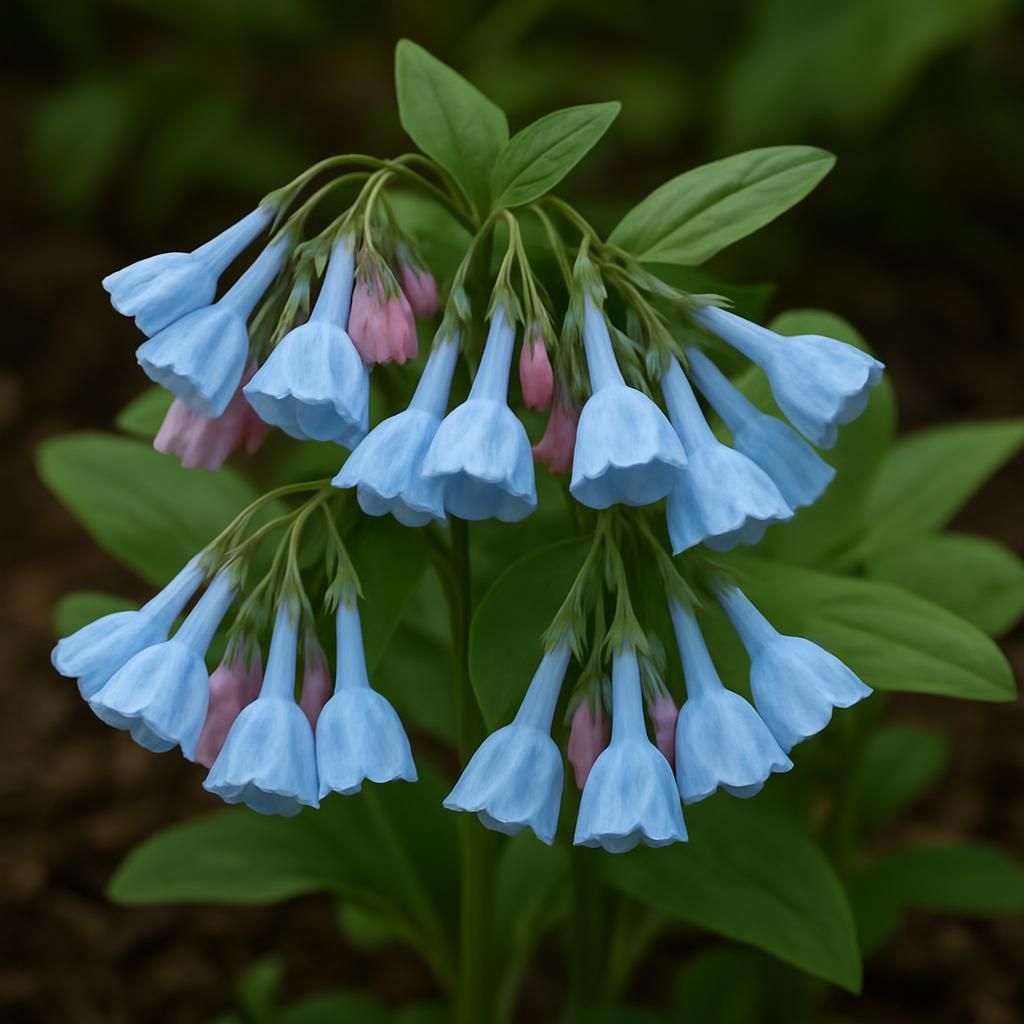
Introduction to Virginia bluebells
Virginia bluebells (Mertensia virginica) are among the most beloved native spring wildflowers in eastern and central North America. These short-lived perennials emerge in early spring, producing clusters of nodding, bell-shaped flowers that transition from pink buds to vibrant sky-blue blooms. Their ephemeral nature means they complete their above-ground growth cycle before summer heat arrives, making them ideal for shaded or woodland gardens seeking seasonal color without long-term maintenance demands.
As a spring ephemeral, Virginia bluebells play an important ecological role by providing early-season nectar for native bees and other pollinators. Their foliage senesces quickly after flowering, allowing them to coexist with later-emerging plants. Gardeners value them for naturalizing in moist, deciduous woodlands, along stream banks, and in shaded borders where few other plants thrive early in the season.
Successful cultivation requires understanding their preference for rich, consistently moist soils and partial to full shade. This guide delivers professional-grade, practical advice for establishing, maintaining, and propagating healthy stands of Virginia bluebells in both home landscapes and larger conservation plantings.
Botanical Profile of Virginia bluebells
Virginia bluebells belong to the Boraginaceae family. Plants produce fleshy, oval to lance-shaped leaves that are gray-green and slightly hairy. In early spring, flower stalks rise 12–24 inches (30–60 cm) tall, bearing terminal clusters of 10–20 pendulous flowers. Each flower measures approximately ¾–1 inch (2–2.5 cm) long.
Flower color changes dramatically: pink buds open into sky-blue corollas, a trait caused by pH-sensitive anthocyanins. After pollination, plants produce small nutlets that drop near the parent clump. Virginia bluebells spread slowly via short rhizomes and self-seeding, forming loose colonies over several seasons.
The plant enters dormancy by early summer, with foliage yellowing and disappearing completely. This life cycle makes Virginia bluebells excellent companions for summer perennials that fill the space once the bluebells have gone dormant.
Soil, pH, and Climate Requirements for Virginia bluebells
Virginia bluebells thrive in cool, moist environments typical of deciduous woodlands. They prefer rich, loamy soils high in organic matter with excellent moisture retention but good drainage. Heavy clay or sandy soils should be amended before planting.
| Parameter | Ideal Range | Notes |
|---|---|---|
| Soil Type | Loam to sandy loam | High organic content essential |
| Soil pH | 6.0–7.0 | Slightly acidic to neutral |
| Soil Moisture | Consistently moist | Never allow complete drying |
| Drainage | Well-drained yet moisture-retentive | Raised beds helpful in heavy soils |
| Temperature Range | 50–70 °F (10–21 °C) active growth | Hardy to USDA Zone 3 (-40 °F / -40 °C) |
| Light | Partial to full shade | Tolerates morning sun in cooler climates |
| Humidity | Moderate to high | Woodland microclimates ideal |
Avoid planting in full sun or exposed windy sites, as rapid soil drying will cause premature dormancy and reduced flowering.
Step-by-Step Planting & Propagation
Site Preparation Select a shaded or semi-shaded location with rich, moist soil. Remove weeds and incorporate 2–3 inches (5–8 cm) of well-rotted leaf mold or compost. If drainage is poor, create raised beds or add coarse sand and organic matter.
Planting from Bare-Root or Potted Plants Plant bare-root rhizomes or container-grown plants in early fall or very early spring while dormant. Space plants 8–12 inches (20–30 cm) apart. Set rhizomes horizontally 2–3 inches (5–8 cm) deep. Water thoroughly after planting and apply a 2-inch (5 cm) layer of shredded leaf mulch to conserve moisture.
Seed Propagation Collect ripe nutlets in late spring. Sow immediately in prepared woodland soil or cold-stratify for 60–90 days at 35–40 °F (2–4 °C) before spring sowing. Germination occurs the following spring; seedlings require consistent moisture and shade for the first two seasons.
Division Established clumps can be divided in early fall after foliage yellows. Dig the clump, separate rhizomes with at least one growing point, and replant immediately at the same depth.
Care & Maintenance regimes for Virginia bluebells
Virginia bluebells require minimal intervention once established, but consistent moisture and organic mulch are critical during active growth.
| Season | Watering Schedule | Fertilizer Application | Pruning / Maintenance |
|---|---|---|---|
| Early Spring | Keep soil evenly moist; water if rainfall <1 inch/week | Apply thin layer of compost or leaf mold | Remove any winter debris; no cutting needed |
| Late Spring (Bloom) | Maintain consistent moisture; avoid overhead watering | No fertilizer needed | Deadhead spent flowers if seed not desired |
| Early Summer | Reduce watering as plants yellow; allow natural senescence | None | Allow foliage to yellow naturally before removal |
| Fall | Light watering if extremely dry | Top-dress with 1 inch compost | Divide overcrowded clumps if desired |
Mulch annually with shredded leaves or fine bark to suppress weeds and maintain soil moisture. Avoid high-nitrogen fertilizers that promote weak growth.
Pests, Diseases & Organic Management
Virginia bluebells are generally pest-resistant, but slugs and snails may damage young foliage in very moist sites. Slugs and snails can be managed with beer traps, diatomaceous earth barriers, or hand-picking at night.
Fungal leaf spots occasionally appear in overly crowded or poorly ventilated plantings. Improve air circulation by thinning clumps and removing infected leaves. Root rot can occur in waterlogged soils; ensure proper drainage and avoid overwatering during dormancy.
Deer rarely browse Virginia bluebells, but rabbits may nip emerging shoots. Use hardware cloth cylinders or apply organic repellents containing capsaicin or garlic during early spring.
Harvesting, Curing & Optimal Storage
Virginia bluebells are primarily grown as ornamentals rather than for harvest. If collecting seed for propagation, harvest nutlets when they turn dark brown and begin to drop naturally in late spring. Dry seeds in paper envelopes at room temperature for 1–2 weeks, then store in labeled envelopes in a cool, dry location (40–50 °F / 4–10 °C) for up to two years.
Rhizomes are not typically harvested or stored long-term. For transplanting, divide and replant immediately or store briefly in moist sphagnum moss at 35–40 °F (2–4 °C) for no more than 7–10 days.
Companion Planting for Virginia bluebells
Virginia bluebells pair beautifully with other spring ephemerals and shade-tolerant perennials that emerge later. Recommended companions include Trillium species, Mayapple, ferns, and Wild ginger. These plants share similar moisture and shade requirements and provide sequential seasonal interest.
Avoid planting with aggressive groundcovers that may outcompete bluebells during their brief active period. Summer-blooming woodland plants such as Heuchera and Tiarella fill the space once bluebells go dormant, maintaining year-round soil coverage and visual appeal.