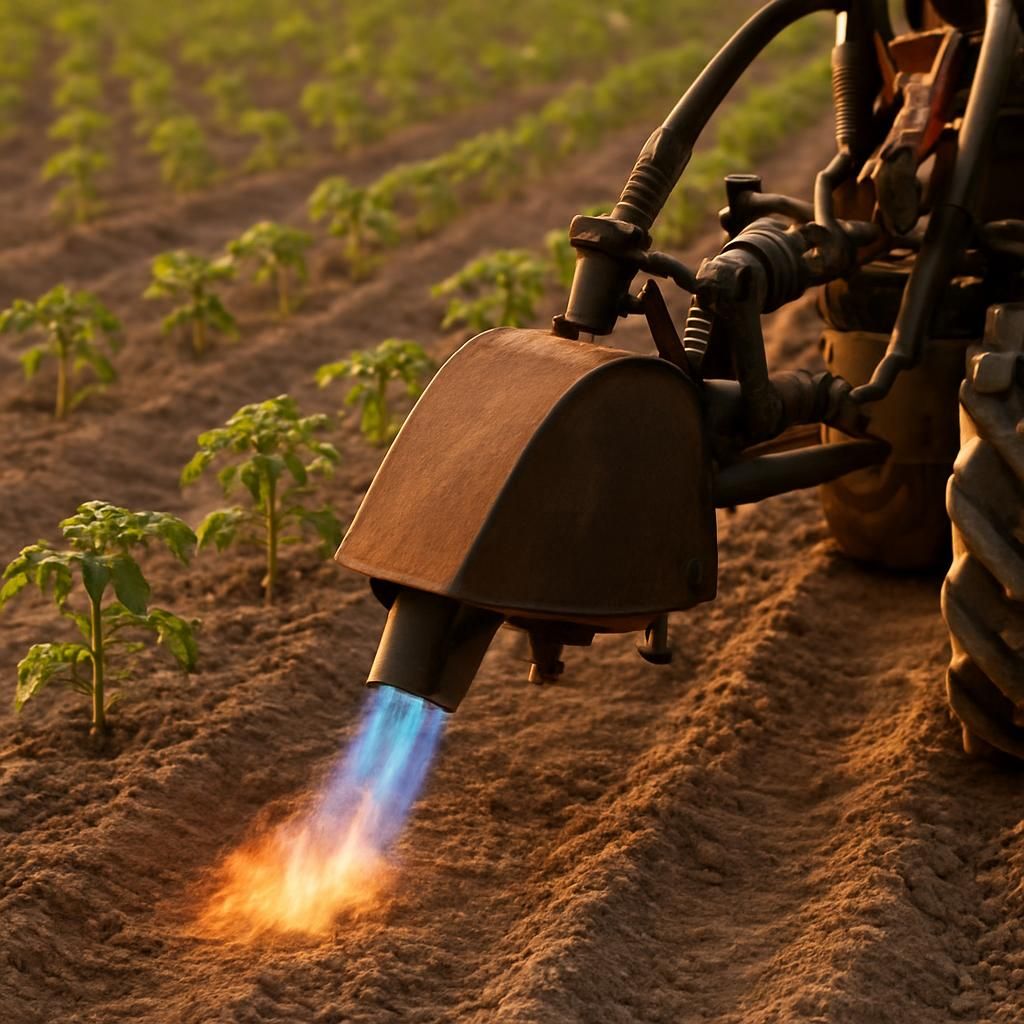
Flame Weeding: A Professional Agricultural Guide
Flame weeding delivers targeted thermal energy to disrupt weed physiology while leaving crop plants largely unharmed. The technique is especially valuable in organic vegetable, fruit, and row-crop systems where synthetic herbicides are restricted or where resistance has developed. When executed correctly, it reduces weed seedbanks, lowers labor costs, and integrates well with Crop Rotation Realities: 6 Organic Patterns That Deliver for Small Farms.
How Flame Weeding Works
Propane-fueled torches heat plant tissue to approximately 130–200 °C for 0.1–0.2 seconds. This ruptures cell membranes, causing rapid wilting and desiccation within hours. The goal is not combustion; a visible flame is unnecessary if the correct temperature and exposure time are achieved. Equipment ranges from handheld wands for small plots to hooded, multiple-burner tractor units for large acreage.
Suitable Crops and Situations
Flame weeding is safe around many established crops once stems have lignified. It is commonly used in:
- Tomato and Bell Pepper rows after transplanting
- Corn at the V4–V6 stage
- Onion and Garlic beds before bulbing
- Between-row spaces in Strawberry plasticulture
- Pre-plant stale seedbeds for Lettuce and Cabbage
Avoid flaming over succulent seedlings of Spinach or Carrot until true leaves appear.
Equipment Types and Specifications
| Equipment Type | Typical Output (BTU/hr) | Working Width | Best For | Fuel Use (gal/acre) |
|---|---|---|---|---|
| Handheld wand | 100,000–150,000 | 4–8 in | Small gardens, spot treatment | 3–5 |
| Push flamer (2-burner) | 200,000–300,000 | 12–18 in | Market gardens | 6–9 |
| Tractor-mounted hooded unit | 500,000–1,200,000 | 4–12 ft | Row crops, orchards | 8–15 |
| Infrared radiant panels | 80,000–120,000 | 24–36 in | Sensitive crops, urban farms | 4–7 |
Optimal Weed Stage and Timing
| Weed Growth Stage | Effectiveness | Recommended Speed | Notes |
|---|---|---|---|
| Cotyledon (white thread) | 95–100 % | 2–3 mph | Highest kill rate; repeat in 7–10 days |
| 2–4 true leaves | 85–95 % | 2–3 mph | Most economical window |
| 6+ leaves or flowering | 40–60 % | 1–2 mph | May require follow-up cultivation |
| Perennial grasses | <30 % | N/A | Not recommended; use integrated methods |
Step-by-Step Field Protocol
- Scout fields 24–48 h before flaming; target weeds <2 in tall.
- Calibrate burner height so flame tip is 2–4 in above soil.
- Travel at constant speed; overlap passes by 10 %.
- Monitor wind (<10 mph) and humidity (>30 %) to prevent drift.
- Water crops thoroughly the day before to reduce heat stress.
- Perform a second pass 7–14 days later on any escapes.
Safety and Regulatory Considerations
- Wear flame-resistant clothing, leather gloves, and ANSI-rated eye protection.
- Carry a 10 lb ABC fire extinguisher on every unit.
- Maintain 25 ft buffer from dry crop residue or structures.
- Comply with local burn bans and propane storage rules.
- Never leave torches unattended while pressurized.
Integration with Other Cultural Practices
Flame weeding pairs effectively with stale seedbed preparation, shallow cultivation, and mulching. In Tomato systems, flaming the stale seedbed followed by transplanting into black plastic reduces early-season weed pressure by 70 %. Combining flaming with cover-crop termination further depletes the weed seedbank over multiple seasons.
Limitations and Common Mistakes
Over-flaming can damage crop stems or plastic mulch. Flaming wet weeds or during high winds reduces efficacy. Repeated use on the same weed cohort may select for heat-tolerant biotypes; rotate with mechanical or cultural tactics. Perennial weeds with deep rhizomes require additional strategies such as repeated defoliation or targeted spot treatment.
Economic Analysis
At 2024 propane prices ($2.80/gal average), tractor-mounted flaming costs $18–$42 per acre per pass versus $55–$110 for organic herbicide programs. Labor savings average 12–18 h/acre compared with hand weeding in high-value vegetable crops. Return on investment is typically reached within two seasons when equipment is shared among neighboring farms.
Environmental Impact
Flame weeding produces no soil residues and minimal volatile organic compounds when propane is fully combusted. Carbon emissions are approximately 8–12 kg CO₂e per acre per pass, lower than many tillage operations when diesel savings are considered. Wildlife and beneficial insect disruption is negligible when flaming is limited to daytime hours and low-wind conditions.
Troubleshooting Quick Reference
| Symptom | Likely Cause | Corrective Action |
|---|---|---|
| Uneven kill | Clogged orifice or wind gusts | Clean burner, shield with hood, reduce speed |
| Crop leaf scorch | Flame too close or slow travel | Raise torch 1 in, increase speed 0.5 mph |
| Persistent grasses | Wrong growth stage | Switch to cultivation or post-emergent grass herbicide |
| Excessive fuel use | Low pressure or leaks | Check regulator, replace hoses, calibrate pressure to 20–30 psi |
Future Directions
Emerging infrared and laser weeding systems promise reduced fuel consumption and greater selectivity. Research into autonomous robotic flamers is underway in both Europe and North America. Until these technologies reach commercial scale, well-managed propane flame weeding remains one of the most reliable non-chemical tools for sustainable weed management across diverse cropping systems.