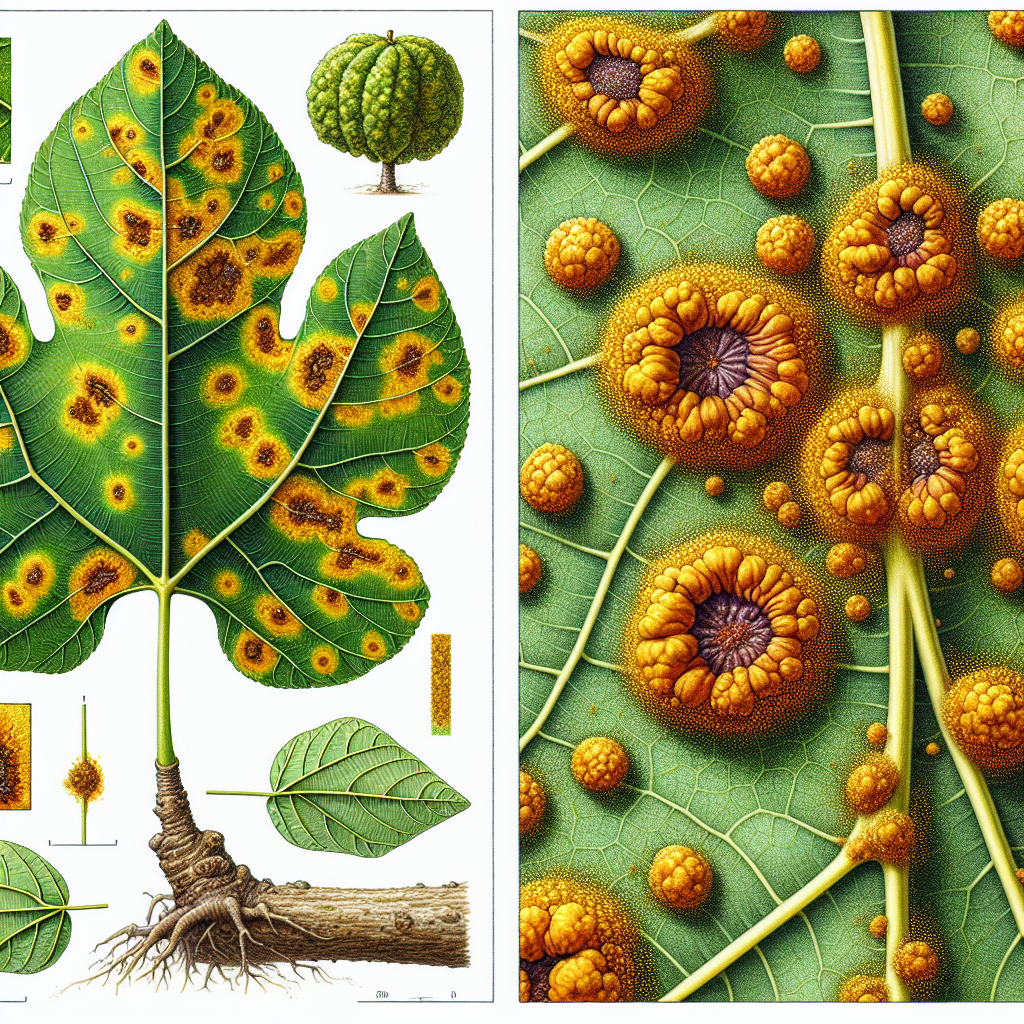
Introduction to Fig rust
Fig rust is a fungal disease primarily caused by the pathogen Physopella fici (formerly Cerotelium fici), a rust fungus that targets fig trees (Ficus carica). This disease poses significant challenges to fig growers, particularly in warm, humid climates where it thrives. Characterized by distinctive rusty-orange spore masses on leaf undersides, fig rust can lead to severe defoliation, weakening trees and reducing yields by up to 50% in untreated orchards. Understanding its symptoms, lifecycle, and management is crucial for maintaining healthy Fig crops and ensuring bountiful harvests of this beloved fruit.
First identified in the Mediterranean region, fig rust has spread globally, affecting commercial plantations and home gardens alike. The disease disrupts photosynthesis through leaf damage, indirectly impacting fruit size, sweetness, and overall tree vigor. While not typically lethal, repeated infections over seasons can decline tree productivity, making proactive management essential. This definitive guide draws from botanical and agricultural expertise to equip growers with practical, science-backed strategies for diagnosis and control. By integrating cultural, organic, and preventive measures, you can protect your fig trees effectively.
Identifying Symptoms & Damage
Early identification of fig rust is vital for timely intervention. Initial symptoms appear as small, pale yellow spots on the upper surfaces of fig leaves, often starting on older foliage in mid-to-late summer. These spots expand into larger chlorotic (yellow) areas with irregular margins, sometimes surrounded by a faint halo. As the infection progresses, corresponding rusty-brown or orange pustules (aecia) erupt on the leaf undersides, releasing powdery spores that give the disease its name.
Affected leaves may curl, distort, or develop necrosis, leading to premature drop. In severe cases, entire leaves turn yellow-brown and defoliate, exposing fruit to sunburn and increasing susceptibility to secondary pests like aphids or spider mites. Fruit damage is indirect: weakened trees produce smaller, less flavorful figs with thinner skins. Inspect undersides of lower leaves weekly during humid periods, using a 10x hand lens to confirm orange urediniospores.
Differentiate fig rust from similar issues: powdery mildew produces white powdery growth without pustules, while Alternaria leaf spot shows darker concentric rings. Damage assessment involves counting infected leaves per branch; over 30% infection warrants treatment. Economic thresholds vary: in commercial settings, 10-20% defoliation signals action to prevent yield loss.
Lifecycle and Progression of Fig rust
Physopella fici follows a complex lifecycle typical of autoecious rust fungi, completing all stages on fig leaves. It overwinters as teliospores in fallen debris or on bark. In spring, teliospores germinate into basidiospores under moist conditions (above 15°C/59°F), infecting new leaves via stomata. Pycnia form small orange cups on upper leaf surfaces, releasing pycniospore-containing nectar that facilitates wind or insect dispersal.
Within 10-14 days, aecia develop on undersides, maturing into uredinia that produce prolific urediniospores—the primary spread mechanism during summer. These bicellular spores disperse by wind, splashing rain, or tools, infecting nearby trees in 7-10 days under optimal conditions (20-25°C/68-77°F, 90%+ humidity). Late season, telia form black teliospores for overwintering. A single lesion can produce millions of spores, enabling rapid epidemics in dense plantings.
Progression peaks in late summer, with 2-4 infection cycles per season. Disease severity escalates with prolonged leaf wetness (>8 hours). Understanding this cycle informs timing: scout post-rain, prune debris in fall to break the cycle.
Environmental Triggers & Risk Factors
Fig rust flourishes in warm, humid environments with temperatures of 20-28°C (68-82°F) and relative humidity above 85%. Leaf wetness from dew, fog, or irrigation exceeding 8-12 hours daily triggers spore germination. Regions like the southeastern U.S., Mediterranean, and subtropical Asia report highest incidence. Overhead watering, poor air circulation in crowded orchards, and susceptible varieties like Brown Turkey Fig or Mission Fig heighten risk.
Susceptibility increases with tree stress: drought, over-fertilization (high nitrogen), wounding, or nutrient imbalances (low potassium). Monoculture plantings without diversity amplify spread. Climate change extends humid periods, boosting epidemics. Risk factors include planting in low-lying fog-prone areas or near wild figs. For more on optimizing farm layouts, check this insightful blog post on zoning strategies.
Organic Control & Treatment Plans
Organic management emphasizes integrated approaches: cultural, biological, and approved fungicides. Cultural Controls: Prune for 20-30% canopy openness to enhance airflow; remove and destroy infected leaves weekly. Apply 2-4 inches of organic mulch to suppress splash dispersal, avoiding trunk contact to prevent root rot. Water at base early morning; avoid evening irrigation.
Biological Options: Introduce rust antagonists like Bacillus subtilis or Trichoderma spp. via foliar sprays (e.g., Serenade, RootShield). Neem oil (1-2% solution) disrupts spore germination; apply every 7-10 days preventively. Baking soda (1 tbsp/gallon + hort oil) raises leaf pH, inhibiting rust (3x/week).
Approved Fungicides: Use OMRI-listed sulfur (e.g., Liquid Lime Sulfur, 1-2 gal/100 gal water) or copper soaps (e.g., Cueva) at 7-14 day intervals, starting at first symptoms. Rotate to prevent resistance. For rusts in general, potassium bicarbonate offers broad-spectrum protection.
Treatment Timeline: Scout weekly; treat at 5-10% leaf infection. Post-harvest, apply dormant copper spray. Monitor with sticky traps for spore counts. Combine with compost teas rich in mycorrhizae for tree resilience. Success rates exceed 80% with consistent application.
Preventing Fig rust in the Future
Prevention hinges on resistant varieties (e.g., 'Celeste' or 'LSU Purple'), certified disease-free stock, and site selection with full sun, well-drained soil, and windbreaks. Space trees 15-20 ft apart for airflow. Annual fall cleanup removes 90% overwintering inoculum. Balanced fertility (e.g., 10-10-10 NPK) bolsters defenses; foliar calcium sprays reduce susceptibility.
Implement 3-year rotation if intercropping; avoid overhead sprinklers, opting for drip irrigation. Antitranspirants like kaolin clay (Surround WP) create barriers pre-rain. Monitor weather for high-risk periods using hyper-local forecasts—crucial as downy mildew shares triggers. Build soil health with cover crops like clover to enhance microbial suppression. Long-term, scout neighbors for wild hosts.
Crops Most Affected by Fig rust
Fig rust primarily targets Ficus carica cultivars, with Brown Turkey Fig, Mission Fig, Fig (Adriatic), and Fig (Celeste) showing high susceptibility. Common varieties like Black Mission and Kadota suffer most in humid zones. Wild figs (Ficus spp.) serve as reservoirs. No other major crops are primary hosts, though minor reports exist on ornamental Ficus. Focus protection on commercial figs; diversify with resistant types like Violette de Bordeaux.