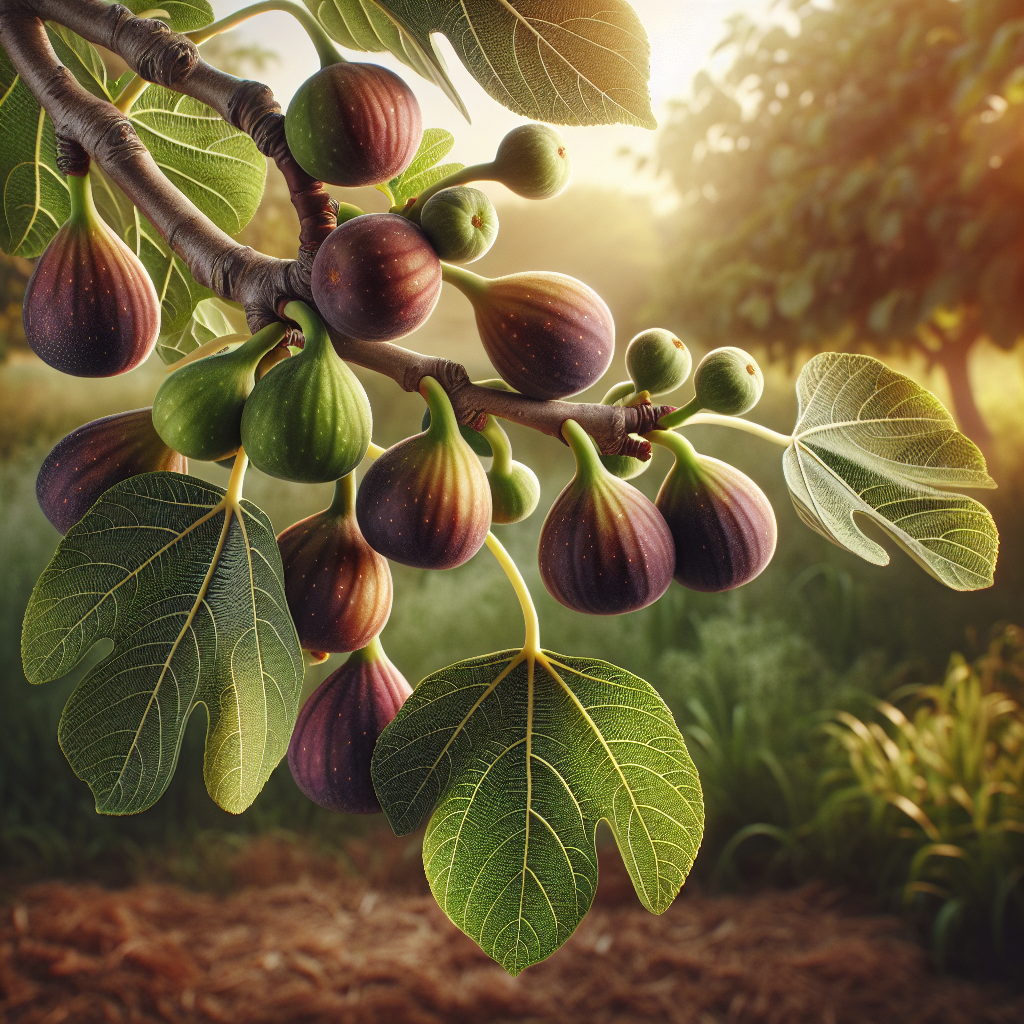
Introduction to Fig (Celeste)
A long-grown heirloom fig, often called the “Sugar Fig,” this cultivar is especially valued for its compact habit, dependable crops, and intensely sweet fruit with a soft, jammy interior. It belongs to the common fig group, meaning it does not require pollination by a fig wasp to set fruit, which makes it practical for home growers and commercial niche producers far beyond the Mediterranean basin.
Celeste typically produces small to medium pear-shaped figs with bronze to violet-brown skin and pink to amber pulp. The ostiole, or eye, is relatively tight compared with many other figs, a major advantage in humid climates because it reduces fruit splitting, insect intrusion, and souring. For growers in the American South, that trait is one reason Celeste remains a benchmark cultivar and is often compared with Brown Turkey Fig when selecting a productive backyard fig.
This variety is not the largest-fruited fig, nor is it always the best for long shipping, but it excels in flavor, fresh eating, preserves, drying, and low-input culture. Mature trees are vigorous yet manageable, and once established they tolerate drought better than many temperate fruit crops. Even so, premium fruit quality depends on carefully balancing water, pruning, sun exposure, and nitrogen management.
For broader soil-building principles that support long-term orchard health, see soil health strategies.
Botanical Profile of Fig (Celeste)
This cultivar is a deciduous subtropical fruit tree in the Moraceae family. Like other figs, it has a milky latex in stems and leaves, broad lobed foliage, and a unique fruit structure known as a syconium, which is technically an inverted inflorescence lined inside with tiny flowers. The edible “fruit” is therefore botanically specialized and responds strongly to temperature, moisture, and canopy light.
Celeste usually forms a rounded, multi-branched tree 10-20 feet tall and wide in typical garden culture, though it can be kept smaller with pruning or grown in large containers. In favorable climates, older specimens can exceed that size. Leaves are medium to large, rough-textured, and usually three- to five-lobed. Dormant wood is relatively cold tolerant for a fig, though top growth can still be damaged by severe winter freezes.
Key cultivar traits include:
- Common fig type, parthenocarpic, no pollinator required
- Usually one main crop rather than a heavy breba crop
- Small to medium fruit with very sweet flesh
- Closed or tight eye that reduces spoilage pressure
- Good adaptation to humid summers compared with many open-eyed cultivars
- Productive under backyard conditions with moderate care
Fruit ripens over a concentrated mid- to late-season window depending on climate, often from early summer into late summer in warm regions. Celeste can drop immature fruit if stressed by erratic watering, excessive shade, root disturbance, overfertilization, or sudden temperature shifts. That tendency is not a defect so much as a sign that this cultivar performs best when growth is steady rather than forced.
Soil, pH, and Climate Requirements for Fig (Celeste)
This fig performs best in full sun, well-drained soil, and climates with long warm summers. It is adaptable, but high-quality fruit depends on root aeration and avoidance of prolonged waterlogging. Ideal soil textures are sandy loam or loam, though clay soils can work if they are mounded, amended with organic matter, and never allowed to stay saturated around the crown.
A target soil pH of 6.0-6.8 is ideal, though Celeste will usually tolerate roughly 5.5-7.5 if drainage and nutrient balance are good. Below pH 5.5, calcium and magnesium availability often become limiting, and root vigor may suffer. Above pH 7.5, micronutrient tie-up, especially iron, manganese, and zinc, can lead to pale foliage and reduced shoot extension.
Drainage is more important than fertility. If you dig a planting hole and fill it with water, it should drain within 12-24 hours. If water remains longer, the site is risky unless you plant on a raised berm 12-18 inches high. Figs dislike “wet feet”; oxygen-starved roots often lead to yellow leaves, reduced fruit size, fruit drop, and eventual dieback.
For soil moisture, aim for evenly moist but never soggy conditions in the root zone. A useful field benchmark is that the top 2-3 inches may dry somewhat between irrigations, but soil 4-8 inches deep should remain lightly moist during active growth and fruit sizing. When squeezed, this deeper soil should feel cool and cohesive, not muddy, and should crumble with pressure rather than smear. Chronic excess water often shows up as lush, overly soft vegetative growth, leaf yellowing beginning on lower foliage, fungal issues, and bland fruit. Drought stress appears as leaf cupping, dull foliage, slowed shoot growth, undersized fruit, and premature fruit drop.
Celeste is best adapted to USDA zones about 7-10, with some success in protected zone 6 locations if winter protection is provided. It thrives where summers are warm to hot, typically 75-95°F (24-35°C), and where ripening occurs under bright light. Dormant wood may tolerate short drops into the teens Fahrenheit, but young trees and container plants are much more vulnerable. Spring frost after bud break can destroy tender shoots and delay cropping.
Humidity tolerance is one of Celeste’s strengths, but even this cultivar benefits from air flow. In muggy climates, avoid dense, shaded canopies that trap moisture and encourage leaf disease. In arid climates, fruit quality can be excellent, though sunscald on exposed bark and rapid soil drying become greater concerns.
Step-by-Step Planting & Propagation
Choose a site with at least 8 hours of direct sun, good air movement, and enough space for the mature canopy. Avoid low frost pockets and poorly drained depressions. If planting near structures, keep at least 8-10 feet away from foundations because fig roots are opportunistic and wide-spreading, though usually not aggressively destructive in normal soils.
For bare-root or container planting:
- Test drainage before planting. If the area drains slowly, build a raised mound or berm.
- Dig a hole about twice the width of the root ball but no deeper than the root mass height.
- Set the tree so the root flare is at or slightly above finished soil grade. Planting too deep is a common cause of decline.
- Backfill mostly with native soil. Heavy amendment only in the planting hole can create a “pot effect” that traps water.
- Water thoroughly to settle soil and eliminate air pockets.
- Apply 2-4 inches of mulch in a broad ring, keeping mulch 3-4 inches away from the trunk.
- If top growth is excessive relative to roots, head back lightly at planting to reduce stress.
Spacing depends on system. For open-grown backyard trees, 12-20 feet between plants is common. For intensive pruning systems, 8-12 feet may work, but closer spacing requires disciplined canopy management and irrigation.
The best planting season is early spring after the danger of severe freezing has passed but before hot weather arrives. In warm winter climates, late fall to winter planting is also effective because roots establish during mild weather.
Propagation is straightforward, which is one reason figs have been shared for centuries. Hardwood cuttings are the most common method.
To propagate from cuttings:
- Take pencil-thick dormant wood 6-10 inches long from healthy one-year shoots.
- Make a flat cut below a node at the base and an angled cut above a node at the top so orientation is obvious.
- Allow cut surfaces to dry briefly, then place in a sterile, well-aerated medium such as 50:50 perlite and peat or coco coir.
- Keep warm, ideally 70-80°F at the root zone, with bright indirect light.
- Maintain moderate moisture; the medium should be damp, never saturated.
- Pot up once roots are established and new growth is active.
Air layering also works well for preserving exact cultivar identity. Seed propagation is not appropriate because seedlings will not come true to type.
Care & Maintenance regimes for Fig (Celeste)
Young trees need consistent support for the first 2-3 years. During establishment, provide deep irrigation when the top 2 inches of soil become dry, especially in sandy soils. A practical schedule is once or twice weekly in hot weather for new trees, adjusted for rainfall and soil texture. Each irrigation should moisten the root zone to roughly 12-18 inches deep. Frequent shallow watering encourages surface roots and increases drought sensitivity.
Established trees are more drought tolerant, but irrigation during fruit set and fruit swell greatly improves size and reduces drop. In many climates, mature in-ground trees perform well with a deep soaking every 7-14 days during dry periods. Sandy soils may need more frequent watering; clay soils need less frequent but carefully monitored irrigation. Sudden shifts from dry to very wet conditions often trigger fruit cracking or splitting, even in relatively tight-eyed cultivars.
Fertilization should be conservative. Excess nitrogen is one of the quickest ways to get a large leafy tree with poor fruit quality. If the tree is making 12-18 inches of healthy new shoot growth per year and leaves are a normal medium green, additional nitrogen may be unnecessary. If growth is weak, apply a modest balanced fertilizer in early spring, or split low rates between spring flush and early summer. Stop nitrogen by midsummer in cooler regions so wood can harden before winter.
As a broad guide for nonbearing young trees, a small amount of nitrogen equivalent may be applied monthly during spring to early summer, increasing gradually with age. For bearing trees, focus more on maintaining organic matter, potassium sufficiency, and balanced nutrition than pushing nitrogen. Compost applied as a surface dressing under mulch often works better long term than repeated heavy synthetic feeding.
Pruning depends on climate and training style. In regions with winter dieback risk, a multi-stem bush form is often safest because damaged stems can be renewed from the base. In milder climates, a low-headed open tree with 3-5 main scaffold branches works well. Prune during dormancy to remove dead, crossing, crowded, or weak wood. Because Celeste fruits mainly on current season growth emerging from older wood, avoid over-pruning, which can reduce the crop.
A practical annual routine is:
- Late winter: remove dead wood, thin crowded interior shoots, shorten overly long whips, maintain height for harvest access
- Spring: monitor bud break, protect from late frost if possible
- Early summer: remove suckers if they are not needed for renewal; lightly thin water sprouts
- Late summer: avoid hard pruning that stimulates tender growth
Mulching is highly beneficial. A 3-4 inch layer of shredded leaves, wood chips, or composted bark moderates soil temperature, reduces evaporation, and improves tilth. Extend the mulch ring out toward the canopy drip line over time.
In colder zones, winter protection may determine success. After leaf drop, heavily mulch the root zone. Young or bush-trained plants can be wrapped with breathable insulation, surrounded with leaves and burlap, or bent and covered in extreme climates. Container-grown Celeste should be moved into an unheated garage, shed, or protected structure where temperatures stay roughly 25-45°F during dormancy.
Container culture is possible if the plant is root-pruned and repotted periodically. Use a sharply drained mix, a container at least 15-25 gallons for long-term growth, and expect more frequent watering. Container figs dry rapidly in summer and can go from ideal moisture to severe wilt in a day or two during hot wind.
Pests, Diseases & Organic Management
Celeste is relatively forgiving, but no fig is trouble-free under chronic stress. Healthy, sun-grown, well-pruned trees with good drainage suffer far fewer problems than shaded or overwatered specimens.
Common pest issues include:
- Birds: often the main harvest competitor. Use netting before fruit softens.
- Squirrels and raccoons: harvest promptly and consider trunk guards or exclusion methods.
- Root-knot nematodes: more serious in sandy southern soils; use organic matter heavily and avoid infested planting sites.
- Fig rust: common in humid regions, causing yellow spots on upper leaf surfaces and rusty pustules beneath.
- Scale insects: may colonize stems and leaf undersides, leading to weakened growth and sooty mold.
- Mealybugs: occasionally present, especially in protected or container environments.
- Spider mites: more common in hot, dry, dusty conditions.
- Dried fruit beetles or Sap beetles: attracted to split or overripe fruit.
Organic management begins with sanitation. Remove fallen fruit promptly, prune out dead wood, and avoid leaving mummified fruit in the canopy. Maintain open air circulation so leaves dry quickly after rain. Keep weeds and dense grass away from the trunk to reduce humidity and rodent shelter.
For Fig rust, the best control is prevention through spacing, pruning, and avoiding overhead irrigation late in the day. Severe defoliation weakens the tree but usually does not kill it. Destroy heavily infected fallen leaves. Organic copper products can help in high-pressure situations if used preventively and according to label directions, but repeated use should be limited to avoid soil accumulation.
For scale and Mealybugs, dormant oil or horticultural oil can be effective when coverage is thorough. Apply during appropriate temperature windows to avoid phytotoxicity. Encourage beneficial insects by maintaining flowering borders with plants such as Thyme, Yarrow, and Clover.
Root diseases are most likely in poorly drained soils. Symptoms include stunting, sparse foliage, sudden wilt despite wet soil, and branch dieback. No spray fixes chronically waterlogged roots; site correction is essential.
Fruit souring is less common on Celeste than on open-eyed figs, but it can still happen when fruit is damaged, split, or left hanging overripe in hot wet weather. Prompt harvest and canopy hygiene are critical.
Late spring frost is a physiological hazard rather than a pest, but it can be devastating. If a freeze is forecast after bud break, use frost cloth on smaller plants or exploit heat-reflecting microclimates near south-facing walls.
Harvesting, Curing & Optimal Storage
Harvest timing is crucial because figs do not continue to ripen properly after picking the way many climacteric fruits do. Celeste fruit is ready when it softens noticeably, the neck bends, skin color deepens to bronze-violet, and slight cracking or sugar beading may appear near the surface. A ripe fig should detach with a gentle lift and twist. If latex flows heavily from the stem end, the fruit is usually still underripe.
Pick every 1-3 days during peak season. Fully ripe figs are delicate and bruise easily, so place them in shallow containers no more than one or two layers deep. Harvest in the cool morning after dew dries but before midday heat softens the fruit excessively.
Fresh Celeste figs are best eaten within 24-72 hours. Store at 32-40°F with high relative humidity, ideally 85-95%, in ventilated shallow clamshells or trays lined with absorbent material. At warmer room temperatures they deteriorate very quickly, often within a day.
For short-term storage:
- Do not wash until just before use unless fruit is visibly dirty.
- Remove cracked, leaking, or insect-damaged figs immediately.
- Refrigerate promptly after harvest.
- Keep away from strong ethylene-sensitive produce only if mixed storage quality matters; figs themselves are highly perishable regardless.
Celeste is excellent for drying because of its concentrated sweetness. To cure for dried use, harvest fully ripe but sound fruit, halve if desired, and dry in a dehydrator at low fruit settings or in a screened solar dryer with strong airflow until leathery and no free moisture remains. Properly dried figs should be pliable, not sticky-wet, with no pockets of internal moisture that could support mold.
For preserves, pick fruit when soft and sweet but before collapse. This cultivar’s dense sweetness makes it especially suitable for jam, fig butter, preserves, and baking.
Companion Planting for Fig (Celeste)
Companion planting around fig trees should support root-zone biology, reduce weed pressure, attract beneficial insects, and avoid direct competition close to the trunk. The most effective companions are shallow-rooted insectary plants and living mulches placed outside the immediate crown zone rather than aggressive feeders planted directly against the tree.
Clover is one of the best understory companions because it suppresses weeds, protects soil from erosion, and contributes nitrogen cycling when managed as a low living mulch. Keep it mowed or trimmed so it does not create excessive humidity right against the trunk.
Thyme performs well on the sunny, drier edge of the mulch ring. It attracts pollinators and beneficial insects, tolerates lean soils, and does not usually compete heavily with established fig roots.
Yarrow is valuable nearby as an insectary species that draws predatory and parasitic insects. Its deep-rooting habit can also help improve soil structure in mixed orchard plantings, though it should be placed with enough space to avoid crowding the fig’s base.
Nasturtium can function as a seasonal flowering companion in warmer months, helping attract beneficial insects and adding visual diversity to mixed edible landscapes. In small gardens it is best used at the outer edge of the fig guild where it receives sun and does not trap moisture around the trunk.
Avoid heavy-feeding annual vegetables directly under young fig trees, especially crops that require constant irrigation. Excess water and nutrient competition in the root zone can reduce fruit sweetness and increase disease pressure. Keep the area nearest the trunk mulched and uncrowded, then build a wider companion ring farther out as the tree matures.