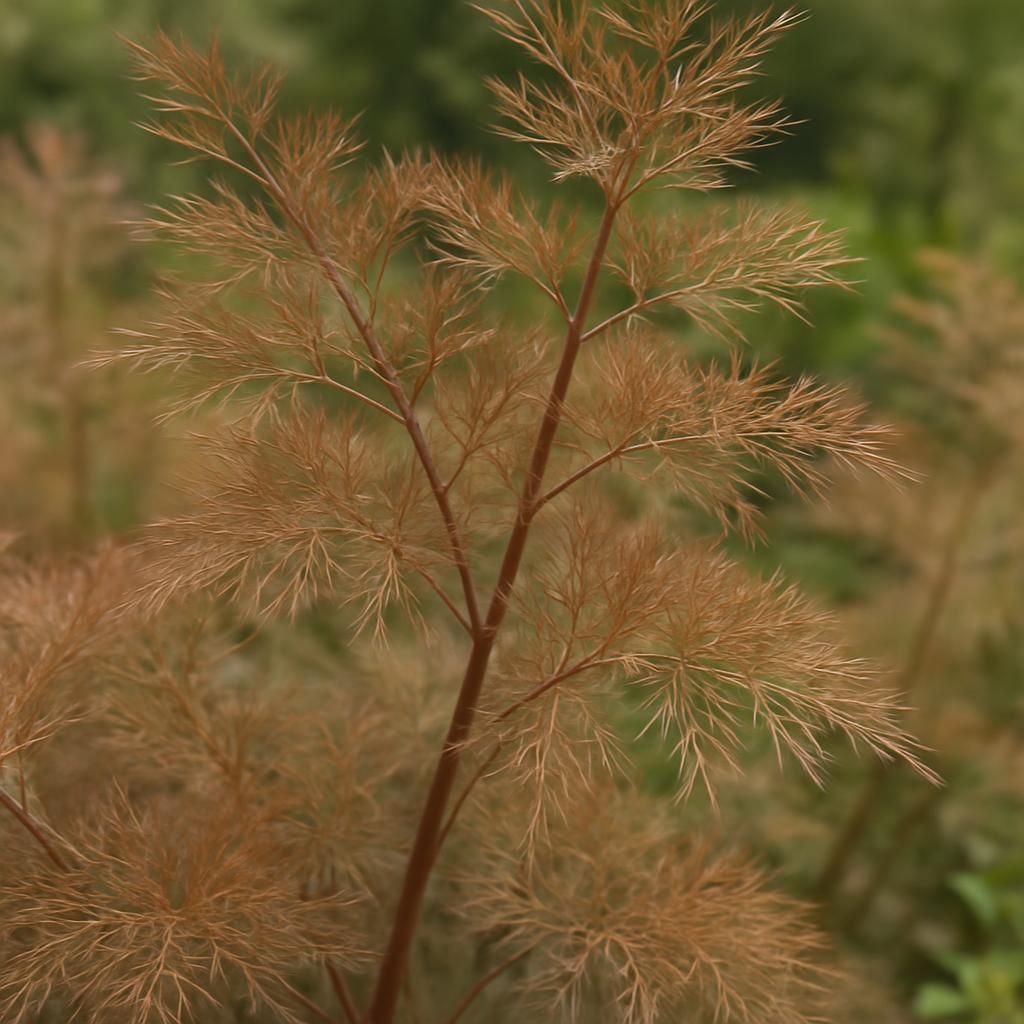
Introduction to Fennel (Bronze)
Bronze fennel (Foeniculum vulgare 'Bronze') is a visually distinctive cultivar of common fennel prized for its striking copper-bronze foliage that contrasts beautifully against green garden beds. Unlike standard green fennel, the 'Bronze' variety offers ornamental appeal while delivering the same sweet, anise-like flavor in its leaves, seeds, and bulb. Gardeners grow it for fresh culinary use, seed harvest, and as a pollinator attractor due to its abundant yellow umbel flowers.
This variety performs well in temperate climates and can be treated as a short-lived perennial in USDA zones 5–9. It reaches 4–6 feet in height when flowering and forms a bushy clump of finely divided, feathery leaves. Bronze fennel is slower to bolt than some green varieties, making it a reliable choice for extended leaf harvests.
Beyond the kitchen, bronze fennel supports beneficial insects and serves as a larval host for swallowtail butterflies. Its deep taproot improves soil structure while the plant itself tolerates drought once established. This guide provides professional-grade advice for soil preparation, propagation, care schedules, pest management, and post-harvest handling.
Botanical Profile of Fennel (Bronze)
Bronze fennel belongs to the Apiaceae family and shares the same species as common fennel. The cultivar is distinguished by anthocyanin pigmentation that produces its signature bronze to purple-bronze foliage. Leaves are finely dissected and emit a strong licorice aroma when crushed.
The plant develops a swollen basal stem or bulb in cool conditions, although bronze fennel is primarily grown for foliage and seed rather than large bulbs. Umbels of tiny yellow flowers appear in mid to late summer, attracting bees, hoverflies, and parasitic wasps. Seeds ripen to a ridged, oblong shape and turn from green to brown.
As a taprooted biennial or short-lived perennial, bronze fennel produces a deep root system that accesses moisture and nutrients from lower soil layers. The plant readily self-seeds in favorable conditions, though bronze seedlings may show variable coloration.
Soil, pH, and Climate Requirements for Fennel (Bronze)
Bronze fennel demands well-drained, moderately fertile soil with consistent moisture during establishment. It performs best in full sun but tolerates light afternoon shade in hot climates. The plant is sensitive to waterlogging, which quickly leads to root rot.
| Parameter | Ideal Range | Notes |
|---|---|---|
| Soil Type | Sandy loam to loam | Excellent drainage essential |
| Soil pH | 6.0–7.0 | Slightly acidic to neutral |
| Temperature Range | 15–24 °C (59–75 °F) daytime | Cool nights improve bulb formation |
| USDA Zones | 5–9 | Protect crowns in zone 5 winters |
| Sun Exposure | Full sun (6–8+ hours) | Tolerates partial shade in extreme heat |
| Spacing | 30–45 cm (12–18 in) between plants | Rows 60–90 cm (24–36 in) apart |
| Soil Organic Matter | 3–5 % | Incorporate well-rotted compost |
Avoid heavy clay soils unless heavily amended with coarse sand and organic matter. Raised beds improve drainage in regions with high rainfall.
Step-by-Step Planting & Propagation
Bronze fennel is most commonly started from seed, though root divisions of established plants are possible. Direct sowing is preferred because the taproot resents disturbance.
- Site Preparation: Clear weeds and incorporate 5–8 cm of compost into the top 20 cm of soil. Ensure pH is within the ideal range.
- Timing: Sow seeds in early spring after the last frost when soil reaches 10 °C (50 °F). In mild climates, autumn sowing produces earlier spring growth.
- Sowing Depth and Spacing: Plant seeds 6–12 mm (¼–½ in) deep. Thin seedlings to 30–45 cm apart once they reach 10 cm tall.
- Transplanting: If starting indoors, use biodegradable pots and transplant at the 4–6 leaf stage without disturbing roots.
- Succession Planting: Sow every 3–4 weeks for continuous leaf harvest through the season.
Root division can be performed in early spring on plants at least two years old. Dig carefully around the crown and separate sections with healthy roots and growing points.
Care & Maintenance regimes for Fennel (Bronze)
Consistent moisture and moderate fertility produce the best foliage color and seed yield. Over-fertilization leads to lush growth at the expense of flavor concentration.
| Growth Stage | Watering Schedule | Fertilizer Application | Pruning / Maintenance |
|---|---|---|---|
| Establishment (0–4 weeks) | Keep top 5 cm moist; water every 2–3 days | None; rely on compost in soil | Remove weeds; thin seedlings |
| Vegetative (4–10 weeks) | 2.5 cm per week; deep watering twice weekly | Side-dress with balanced organic fertilizer (5-5-5) at 4 weeks | Pinch lower leaves for airflow |
| Pre-Flowering | Reduce slightly to encourage root growth | Light compost tea every 3–4 weeks | Remove damaged or yellow foliage |
| Flowering & Seed Set | Minimal supplemental water if rainfall adequate | No additional nitrogen | Cut spent flower heads for seed harvest |
| Post-Harvest / Dormancy | Withhold water in heavy clay soils | Top-dress with compost in autumn | Cut back to 10 cm above ground in winter |
Mulch with 5–7 cm of organic material to suppress weeds and retain moisture. Avoid high-nitrogen feeds after midsummer to prevent weak stems.
Pests, Diseases & Organic Management
Bronze fennel is relatively pest-resistant but can host aphids, swallowtail larvae, and flea beetles. Fungal issues arise mainly from poor drainage.
Aphids: Spray with strong water jet or apply insecticidal soap. Encourage lady beetles and lacewings. Swallowtail larvae: Handpick if populations are high; otherwise tolerate as they become beautiful butterflies. Root rot and Pythium: Improve drainage and avoid overwatering. Remove and destroy affected plants. Powdery mildew: Increase spacing for airflow and apply neem oil or potassium bicarbonate sprays. Slugs and snails: Use beer traps or iron phosphate baits around young seedlings.
Rotate fennel with non-apiaceous crops every 3–4 years to reduce soil-borne pathogen buildup.
Harvesting, Curing & Optimal Storage
Harvest bronze fennel leaves throughout the growing season by cutting outer stems at the base. For peak flavor, pick in the morning before flowering.
Bulbs, when formed, are ready 90–120 days after sowing. Cut the entire plant at soil level when the bulb reaches 8–10 cm diameter.
Seeds are harvested when umbels turn brown but before shattering. Cut entire seed heads, place in paper bags, and hang in a warm, dry location for 1–2 weeks. Once dry, thresh and winnow seeds.
Store fresh leaves in a damp paper towel inside a perforated bag in the refrigerator for up to one week. Dried seeds keep 2–3 years in airtight glass jars away from light and heat. Freeze chopped leaves in ice cube trays with water or oil for extended use.
Companion Planting for Fennel (Bronze)
Bronze fennel is generally considered a poor companion due to its allelopathic properties that can inhibit growth of nearby plants. However, it excels as a beneficial insect attractor when planted at field edges.
Recommended pairings: Place fennel near tomato or cucumber beds at a distance of 1–2 meters to draw pollinators without direct root competition. It pairs well with dill and coriander in herb spirals.
Avoid planting near: Beans, peas, kohlrabi, and carrot because fennel can stunt their growth.
Use fennel as a border plant in nasturtium or marigold plantings to increase overall beneficial insect activity while maintaining crop separation.