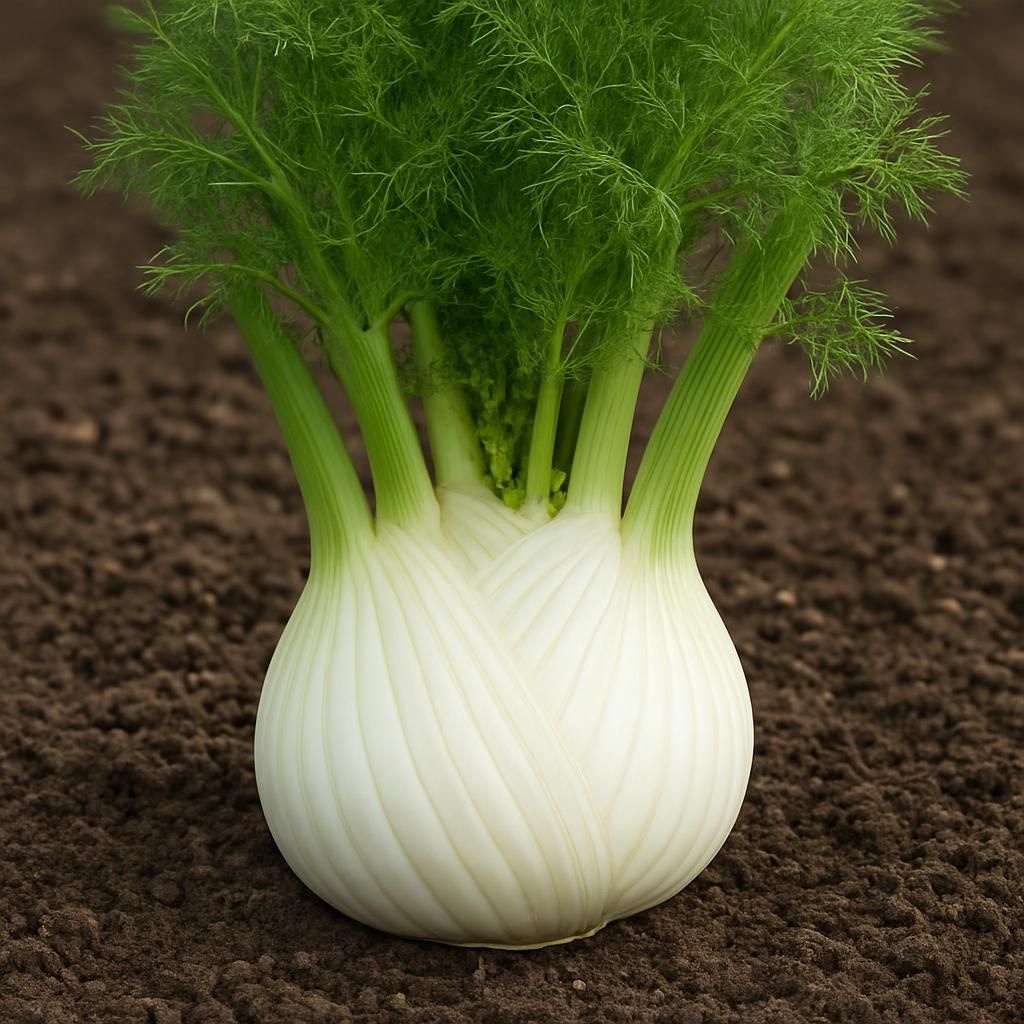
Introduction to Fennel (Antares)
Fennel (Antares) is a modern hybrid fennel variety developed for reliable bulb formation and resistance to premature bolting. It produces large, rounded bulbs with crisp white flesh and aromatic green foliage that can be harvested for both culinary and medicinal uses. Growers value this cultivar for its consistent performance across a wide range of climates and its ability to deliver high-quality produce with minimal post-harvest waste.
Professional growers select Fennel (Antares) for its strong disease tolerance and uniform maturity, making it suitable for both fresh market sales and processing. The plant thrives in full sun and well-drained soils, rewarding attentive management with bulbs that can exceed 400 g under optimal conditions.
Botanical Profile of Fennel (Antares)
Fennel (Antares) belongs to the Apiaceae family and exhibits a biennial growth habit when grown for seed but is typically cultivated as an annual for bulb production. The plant develops a swollen basal stem (the bulb) surrounded by overlapping leaf sheaths, with feathery, blue-green foliage and yellow umbels of flowers if allowed to bolt.
'Antares' is distinguished by its compact growth, thick leaf bases, and high sugar content that contributes to its sweet flavor profile. The root system is relatively shallow, making it sensitive to soil compaction and inconsistent moisture.
Soil, pH, and Climate Requirements for Fennel (Antares)
Fennel (Antares) performs best in fertile, well-drained loam or sandy loam soils with high organic matter. The crop prefers slightly alkaline conditions and consistent moisture without waterlogging.
| Parameter | Ideal Range | Notes |
|---|---|---|
| Soil Type | Loam / Sandy Loam | Good drainage essential |
| Soil pH | 6.5 – 7.5 | Slightly alkaline preferred |
| Temperature (Day) | 15–24 °C | Optimal growth and bulb formation |
| Temperature (Night) | 8–12 °C | Prevents bolting |
| Frost Tolerance | Light frost (-2 °C) | Seedlings tolerate; mature bulbs sensitive |
| Spacing | 25–30 cm between plants | 40–50 cm between rows |
| Sun Exposure | Full sun (6+ hours) | Essential for bulb development |
Step-by-Step Planting & Propagation
- Start seeds indoors 4–6 weeks before the last expected frost or direct sow when soil reaches 10 °C.
- Sow seeds 6–8 mm deep in seed-starting mix or prepared beds; keep evenly moist until germination (7–12 days).
- Harden off seedlings for 7–10 days before transplanting.
- Transplant at the 3–4 true leaf stage, setting plants at the same depth as in the cell tray.
- Direct sow successions every 2–3 weeks through mid-summer for continuous harvest.
- Thin seedlings to 25–30 cm spacing once they reach 10 cm tall.
Care & Maintenance regimes for Fennel (Antares)
Consistent moisture and balanced nutrition are critical. Apply mulch to conserve water and suppress weeds. Avoid high-nitrogen fertilizers after bulb initiation to prevent excessive foliage at the expense of bulb size.
| Growth Stage | Water Schedule | Fertilizer Schedule | Pruning / Thinning Schedule |
|---|---|---|---|
| Seedling (0–4 wks) | Light daily mist or 5 mm every other day | ¼-strength balanced liquid fertilizer weekly | Thin to 25 cm when 10 cm tall |
| Vegetative (4–8 wks) | 25–30 mm per week, maintain even moisture | Side-dress with 10-10-10 at 4 weeks | Remove lower leaves if crowded |
| Bulb Formation (8–12 wks) | 30–40 mm per week; avoid fluctuations | High-potassium fertilizer every 3 weeks | Hill soil around base to blanch bulbs |
| Pre-Harvest | Reduce to 20 mm/week 10 days before harvest | Cease nitrogen applications | Remove flower stalks immediately |
Pests, Diseases & Organic Management
Fennel (Antares) can be affected by Aphids, Slugs, and Fusarium wilt. Monitor weekly and use floating row covers during early growth. Apply diatomaceous earth for slugs and introduce beneficial insects such as lady beetles for aphid control. Rotate crops and maintain soil health to reduce Fusarium pressure.
Harvesting, Curing & Optimal Storage
Harvest when bulbs reach 8–10 cm diameter and before flowering. Cut at soil level with a sharp knife. Remove foliage, leaving 2–3 cm of stem. Cure in a shaded, well-ventilated area for 24–48 hours. Store at 0–2 °C and 90–95 % relative humidity for up to 14 days. For longer storage, freeze blanched slices or pickle in vinegar brine.
Companion Planting for Fennel (Antares)
Fennel (Antares) pairs well with Dill for mutual pollinator attraction but should be kept away from Tomato and Bush Bean due to allelopathic effects. Good companions include Lettuce, Cucumber, and Cilantro. Avoid planting near Carrot to prevent cross-pollination and reduced seed viability in future crops.
For deeper insights into small-farm resilience strategies, see The Truth About Weather Patterns and Small Farm Resilience.