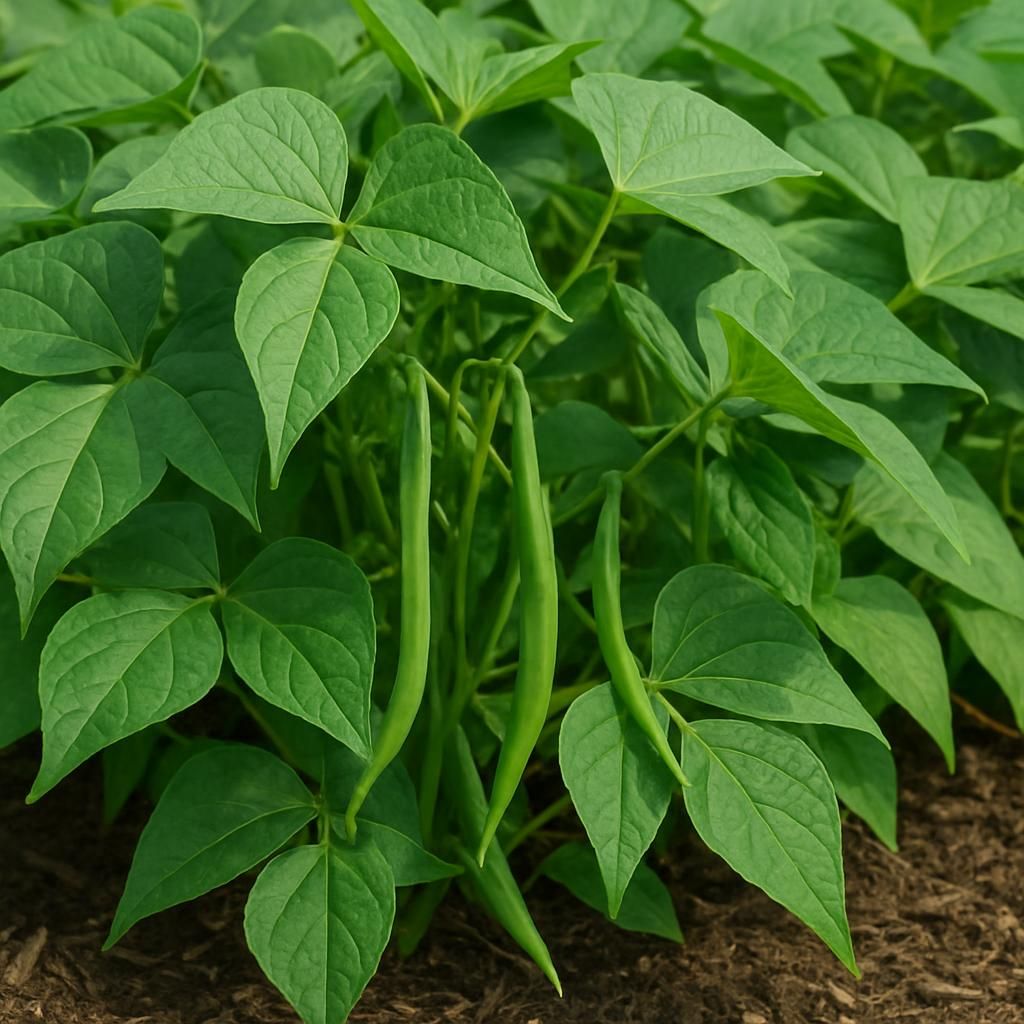
Introduction to Bush Bean
Bush beans (Phaseolus vulgaris) are among the most rewarding warm-season vegetables for gardeners and small-scale farmers. Unlike their vining counterparts, these determinate plants reach a compact height of 12–24 inches, eliminating the need for trellising and allowing dense planting. Their short life cycle enables succession planting for continuous harvests throughout the growing season. High in fiber, protein, and essential micronutrients, bush beans deliver both nutritional value and soil-improving benefits through symbiotic nitrogen fixation.
Botanical Profile of Bush Bean
Bush beans belong to the Fabaceae family and exhibit a bushy growth habit with multiple stems emerging from a central crown. Leaves are trifoliate with ovate leaflets, and small white, pink, or purple flowers appear in clusters at the nodes. After pollination, slender pods develop, each containing 4–8 seeds. Varieties differ in pod color (green, yellow, purple), texture (smooth or slightly fibrous), and seed size. Because plants complete their reproductive cycle in a single flush, timing successive sowings every 2–3 weeks maximizes seasonal production.
Soil, pH, and Climate Requirements for Bush Bean
Bush beans thrive in well-drained, fertile loam with abundant organic matter. They prefer full sun (minimum 6–8 hours daily) and consistent warmth. Avoid heavy clay soils that retain excess moisture, which promotes root diseases.
| Parameter | Ideal Range | Notes |
|---|---|---|
| Soil Type | Sandy loam to loam | Excellent drainage critical |
| Soil pH | 6.0–7.0 | Slightly acidic to neutral |
| Temperature (soil) | 60–85 °F (15–29 °C) | Germination fails below 55 °F |
| Temperature (air) | 65–85 °F (18–29 °C) | Daytime optimum; protect from frost |
| Spacing | 2–4 inches in-row, 18–30 inches between rows | High-density planting possible |
| Depth | 1–1.5 inches | Plant after last frost when soil warms |
Step-by-Step Planting & Propagation
- Perform a soil test 4–6 weeks before planting and amend with well-rotted compost to reach 3–5 % organic matter.
- Sow seeds directly outdoors once soil temperature reaches 60 °F; pre-soak for 4–6 hours in warm water to accelerate germination.
- Plant seeds 1–1.5 inches deep, 2–4 inches apart in rows 18–30 inches wide. For square-foot gardening, space on 4-inch centers.
- Maintain even moisture during germination (7–10 days); avoid overhead watering to reduce disease pressure.
- Thin seedlings to final spacing once true leaves emerge, retaining the strongest plants.
Care & Maintenance regimes for Bush Bean
Consistent care ensures vigorous growth and maximizes pod set. Mulch with 2–3 inches of straw or shredded leaves to conserve moisture and suppress weeds. Side-dress with low-nitrogen organic fertilizer only if leaves show yellowing. Monitor for signs of stress and adjust irrigation accordingly.
| Task | Schedule | Details |
|---|---|---|
| Watering | 1 inch per week; increase in heat | Deep, infrequent watering; morning preferred |
| Fertilizer | At planting & 3 weeks later | 5-10-10 or compost tea; avoid excess N |
| Pruning | None required | Remove only diseased foliage at season end |
Pests, Diseases & Organic Management
Common pests include bean leaf beetles, Mexican bean beetle, and aphids. Handpick beetles and use floating row covers until flowering. For aphids, apply insecticidal soap or introduce lady beetles. Major diseases are bacterial blight, common bean mosaic virus, and root rot complexes. Practice 3–4 year crop rotation, remove crop debris, and select resistant varieties. Copper-based sprays manage bacterial issues when applied at first symptoms.
Harvesting, Curing & Optimal Storage
Harvest pods when they reach 3–5 inches long and snap cleanly, typically 50–65 days after sowing. Pick every 2–3 days to encourage continued production. For dry beans, allow pods to yellow and rattle on the plant, then pull entire plants and hang upside down in a warm, ventilated area for 1–2 weeks. Shell seeds and store in airtight containers at 50–60 °F with low humidity. Fresh pods keep 4–7 days refrigerated in perforated bags.
Companion Planting for Bush Bean
Bush beans pair exceptionally well with corn and squash in the traditional Three Sisters system, where beans fix nitrogen for heavy-feeding corn. Other beneficial companions include carrot, celery, and cucumber. Avoid planting near onion, garlic, or chives as alliums can inhibit bean growth. Aromatic herbs such as rosemary and thyme help deter pests while supporting beneficial insects.