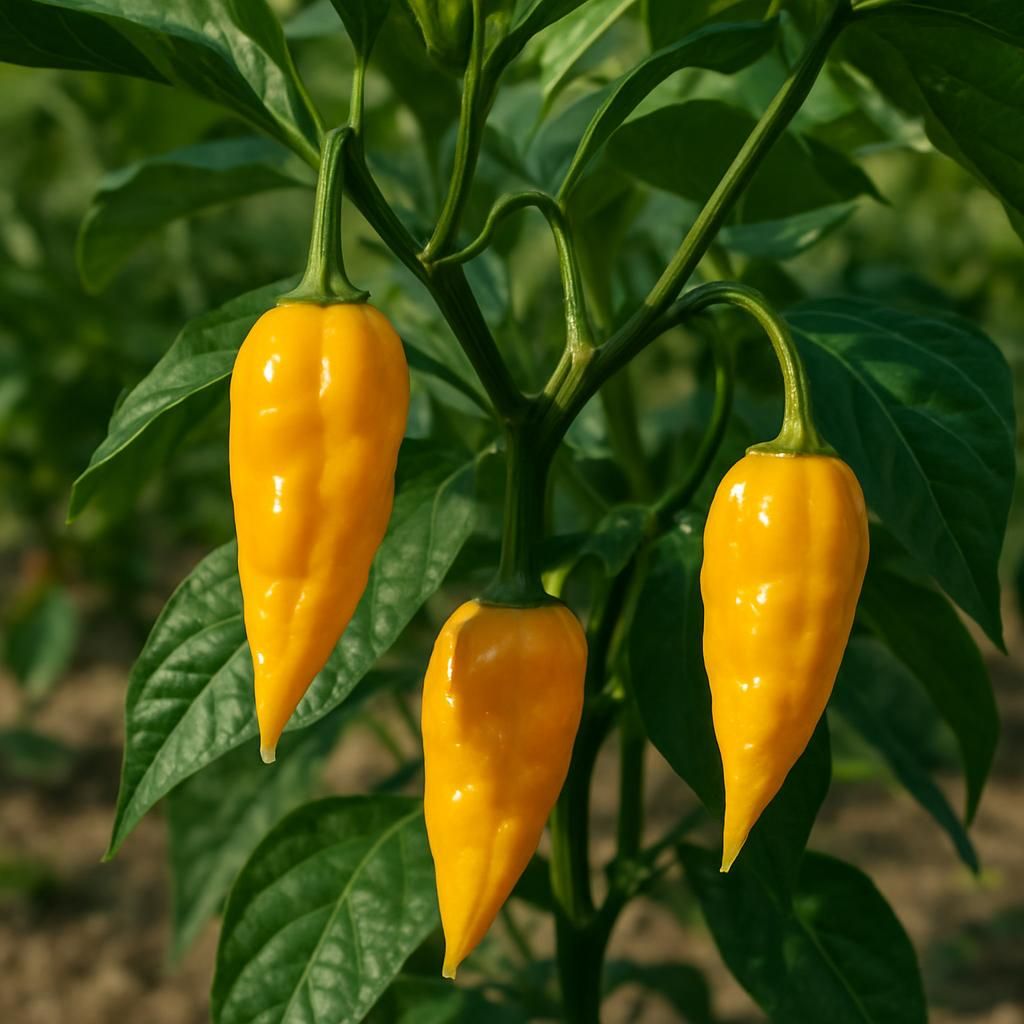
Introduction to Fatali Chili
Fatali Chili (Capsicum chinense 'Fatali') originates from the Central African region and is botanically classified within the chinense species, sharing lineage with Habanero Pepper. It is renowned for its blistering heat (150,000–400,000 Scoville Heat Units) coupled with a pronounced lemon-lime fragrance that distinguishes it from standard habaneros. Commercial growers and culinary professionals value the cultivar for both fresh market sales and value-added hot sauces. The plants exhibit vigorous branching, glossy dark-green foliage, and lantern-shaped pods that transition from pale green to vibrant yellow at full ripeness.
Successful cultivation requires attention to temperature thresholds, precise irrigation, and proactive disease management. Because Fatali belongs to the same species as Ghost Pepper, many of the cultural practices outlined for Ghost Pepper apply here, although Fatali matures slightly earlier under equivalent conditions.
Botanical Profile of Fatali Chili
Fatali plants reach 60–90 cm in height with a spreading habit and multiple basal branches. Leaves are ovate-lanceolate, 7–10 cm long, with pronounced veins and a slightly rugose texture. Flowers are small, white to cream-colored, and typically self-pollinating, although insect activity improves fruit set. Pods measure 4–6 cm, possess thin walls, and contain 20–40 seeds per fruit. The cultivar is day-neutral but benefits from 12–14 hours of full sun for optimal capsaicinoid synthesis.
Soil, pH, and Climate Requirements for Fatali Chili
Fatali thrives in well-drained sandy loam or loam soils rich in organic matter. Soil pH should be maintained between 6.0 and 6.8 to optimize nutrient uptake, particularly phosphorus and calcium. The plant is frost-sensitive and performs best when daytime temperatures range 24–30 °C and nighttime temperatures remain above 18 °C.
| Parameter | Ideal Range | Notes |
|---|---|---|
| Soil Type | Sandy loam to loam | High drainage prevents root rot |
| Soil pH | 6.0–6.8 | Adjust with lime or sulfur as needed |
| Temperature (Day) | 24–30 °C | Critical for capsaicin production |
| Temperature (Night) | 18–22 °C | Below 15 °C reduces fruit set |
| Sunlight | Full sun, 12–14 h | Use shade cloth above 35 °C |
| Spacing | 45–60 cm between plants | Rows 75–90 cm apart |
| Growing Season | 90–110 frost-free days | Start indoors 6–8 weeks before last frost |
Step-by-Step Planting & Propagation
- Start seeds indoors 6–8 weeks before the last expected frost in sterile seed-starting mix at 26–28 °C. Germination occurs in 7–14 days.
- Transplant seedlings into 10 cm pots once they develop two true leaves; maintain 24 °C days.
- Harden off plants for 7–10 days when outdoor night temperatures exceed 15 °C.
- Transplant into prepared beds after soil temperature reaches 18 °C at 10 cm depth. Plant at the same depth as the nursery pot and water thoroughly.
- Install drip irrigation and 5–7 cm organic mulch immediately after transplanting to conserve moisture and suppress weeds.
Care & Maintenance regimes for Fatali Chili
Consistent moisture without waterlogging is essential. Over-fertilization with nitrogen promotes vegetative growth at the expense of fruiting. Prune lower leaves after fruit set to improve airflow and reduce disease incidence.
| Growth Stage | Water Schedule | Fertilizer Schedule | Pruning Schedule |
|---|---|---|---|
| Seedling (0–4 wks) | Keep evenly moist; water daily | ½-strength balanced liquid fertilizer weekly | None |
| Vegetative (4–8 wks) | 2–3 cm per week; allow top 2 cm to dry | High-nitrogen every 10 days | Remove lower leaves at 15 cm height |
| Flowering/Fruiting | 3–4 cm per week; deep infrequent watering | Switch to high-phosphorus/potassium bi-weekly | Pinch first flowers; later remove suckers below first fork |
| Late Season | Reduce to 2 cm per week | Stop nitrogen; apply calcium foliar spray | Remove diseased foliage promptly |
Pests, Diseases & Organic Management
Major insect threats include Aphids, Thrips, Spider Mites, and Whiteflies. Fungal diseases such as Phytophthora, Fusarium wilt, and Powdery mildew can devastate plantings if humidity remains high. Implement weekly scouting and release beneficial insects (lady beetles, lacewings, predatory mites) early. Apply neem oil or insecticidal soap at first sign of infestation. Rotate crops on a three-year cycle and solarize soil between seasons to reduce soil-borne pathogens.
Harvesting, Curing & Optimal Storage
Harvest pods at full yellow color for peak flavor and heat. Use clean shears to cut stems, leaving 1 cm of pedicel attached. For fresh market, store at 7–10 °C and 85–90 % RH for up to 14 days. For drying, spread pods in single layers at 35–40 °C with good airflow until brittle (8–12 % moisture). Vacuum-seal dried chilies or store in airtight glass jars away from light. Freezing whole pods preserves both color and capsaicin content for up to 12 months.
Companion Planting for Fatali Chili
Pair Fatali with Thai Basil, Marigold, and Nasturtium to repel aphids and nematodes while attracting pollinators. Avoid planting near Fennel or members of the Brassica family, which can inhibit growth or harbor shared pests. Interplant with Cherry Tomato to maximize bed space and provide light afternoon shade in hot climates. Reference Summer Companion Planting: 10 Organic Pairings to Boost Small Farm Resilience for additional polyculture strategies.
Fatali Chili rewards meticulous growers with exceptional flavor and market value when cultural requirements are met consistently throughout the season.