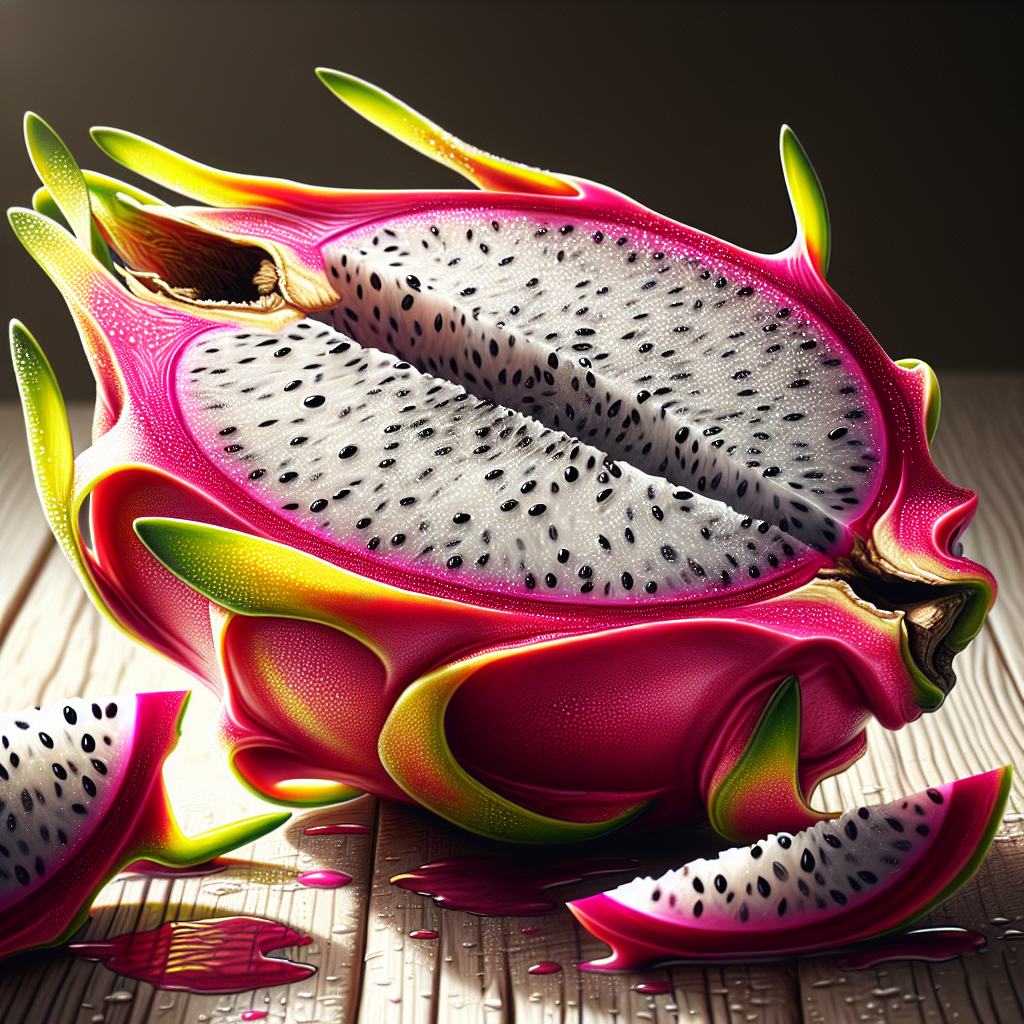
Introduction to Dragon Fruit (Physical Graffiti)
Dragon Fruit (Physical Graffiti), a captivating hybrid cultivar of Hylocereus polyrhizus, stands out in the world of exotic fruits with its eye-catching exterior and delectable taste. Named after the iconic Led Zeppelin album for its bold, graffiti-like yellow stripes on hot pink skin, this variety delivers fruits weighing 0.5-1 lb each, featuring creamy white flesh bursting with sweet-tart flavor notes of kiwi and pear. Originating from selective breeding programs aimed at enhancing visual appeal and marketability, Physical Graffiti has gained popularity among commercial growers and home enthusiasts alike.
This cactus thrives as an epiphyte, naturally climbing trees in its native Central and South American habitats, but adapts remarkably well to trellises, poles, or even container culture in suitable climates. Yields can reach 20-30 fruits per plant annually after 2-3 years of establishment, making it a profitable crop for small-scale farmers. Beyond its culinary uses in fresh eating, smoothies, salads, and desserts, the plant's nocturnal flowers add a dramatic, otherworldly beauty to night gardens. For more on the species, see the general Dragon Fruit (crop) page.
Growers appreciate its drought tolerance, minimal pest issues, and ability to fruit year-round in frost-free zones. Whether you're in USDA zones 10-11 or using greenhouses in cooler areas, Physical Graffiti offers a blend of productivity and aesthetics unmatched by standard pitaya varieties.
Botanical Profile of Dragon Fruit (Physical Graffiti)
Belonging to the Cactaceae family, Dragon Fruit (Physical Graffiti) is a perennial, vining cactus with three-angled stems covered in small, greenish scales and aerial roots for climbing. Stems grow rapidly to 15-20 feet, branching profusely to form a dense canopy. The plant's large, white flowers—up to 14 inches long—bloom at night from summer through fall, exuding a sweet fragrance to attract pollinators like bats and moths. Self-sterile, it requires cross-pollination with compatible varieties like American Beauty or Haley’s Comet for optimal fruit set.
Fruits mature in 30-50 days post-pollination, displaying the signature hot pink rind with vivid yellow stripes that make Physical Graffiti a standout at markets. Internally, the flesh is seed-studded and mildly sweet (Brix 16-20), with higher vitamin C and antioxidant content than many berries. Roots are shallow but extensive, aiding quick water uptake. As a CAM (Crassulacean Acid Metabolism) plant, it opens stomata at night to minimize transpiration, ideal for arid conditions.
Propagation is straightforward via stem cuttings or seeds, though cuttings yield truer-to-type plants. Mature plants can live 20+ years, with peak productivity in years 5-10. This hybrid's vigor surpasses wild types, resisting common stem cracking under stress.
Soil, pH, and Climate Requirements for Dragon Fruit (Physical Graffiti)
Dragon Fruit (Physical Graffiti) demands well-draining, sandy loam or cactus mix soils to prevent root rot, its primary killer. Incorporate 30-50% perlite, pumice, or coarse sand into garden soil, aiming for 6-8 inches of depth around support structures. pH should range 6.0-7.5; test and amend with dolomite lime if below 6.0 to avoid nutrient lockout. Avoid heavy clays or waterlogged areas—raised beds or mounds elevate roots above saturation zones.
Climatically, it flourishes in 75-95°F (24-35°C) daytime temps, tolerating brief dips to 32°F (-0°C) but suffering below 50°F (10°C) with slowed growth. Full sun (6-8+ hours) promotes robust stems and fruit coloration, though 20-30% shade cloth mitigates scorching in extreme heat. Humidity of 60-80% mimics tropical origins, but it adapts to drier air with consistent moisture. Annual rainfall of 25-40 inches suits it, supplemented by irrigation. In marginal zones, use frost protection like row covers. For heat management tips, check this Why Summer Heatwaves Are Silently Killing Small Farm Yields - And 7 Organic Strategies to Fight Back post.
Mulch with organic matter (coconut coir, bark) to retain moisture and suppress weeds, but keep 4-6 inches from the base to deter rot.
Step-by-Step Planting & Propagation
Propagation: Take 12-18 inch stem cuttings from healthy, mature plants in spring. Cure cuts for 7-10 days in shade to callus, then plant 4-6 inches deep in pots with cactus mix. Roots emerge in 2-4 weeks at 75°F+. Seed propagation works but takes 5-7 years to fruit.
Site Prep: Select sunny, wind-sheltered spots. Install 4-6 ft tall concrete, wooden, or metal poles (8-12 inch diameter) spaced 8-10 ft apart. Wrap poles with rough fabric for grip.
Planting: Dig holes 2 ft deep/wide around poles. Plant cuttings or nursery stock at soil line, fanning roots outward. Space plants 6-10 ft apart for air flow. Water sparingly first week, then deeply weekly until established (3-6 months).
Container Growing: Use 20-25 gallon pots or larger with trellises. Repot every 2-3 years. For small farms, vertical systems maximize space.
Pollination Boost: Hand-pollinate at night using soft brushes to transfer pollen between flowers, boosting yields 2-3x.
Care & Maintenance regimes for Dragon Fruit (Physical Graffiti)
Water deeply but infrequently—1-2 inches weekly in dry periods, allowing soil to dry 2-3 inches down between sessions. Overwatering invites root rot. Fertilize monthly during growth (spring-fall) with balanced 10-10-10 or cactus formula (low nitrogen), diluted to 1/2 strength. Micronutrients like magnesium and boron prevent chlorosis.
Prune annually post-harvest: remove dead/dense stems to improve light penetration and airflow. Support heavy fruit loads with slings. Thin buds to 4-6 per stem for larger fruits. Winter care in cool areas: withhold water, protect from frost.
Weed meticulously around bases. Monitor for nutrient deficiencies—yellowing tips signal potassium lack. Integrated regimes yield 10-15 tons/acre commercially.
Pests, Diseases & Organic Management
Common pests include ants, mealybugs, and scale insects. Scout weekly; blast with water or apply neem oil (1-2% solution) weekly. Introduce ladybugs for aphids. For borers, remove infested stems.
Diseases: Phytophthora root rot from poor drainage—use biofungicides like Trichoderma. Anthracnose causes stem lesions; copper sprays prevent. Avoid overhead watering. Learn more organic fixes in Why 90% of Small Farms Fail at Pest Management - And 8 Organic Fixes That Actually Work—wait, no blog link here, but general IPM: rotate, sanitize tools, promote biodiversity.
Resistant Physical Graffiti rarely needs chemicals; beneficial nematodes control soil pests.
Harvesting, Curing & Optimal Storage
Harvest when skin shifts from green to pink with yellow stripes, fruits slightly soft (45-60 days post-bloom). Twist or cut with pruners, leaving 1-inch stem. Yield peaks July-October.
No curing needed; refrigerate at 45-50°F (7-10°C) for 2-3 weeks, 85-90% humidity. Ripen at room temp. Market fresh or process into jams, wines. Postharvest losses minimal with proper cooling.
Companion Planting for Dragon Fruit (Physical Graffiti)
Pair with shallow-rooted Thai Basil or marigold to deter nematodes and attract pollinators. Avoid water-hungry tomato or deep-rooted avocado. Legumes like peas fix nitrogen. Nasturtium traps aphids. Vertical planting saves space; groundcovers suppress weeds. Enhances biodiversity, reduces pests naturally.