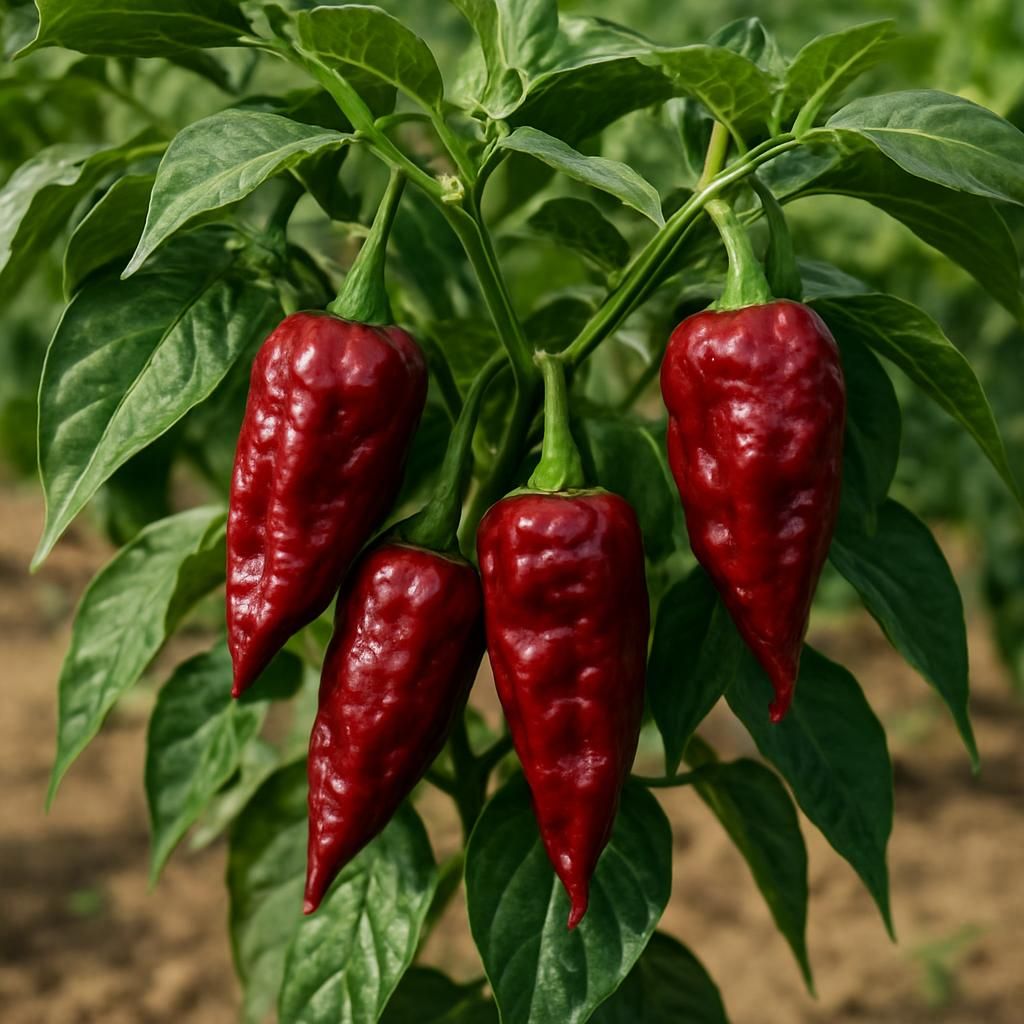
Introduction to Dorset Naga
Dorset Naga is a premium hot pepper variety developed from traditional Chili Pepper genetics and refined in the United Kingdom. It consistently ranks among the world’s hottest peppers, often exceeding 1,000,000 Scoville Heat Units, while delivering complex citrus and tropical fruit notes. Professional growers value Dorset Naga for its reliable yields, attractive deep-red fruits, and strong market demand in specialty food and sauce production. The variety performs well in both protected cultivation and open-field systems when temperature and humidity are properly managed.
Botanical Profile of Dorset Naga
Dorset Naga belongs to the species Capsicum chinense. Plants are compact yet vigorous, typically reaching 60–90 cm in height with a bushy, multi-branched habit. Leaves are medium-green, ovate to lanceolate, and slightly rugose. Flowers are small, creamy-white with green anthers and appear continuously once plants reach maturity. Fruits are lantern-shaped, 4–6 cm long, and mature from pale green to a glossy, deep red. The thick-walled pods contain high capsaicin concentrations concentrated in the placental tissue and seeds. The plant exhibits moderate drought tolerance once established but responds dramatically to consistent moisture and balanced nutrition.
Soil, pH, and Climate Requirements for Dorset Naga
Successful cultivation begins with understanding the precise environmental parameters Dorset Naga demands. The crop thrives in fertile, well-drained soils with high organic matter content. Avoid heavy clay or waterlogged conditions, which promote root diseases. The following table summarizes ideal growing conditions:
| Parameter | Ideal Range | Notes |
|---|---|---|
| Soil Type | Sandy loam to loam | High organic matter, excellent drainage |
| Soil pH | 6.0 – 6.8 | Slightly acidic; avoid alkaline soils |
| Temperature (Day) | 24 – 30 °C | Optimal fruit set and capsaicin production |
| Temperature (Night) | 18 – 22 °C | Prevents flower drop |
| Relative Humidity | 60 – 75 % | Higher humidity increases disease risk |
| Sunlight | Full sun, minimum 8 hours | Essential for maximum heat and yield |
| Frost Tolerance | None | Protect below 10 °C |
Step-by-Step Planting & Propagation
Dorset Naga is almost exclusively propagated by seed. Begin sowing 8–10 weeks before the last expected frost. Use sterile seed-starting mix in 50–72 cell trays. Maintain soil temperature at 26–28 °C with bottom heat for rapid, uniform germination (7–14 days). Once seedlings develop two true leaves, transplant into 7–10 cm pots. Harden off plants for 7–10 days before setting outdoors. Space plants 45–60 cm apart in rows 75–90 cm wide. In cooler climates, grow under polytunnels or in large containers (minimum 20 L) to extend the season. Grafting onto vigorous rootstocks such as Tomato or specialized pepper rootstocks can improve disease resistance and yield in intensive systems.
Care & Maintenance regimes for Dorset Naga
Consistent care maximizes both yield and capsaicin concentration. The following table outlines recommended schedules for water, fertilizer, and pruning:
| Growth Stage | Watering Frequency | Fertilizer Program | Pruning & Training |
|---|---|---|---|
| Seedling (0–4 wks) | Keep evenly moist, never waterlogged | Weekly ¼-strength balanced liquid fertilizer | Pinch at 4–6 leaves to encourage branching |
| Vegetative (4–8 wks) | 2–3 times weekly; 2–3 cm/week | High-nitrogen feed every 10–14 days | Remove lower leaves touching soil |
| Flowering & Fruit Set | Deep watering 2× weekly; mulch | Switch to high-potassium formula weekly | Remove first flowers for stronger plants |
| Fruit Development | Maintain even moisture; avoid stress | Continue K-rich feed; supplement Ca & Mg | Light tipping of lateral shoots |
| Late Season | Reduce frequency as temperatures drop | Cease nitrogen; maintain potassium | Remove diseased or shaded foliage |
Mulch with 5–8 cm of organic material to conserve moisture and suppress weeds. Stake or cage tall plants in windy locations. Monitor leaf color weekly; pale foliage indicates nitrogen deficiency while blossom-end issues signal calcium shortage.
Pests, Diseases & Organic Management
Dorset Naga is susceptible to several common pepper pests and diseases. Aphids and Spider Mites colonize leaf undersides, causing distortion and reduced photosynthesis. Thrips transmit viruses, while Whiteflies excrete honeydew that promotes sooty mold. Fungal threats include Powdery Mildew, Phytophthora, and Fusarium Wilt. Implement integrated pest management: introduce predatory insects such as lady beetles and lacewings, apply neem oil or insecticidal soap at first sign of infestation, and maintain strict greenhouse hygiene. Rotate crops every 3–4 years and solarize soil in high tunnels between seasons. Remove and destroy infected plant material promptly.
Harvesting, Curing & Optimal Storage
Harvest Dorset Naga when fruits reach full color and desired heat level. Wear gloves and eye protection; capsaicin can cause severe irritation. Pick by cutting the peduncle with clean shears to avoid stem damage. Fresh pods store 2–3 weeks at 7–10 °C and 85–90 % humidity. For drying, string whole fruits or halve and dehydrate at 45–50 °C until brittle. Store dried peppers in airtight containers away from light. Fermenting or smoking pods creates value-added products with extended shelf life. Proper post-harvest handling preserves both flavor and pungency.
Companion Planting for Dorset Naga
Strategic companions improve pollination, deter pests, and optimize space. Thai Basil planted nearby repels aphids and thrips while attracting beneficial insects. Marigold roots exude compounds that suppress nematodes. Nasturtium acts as a trap crop for aphids. Avoid planting near Fennel or members of the Brassica family, which may compete for nutrients or harbor shared pests. Interplant with Tomato or Eggplant in rotation systems to break pest cycles. In greenhouse settings, position aromatic herbs along pathways to enhance biodiversity and reduce chemical inputs.