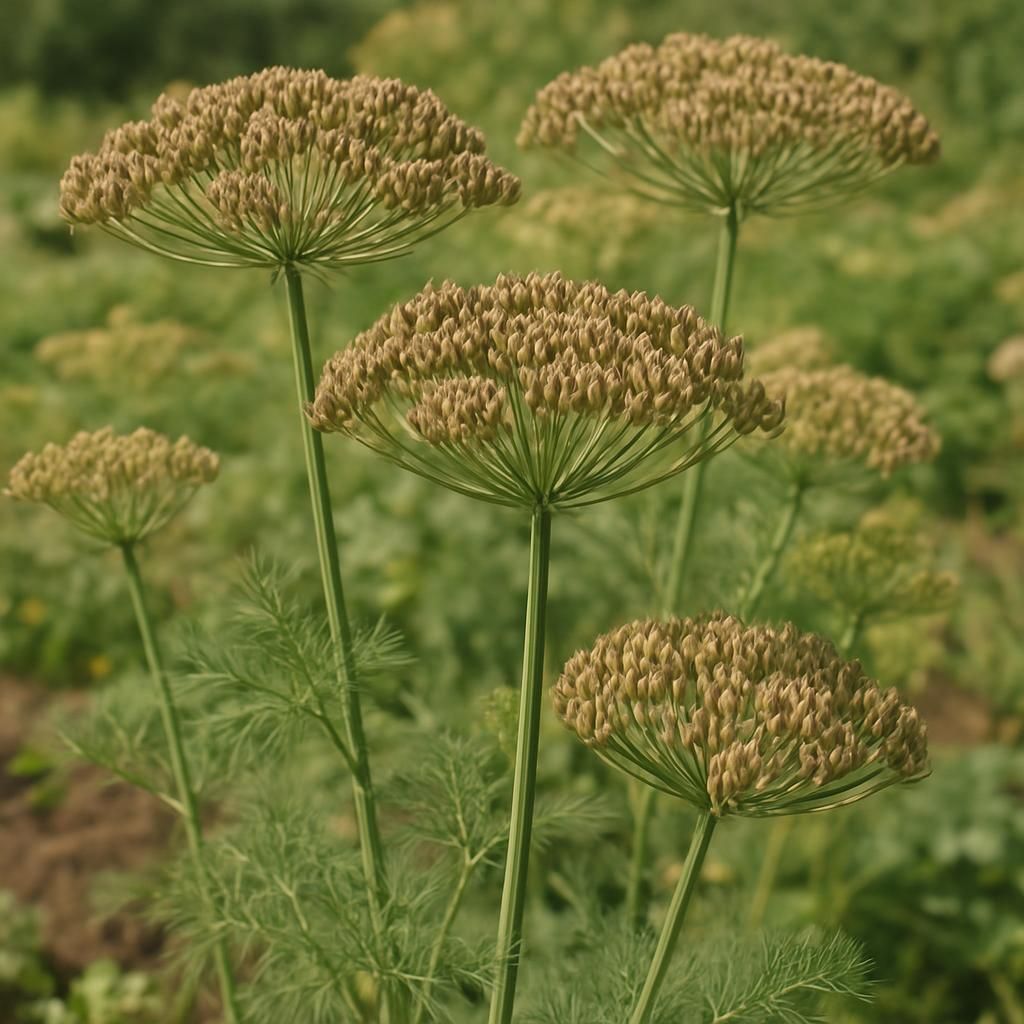
Introduction to Dill Seed (Mammoth)
Dill Seed (Mammoth) is a high-yielding cultivar of the common dill plant, selected for its robust growth habit and exceptional seed heads. Originating from selections of Anethum graveolens, the Mammoth strain produces larger umbels and seeds than standard varieties, making it a preferred choice for spice production, pickling, and essential oil extraction. Farmers and gardeners favor this variety for its reliability across temperate climates and its ability to reach full maturity in 85–100 days.
The plant’s tall stature, often exceeding 1.5 meters, combined with its deep taproot, allows it to thrive in well-drained soils where other herbs may struggle. Dill Seed (Mammoth) is also valued for its dual-purpose nature: both the feathery leaves (dill weed) and the mature seeds are harvested. Its strong aromatic compounds act as natural insect repellents, enhancing its utility in integrated pest management systems.
In commercial agriculture, Mammoth dill is grown both for fresh-market herb bundles and bulk seed sales. Home gardeners appreciate its ease of cultivation from direct sowing and its rapid growth cycle. The variety’s open-pollinated nature also supports seed saving for future plantings.
Botanical Profile of Dill Seed (Mammoth)
Dill Seed (Mammoth) belongs to the Apiaceae family, sharing botanical traits with carrots, parsley, and celery. The plant features a hollow, glaucous stem that can reach 120–180 cm in height. Its compound leaves are finely divided, giving the foliage a delicate, feathery appearance.
Flowers form large, flat-topped umbels up to 25 cm across, each containing numerous small yellow blossoms. These umbels mature into clusters of oval, ribbed seeds measuring 3–5 mm in length. The seeds are rich in essential oils, primarily carvone and limonene, responsible for the characteristic dill aroma.
The root system consists of a deep taproot with lateral feeders, enabling efficient nutrient and water uptake. This architecture contributes to drought tolerance once established. The entire plant is annual in most climates, completing its life cycle within a single growing season.
Soil, pH, and Climate Requirements for Dill Seed (Mammoth)
Dill Seed (Mammoth) performs best in fertile, well-drained loam or sandy loam soils. Heavy clay soils should be amended with organic matter to improve drainage and prevent root rot. The plant prefers full sun exposure of at least six hours daily.
| Parameter | Ideal Range | Notes |
|---|---|---|
| Soil Type | Loam or sandy loam | Well-drained; avoid waterlogging |
| Soil pH | 6.0–7.5 | Slightly acidic to neutral |
| Temperature (Day) | 18–25°C | Optimal vegetative growth |
| Temperature (Night) | 10–15°C | Supports seed development |
| USDA Zones | 3–9 | Annual in cooler zones; may overwinter in 9 |
| Sunlight | Full sun (6+ hours) | Essential for seed production |
| Soil Moisture | Moderate | Consistent until establishment |
Adequate spacing and airflow reduce fungal pressure. In regions with short summers, starting seeds indoors four weeks before last frost can extend the growing window.
Step-by-Step Planting & Propagation
Dill Seed (Mammoth) is best sown directly into the garden because the taproot resents disturbance. Begin by preparing a weed-free bed with compost incorporated to 15 cm depth. Sow seeds 1–2 cm deep in rows spaced 30–45 cm apart, with plants thinned to 20–30 cm within rows.
For successive harvests, sow every two to three weeks from early spring through midsummer. Germination occurs in 7–14 days at soil temperatures of 15–20°C. Keep the seedbed evenly moist during this period.
Transplanting is possible only when seedlings are very young and grown in biodegradable pots. Avoid root disturbance to prevent bolting. In cooler climates, use row covers to protect early plantings from frost.
Care & Maintenance regimes for Dill Seed (Mammoth)
Proper irrigation, nutrition, and pruning schedules maximize both foliage and seed yields. Dill Seed (Mammoth) requires moderate fertility; excessive nitrogen promotes lush foliage at the expense of seed production.
| Growth Stage | Watering Schedule | Fertilizer Application | Pruning/Maintenance |
|---|---|---|---|
| Germination (0–2 wks) | Keep top 5 cm moist daily | None; rely on seed reserves | None |
| Vegetative (2–6 wks) | 2–3 cm per week; deep soak | Side-dress with compost tea at week 3 | Remove lower yellow leaves |
| Flowering (6–9 wks) | Reduce to 1–2 cm weekly | Light potassium-rich organic fertilizer | Stake tall stems if windy |
| Seed Maturation (9–12 wks) | Withhold water 7–10 days before harvest | None | Cut seed heads when 50% brown |
Mulch with 5 cm of straw or leaf mold to suppress weeds and retain moisture. Monitor for lodging during heavy rain events and provide support as needed.
Pests, Diseases & Organic Management
Common pests include aphids, spider mites, and cutworms. Dill Seed (Mammoth) is generally resistant to most diseases, but powdery mildew and root rot can occur in poorly drained soils.
Implement integrated pest management by introducing beneficial insects such as lady beetles and lacewings. Neem oil or insecticidal soap provides effective organic control when applied at the first sign of infestation. Crop rotation every two years prevents soil-borne pathogen buildup.
Remove and destroy infected plant material promptly. Ensure adequate spacing for airflow and avoid overhead watering to minimize fungal issues.
Harvesting, Curing & Optimal Storage
Harvest foliage (dill weed) when plants reach 30–45 cm tall by cutting outer stems. For seed production, allow umbels to turn tan and seeds to harden. Cut entire heads and hang upside down in paper bags in a dry, shaded location.
Thresh seeds by rubbing dried heads gently. Winnow to remove chaff. Store seeds in airtight glass jars in a cool, dark place; viability remains high for up to three years.
Proper curing prevents mold and preserves essential oils. Label batches with harvest date for rotation.
Companion Planting for Dill Seed (Mammoth)
Dill Seed (Mammoth) enhances gardens when paired strategically. It attracts beneficial insects that prey on pests of neighboring crops. Avoid planting near carrots or fennel to prevent cross-pollination and reduced seed quality.
Compatible companions include tomato, cucumber, cabbage, and lettuce. The aromatic foliage deters aphids and cabbage loopers. Interplanting with flowering herbs such as thyme or yarrow further boosts pollinator activity.
Rotate dill with legumes or brassicas the following season to maintain soil health and break pest cycles.