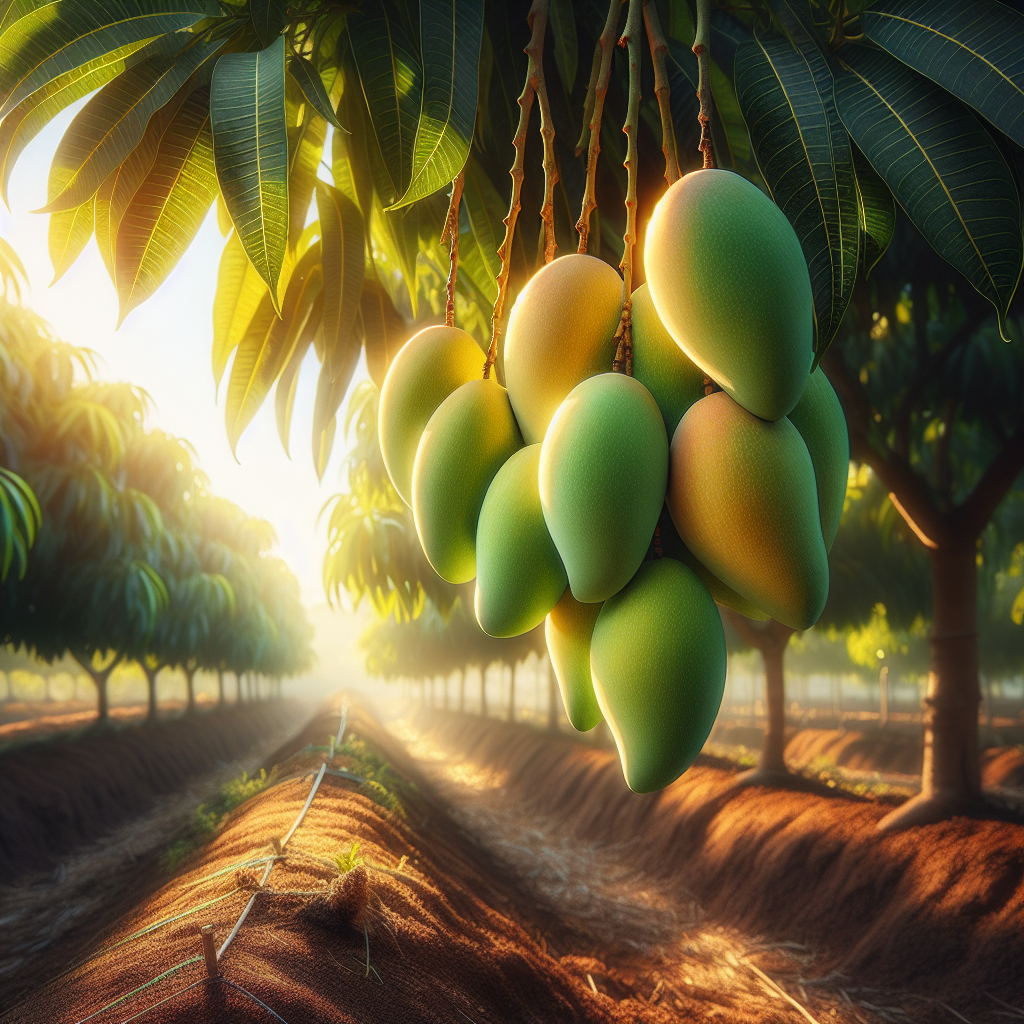
Introduction to Dasheri Mango
Originating from the Dasheri village belt near Malihabad in Uttar Pradesh, this cultivar is one of the most culturally significant mangoes of the Indian subcontinent. It is prized for its elegant oblong fruits, thin to medium peel, deep yellow flesh, strong perfume, and melting texture with relatively low fiber compared with many seedling mangoes. Commercially, it is favored in premium fresh markets because consumers associate it with classic North Indian mango flavor: intensely sweet, aromatic, and lingering.
Dasheri trees are generally vigorous and can become large if left unmanaged, but they respond well to structured pruning in modern orchards. The variety is widely planted in subtropical mango belts where winter is cool enough to induce floral initiation but not cold enough to damage shoots. In terms of crop behavior, Dasheri tends to be sensitive to irregular moisture, excessive vegetative flushing caused by nitrogen overuse, and humid weather during bloom. Growers who understand the balance between vegetative growth and reproductive stress usually achieve the best flowering and fruit quality.
For broader species-level context, see the general Mango guide. Orchardists planning integrated understory systems may also find useful ideas in this companion planting article.
Botanical Profile of Dasheri Mango
Dasheri belongs to the family Anacardiaceae, the same botanical family that includes cashew and pistachio. It is an evergreen fruit tree with a dense canopy, leathery lanceolate leaves, and terminal panicles bearing hundreds to thousands of small flowers. Like other mango cultivars, the inflorescences carry both male and hermaphrodite flowers, but only a very small fraction sets fruit. Fruit retention depends heavily on temperature stability, humidity, nutrient balance, and pollinator activity.
Key field traits of Dasheri include:
- Tree habit: moderately vigorous to vigorous, upright to spreading with age.
- Flush color: young leaves may emerge bronze to reddish before maturing green.
- Panicle character: medium to large, often susceptible to fungal pressure under humid bloom conditions.
- Fruit shape: oblong to elongated-oblong, often slightly curved near the beak.
- Fruit skin: greenish-yellow to yellow on ripening, usually not heavily blushed.
- Flesh: saffron-yellow, soft, juicy, aromatic, nearly fiberless to low fiber.
- Stone: medium sized, with high edible flesh proportion in well-grown fruit.
- Flavor profile: very sweet, rich, floral, with low turpentine notes when harvested properly.
Dasheri is primarily a table mango rather than a processing cultivar. It is especially valued where consumers want ripe fruit with a strong traditional aroma. Compared with some export cultivars, its keeping quality is moderate rather than outstanding, so harvest timing and postharvest handling are critical. Trees may also show alternate bearing tendencies if crop load, pruning, and nutrition are not managed carefully. In other words, a heavy crop one year can suppress flowering the next unless the orchard is balanced.
Soil, pH, and Climate Requirements for Dasheri Mango
This cultivar performs best in deep, well-drained loam to sandy loam soils with good internal drainage and at least 1.5 to 2 meters of effective root zone depth. While mango can survive on poorer soils, premium Dasheri production requires a soil profile that allows rapid drainage after rain but retains enough moisture between irrigations to prevent stress during fruit development.
Ideal soil parameters:
- Texture: sandy loam, loam, or light clay loam with good structure.
- pH: 5.5 to 7.5 is ideal; up to about 8.0 can be tolerated if drainage and micronutrient availability are managed.
- Electrical conductivity: preferably below 1.0 dS/m for young orchards; chronic salinity reduces vigor and fruit set.
- Organic matter: 1.5% to 3% or higher improves microbial activity, moisture buffering, and nutrient holding.
Dasheri does poorly in sites where water stands around the trunk for more than 24 to 48 hours. Waterlogging sharply increases the risk of root decline, gummosis, and reduced nutrient uptake. In heavy soils, raised mounds or berm planting is often more successful than flat planting.
Climatically, Dasheri is especially well adapted to hot subtropical conditions with:
- A dry, mild winter for floral induction.
- Spring temperatures around 20 to 30°C during flowering and early fruit set.
- Summer heat of 35 to 42°C during fruit enlargement and ripening.
- Annual rainfall of roughly 750 to 2500 mm, provided the monsoon does not coincide with peak flowering.
Flowering is best when trees experience a cooler, relatively dry rest period. Excess winter irrigation or late nitrogen can force vegetative shoots instead of floral panicles. Conversely, frost or temperatures below about 4°C can injure panicles and young growth. Extended fog, drizzle, or high humidity during bloom encourage powdery mildew and anthracnose, two major causes of blossom blight and poor fruit retention.
Wind also matters. Hot desiccating winds can cause panicle drying and fruitlet drop, while strong storms can break limbs in heavily laden trees. Windbreaks placed at an appropriate distance from orchard rows help, but avoid dense barriers that trap humidity in bloom season.
Step-by-Step Planting & Propagation
Dasheri should be propagated vegetatively, not from seed, if varietal fidelity is desired. Seedlings do not come true to type and can vary widely in fruit quality, bearing age, and canopy behavior. Commercial planting material is usually veneer grafted, softwood grafted, or epicotyl grafted onto vigorous seedling rootstocks adapted to local soil and climate.
Select planting material. Choose certified, disease-free grafted plants 8 to 18 months old with a healthy graft union, straight stem, 3 to 4 well-spaced shoots, and no signs of bark cracking, scale infestation, or root binding. Avoid plants with swollen cankers at the collar or circling roots in containers.
Prepare the site. Clear perennial weeds and mark planting points according to orchard density. Traditional spacing is 10 x 10 m or 9 x 9 m for standard trees. In managed medium-density systems with pruning, 6 x 6 m to 8 x 8 m may be workable depending on soil vigor, irrigation, and mechanization. Dasheri can become crowded if planted too tightly without a rigorous canopy program.
Dig and fill pits. Typical pit size is 1 x 1 x 1 m in marginal soils, though smaller pits may suffice in fertile loams. Refill with topsoil mixed with 20 to 30 kg well-decomposed farmyard manure, 1 to 2 kg neem cake, and if needed, 500 g rock phosphate. Do not add large quantities of fresh manure or strong chemical fertilizer directly in the pit, as this can burn young roots or cause uneven settling.
Time the planting. Best planting windows are early monsoon in rainfed zones or post-monsoon to early spring in irrigated areas with mild winters. Avoid planting during periods of intense heat, frost risk, or saturated soil.
Plant correctly. Place the graft so the graft union remains 15 to 25 cm above soil level. Planting too deep encourages scion rooting and collar problems. Firm soil gently, water immediately to settle the root zone, and stake if winds are expected.
Create a watering basin and mulch ring. Form a shallow basin 60 to 90 cm wide around the tree, but keep mulch 10 to 15 cm away from direct contact with the trunk. Apply 5 to 8 cm of dry organic mulch to reduce evaporation and suppress weeds.
Train the young tree. After establishment, retain 3 to 4 scaffold branches evenly distributed around the trunk starting about 60 to 100 cm above ground. Remove narrow crotches, rootstock suckers, and crossing shoots.
Propagation by veneer grafting is preferred where skilled nursery labor is available. Rootstock seedlings should be actively growing and pencil-thick. Scion wood should be mature, disease-free, and taken from true-to-type mother trees known for regular bearing.
Care & Maintenance regimes for Dasheri Mango
Irrigation must be adjusted by tree age, soil type, season, and crop stage. Young trees need consistently moist but never saturated soil. As a practical target, keep the upper 20 to 30 cm of soil lightly moist during establishment. In sandy loam, this may require watering every 3 to 5 days in hot weather; in heavier loam, every 7 to 10 days may be sufficient. A simple field test is to squeeze soil from 15 cm depth: it should hold shape briefly without releasing free water or crumbling into dust.
For bearing trees, irrigation strategy changes across the season:
- Pre-flowering rest period: reduce or withhold irrigation, where climate allows, to discourage excessive vegetative flushing.
- Flowering: provide only light irrigation if severe dryness threatens panicle health.
- Fruit set to fruit enlargement: maintain even moisture; avoid cycles of drought and flooding, which increase fruit drop and uneven sizing.
- Pre-harvest: moderate irrigation supports fruit fill, but excess water near maturity can dilute flavor and increase splitting in sensitive conditions.
- Post-harvest: irrigate to support recovery flush and flower bud preparation for the next season.
Overwatering signs in Dasheri include persistent leaf droop despite wet soil, yellowing older leaves, sour-smelling soil, algae growth around the basin, trunk bark darkening near the collar, and reduced shoot extension. Chronic excess moisture often precedes root rot and micronutrient deficiency symptoms because roots lose function in oxygen-poor soil.
Nutrition should be age-based and split through the year. Young trees require modest nitrogen to build canopy, but avoid forcing lush growth late in the season. Mature trees need balanced NPK plus micronutrients, especially zinc, boron, and iron where soils are alkaline. A practical annual program for mature trees often includes organic manure plus split applications of nitrogen and potash, with phosphorus added according to soil test results. Potassium is particularly important for fruit quality, sugar movement, and stress tolerance.
General nutrition principles:
- Apply well-rotted manure once yearly before the monsoon or after harvest.
- Split nitrogen into 2 to 3 doses rather than applying all at once.
- Emphasize potassium from fruit set onward.
- Correct zinc deficiency with foliar zinc sulfate sprays where permitted.
- Correct boron carefully and only in low doses; excess boron is toxic.
Common nutrient disorders include zinc deficiency showing as small, narrow leaves and rosetting; iron deficiency as interveinal chlorosis on young leaves in alkaline soils; and boron deficiency as poor fruit set, internal breakdown, or malformed fruit in severe cases.
Pruning in Dasheri should be purposeful and restrained. Mango fruits on terminal shoots, so indiscriminate heading reduces production. Focus on removing dead wood, diseased twigs, inward-growing branches, and overcrowded canopy centers after harvest. Maintain light penetration and air movement. In high-density systems, annual size control through selective thinning cuts is essential.
Fruit thinning is not always practiced in mango, but in young heavily setting Dasheri trees, selective thinning can improve fruit size and reduce branch breakage. Support overloaded limbs with props where needed.
Orchard floor management matters greatly. Keep a weed-free circle around young trunks at least 1 m wide. In mature orchards, low-growing living covers such as Clover can improve soil tilth and reduce erosion if moisture competition is managed. Aromatic insectary borders such as Thyme and flowering allies like Yarrow can support beneficial insects when placed outside the immediate trunk zone.
Pests, Diseases & Organic Management
Dasheri is susceptible to the major mango pest and disease complex found in humid subtropical orchards. Organic or low-residue management depends on sanitation, orchard aeration, monitoring, and precisely timed interventions.
Major pests include mango hopper, mealybug, fruit fly, scale insects, stem borer, and occasionally thrips or mites. mango hopper is especially damaging during flowering because it sucks sap from panicles and can trigger sooty mold via honeydew deposition. mealybugs often climb trunks from soil or protected crevices and infest panicles and developing fruit.
Organic pest management priorities:
- Scrape loose bark where pests shelter, then destroy residues away from the orchard.
- Apply sticky trunk bands before mealybug movement season.
- Encourage natural enemies by maintaining flowering habitat and avoiding broad-spectrum sprays.
- Use neem-based formulations at labeled rates during early pest buildup, not during peak pollinator activity.
- Deploy fruit fly traps and orchard sanitation; collect and destroy fallen infested fruit.
- Prune and burn stem borer-infested branches where feasible.
The most serious diseases for Dasheri are anthracnose, powdery mildew, bacterial black spot in some regions, sooty mold secondary to sucking pests, and trunk gummosis. anthracnose can infect flowers, young fruit, leaves, and postharvest fruit, especially under wet, warm conditions. powdery mildew is favored by cool nights, dry days, and high relative humidity around bloom.
Disease reduction practices:
- Open the canopy for sunlight and rapid drying.
- Avoid overhead irrigation during flowering and fruiting.
- Remove mummified fruit and infected panicles after the season.
- Maintain balanced nutrition; excess nitrogen increases soft susceptible growth.
- Use approved sulfur or biological fungicidal options for powdery mildew where appropriate.
- Use copper-based products judiciously and in accordance with local regulations, especially as preventive sprays in high-risk periods.
A common orchard mistake is reacting too late. By the time flowers are visibly blackened, much of the crop may already be lost. Monitoring should begin before panicles fully emerge and continue through pea-sized fruit stage.
Harvesting, Curing & Optimal Storage
Dasheri fruit reaches best eating quality when harvested at physiological maturity rather than tree-ripe softness. If picked too early, flavor remains flat, sweetness is reduced, and the flesh may develop uneven ripening around the stone. If left too long on the tree, fruit bruises more easily, shelf life declines, and bird or insect damage increases.
Maturity indicators include:
- Full shoulders near the stem end.
- Development of characteristic fruit size and elongated shape.
- Lightening of peel from dark green to greenish yellow.
- Firm but mature pulp when sampled.
- Specific gravity and dry matter improvements in commercial testing.
Harvest by clipping fruit with a short stalk rather than pulling. This reduces sap burn, a common postharvest issue in mango. Desap the fruit by holding it stem-end down on racks or padded surfaces so latex drains away from the skin. Sap staining can permanently damage appearance and increase decay risk.
After harvest, sort fruit immediately:
- Remove damaged, diseased, undersized, or sap-burned fruit.
- Grade by size and maturity stage.
- Keep harvested fruit in shade; never leave crates in direct sun.
Curing, in practical mango handling terms, means allowing harvested mature fruit to stabilize, complete latex drainage, and begin uniform ripening under controlled conditions. Hold fruit in a clean, ventilated room at around 20 to 24°C for even ripening if marketing locally. For storage, mature green fruit can be kept around 12 to 13°C with 85% to 90% relative humidity. Temperatures much below about 10 to 12°C may induce chilling injury, expressed as uneven ripening, skin pitting, gray flesh patches, or poor aroma development.
Ripe Dasheri is best consumed quickly. Once fully soft and aromatic, shelf life is usually short, often only a few days at room temperature. Do not stack deeply, as the flesh bruises easily. For premium markets, single-layer or padded tray packing is preferred.
Companion Planting for Dasheri Mango
Companion planting around mango should support soil health, pollinator activity, and pest balance without competing heavily for water and nutrients near the trunk. The goal is not to crowd the root zone but to build an ecologically stable orchard floor.
Among the best companions are Clover, Thyme, and Yarrow. Clover functions as a low-growing living mulch and nitrogen-contributing cover, especially useful between rows where irrigation is adequate. Keep it mowed low and avoid letting it grow densely right against young trunks. Thyme is valuable along borders and dry berms because it attracts beneficial insects, tolerates heat, and does not create tall humid cover around the tree base. Yarrow serves as an insectary plant, drawing predatory wasps, hoverflies, and other beneficial species that help regulate orchard pests.
Placement matters more than species choice. Keep the immediate trunk zone clear for the first 2 to 3 years. Plant companions in alleys, berm shoulders, or outer basin margins. In low-rainfall orchards, reduce understory density during peak fruit development to prevent moisture competition. In higher rainfall systems, living covers may be maintained longer to reduce erosion, improve infiltration, and protect soil biology.
Avoid aggressive climbers, tall shading intercrops, and plants requiring frequent overhead irrigation. Also avoid dense vegetation that shelters rodents or increases humidity around the collar. In commercial orchards, companions should always be evaluated in relation to irrigation design, labor access, and harvest logistics.