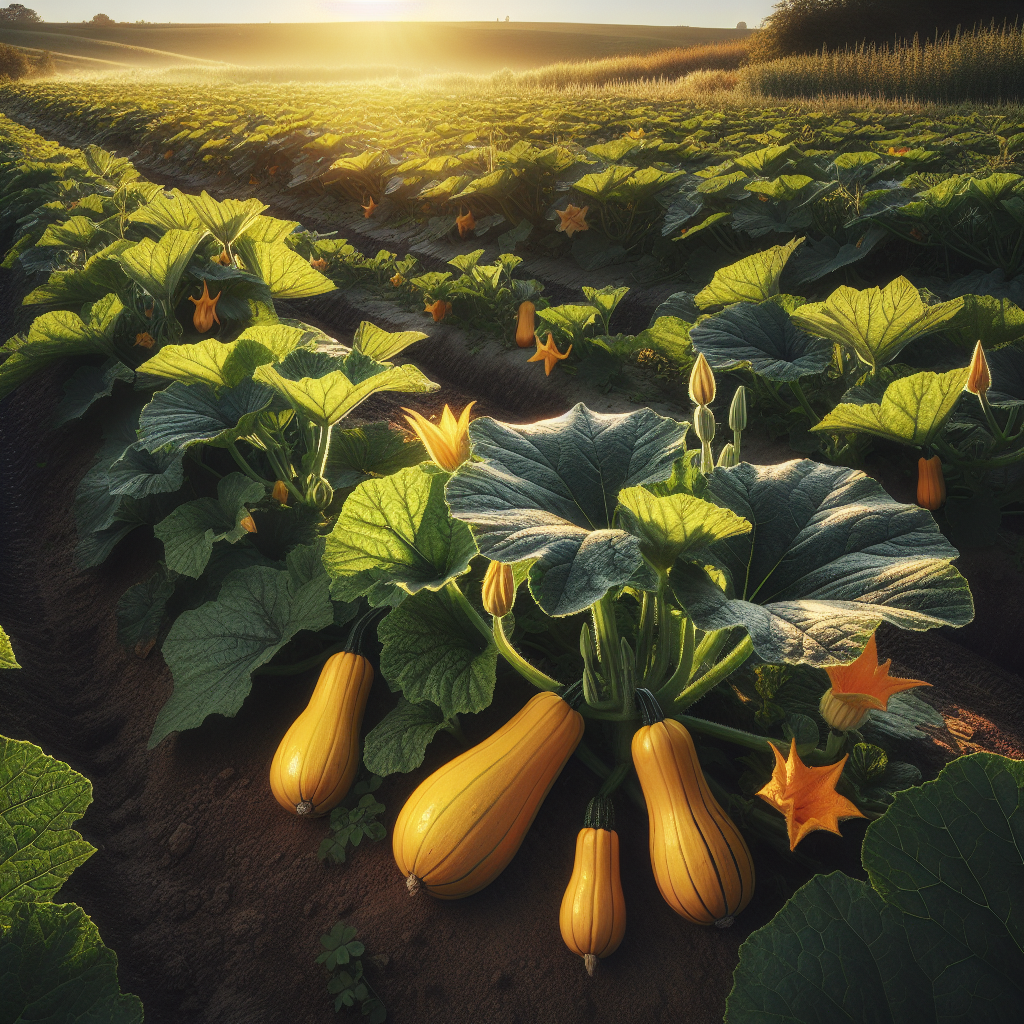
Introduction to Crookneck Squash
A traditional North American summer squash, this plant is grown for its immature fruits, which are harvested while the rind is still soft and edible. The classic crookneck form is usually bright yellow with a bulbous blossom end and a narrowed, curved neck, and it may have either smooth or slightly warted skin depending on cultivar and harvest stage.
Crookneck squash belongs to the same species as zucchini, many pumpkins, and several other summer squashes, but it stands apart in both culinary use and field behavior. It is especially valued for fast maturity, continuous fruiting, and strong performance in home gardens and market gardens where repeated harvests are practical. Historically, summer squashes descend from Mesoamerican domestication of Cucurbita species, and yellow crookneck types became deeply embedded in Southern U.S. gardening traditions because they tolerate heat well, produce heavily, and fit diverse cooking styles from sautés to pickling.
From a production standpoint, crookneck squash is a warm-season, frost-sensitive annual that performs best when growth is uninterrupted. Any early stress such as cold soil, waterlogging, root disturbance, or insect pressure can permanently reduce vigor and lower marketable yield. Professional growers treat the first 30 days after emergence as the most important window for establishing canopy size, root expansion, and early flowering potential.
Botanical Profile of Crookneck Squash
This crop is a bush-form summer squash in the species Cucurbita pepo. Although many people casually group it with all squash types, it is botanically distinct from some winter squash species such as Cucurbita moschata and Cucurbita maxima. That matters because disease susceptibility, pollination compatibility, and fruit morphology can differ significantly between species.
Growth habit is typically compact to semi-bush rather than vining, with a central crown that produces large, rough-textured leaves on hollow petioles. Leaves are broad, palmately lobed, and often slightly prickly due to stiff trichomes. Stems and petioles are succulent and vulnerable to mechanical injury, especially during weeding or harvest.
Crookneck squash is monoecious, meaning each plant bears separate male and female flowers. Male flowers appear first and are carried on long, slender stems; female flowers form later and can be identified by the miniature fruit at the flower base. Flowers open early in the morning and are primarily pollinated by bees. Inadequate pollination causes misshapen fruit, blossom-end shriveling, or tiny fruits that yellow and abort. If you grow other Cucurbita pepo nearby, such as Zucchini, cross-pollination can occur between them, but this affects seed saved for the next generation rather than the current season's fruit quality.
The edible product is a botanical pepo, a specialized berry with a fleshy interior and many flat seeds. For eating quality, fruits are harvested immature, usually before seeds harden and before rind thickening begins. Common cultivar distinctions include smooth yellow crookneck, warted yellow crookneck, early-bearing compact strains, and open-pollinated heirloom lines selected for flavor more than shipping durability.
Soil, pH, and Climate Requirements for Crookneck Squash
This crop demands warm soil, high organic matter, and fast drainage. The ideal soil is a fertile sandy loam or loam with excellent tilth, but crookneck squash can also succeed in clay-based soils if they are deeply amended and never allowed to remain saturated. The root system is moderately shallow and oxygen-sensitive, so compaction and standing water are major yield-limiting factors.
Target a soil pH of 6.0 to 6.8, with 6.2 to 6.5 being especially reliable for nutrient availability. Below pH 5.8, calcium, magnesium, and phosphorus uptake may become uneven, and plants often show reduced vigor. Above pH 7.2, micronutrients such as iron and manganese may become less available, causing interveinal chlorosis on younger leaves. If a soil test shows low calcium, gypsum can improve calcium availability without sharply changing pH, while agricultural lime is the standard correction for acidic soils.
Crookneck squash is a heavy feeder, particularly for nitrogen early, followed by strong demand for potassium during flowering and fruit fill. A productive planting benefits from 2 to 4 inches of finished compost incorporated into the top 6 to 8 inches of soil before planting. Professional beds often aim for soil organic matter above 4%. Excessive raw manure is a mistake: it can stimulate overly lush foliage, delay fruiting, and increase disease pressure.
Temperature is critical. Minimum soil temperature for sowing should be 18 to 21°C (65 to 70°F), though germination may occur more slowly just above 16°C (60°F). Air temperatures of 21 to 32°C (70 to 90°F) are ideal. Growth slows noticeably below 15°C (59°F), and pollen viability and fruit set can decline during prolonged heat above 35°C (95°F), especially if nights remain warm. Frost kills plants outright.
Choose full sun, meaning at least 8 hours of direct light daily. In humid climates, orient rows with prevailing airflow to reduce leaf wetness duration. Raised beds are especially valuable in regions with heavy spring rain because they warm faster and reduce root-zone saturation. For broader bed preparation and fertility-building concepts, see soil health tips.
Step-by-Step Planting & Propagation
Direct seeding is the preferred method because squash seedlings dislike root disturbance. Sow only after all frost danger has passed and the soil has reliably warmed. In short-season regions, seedlings can be started indoors in biodegradable pots 2 to 3 weeks before transplanting, but they must be handled gently and transplanted before becoming root-bound.
- Prepare the bed thoroughly. Remove perennial weeds, loosen soil to at least 8 inches, and incorporate compost plus any soil-test-guided amendments. Shape raised rows or beds if drainage is less than excellent.
- Pre-irrigate if soil is dry. The target is evenly moist, crumbly soil, not muddy ground. A squeezed handful should hold together lightly but break apart with a touch.
- Sow seeds 1 to 1.5 inches deep. In cool edge-of-season conditions, use the shallower end of that range in warmed soil; in hotter, drier conditions, slightly deeper sowing helps maintain moisture around the seed.
- Space bush types 18 to 24 inches apart in rows 3 to 4 feet apart. For high-airflow systems, 24 inches in-row and 4 feet between rows gives easier harvest and lower disease pressure.
- Plant 2 to 3 seeds per station, then thin to the strongest seedling once the first true leaves expand.
- If transplanting, harden plants off for 5 to 7 days. Set them at the same depth they grew in the pot, water immediately, and protect from wind for several days.
- Apply organic mulch only after soil has warmed. Straw or leaf mulch reduces splash-borne disease and suppresses weeds, but thick mulch applied too early can keep spring soils cool.
Germination usually occurs in 5 to 10 days under warm conditions. For succession harvesting, sow every 2 to 3 weeks until midsummer in temperate climates. This is a useful strategy because summer squash plants often decline after sustained disease or borer pressure, and younger plantings maintain production.
Care & Maintenance regimes for Crookneck Squash
Consistent growth is the core principle. Water stress, nutrient swings, and intermittent harvesting all reduce yield quality.
Provide 1 to 1.5 inches of water per week under moderate conditions, and 2 inches or more during hot, windy weather on sandy soils. In practical terms, the root zone should remain evenly moist to a depth of about 6 inches. Use drip irrigation whenever possible. If you check soil 3 inches down and it feels dry and powdery, irrigation is overdue. If the soil is sticky, smells sour, or leaves look limp in the morning despite wet ground, overwatering is likely. Chronic excess moisture leads to shallow rooting, pale leaves, edema, and increased risk of root and crown diseases.
The best irrigation pattern is deep and infrequent enough to encourage rooting, but not so sparse that the plant wilts repeatedly. Morning watering is preferable. Avoid overhead irrigation late in the day because prolonged leaf wetness encourages mildew and foliar disease.
For fertility, side-dress when plants begin to vine or bush out strongly, and again at first heavy flowering if growth appears moderate rather than excessive. A balanced organic fertilizer or one slightly higher in potassium is often effective at this stage. Too much nitrogen after flowering can produce huge leaves and disappointing fruit set. Useful visual cues: dark green, very lush foliage with few fruits suggests excess nitrogen; pale older leaves and slow canopy expansion suggest insufficient fertility.
Weed control matters most in the first month. Cultivate shallowly because roots are near the surface. Once plants spread, healthy canopy cover suppresses later weeds. Mulch helps, but keep it a few inches away from the crown to reduce stem rot and hiding places for pests.
Pollination should be monitored closely, especially in cool or rainy periods when bee activity is low. Poorly pollinated fruit become bulbous on one end, narrow on the other, or abort at marble size. If necessary, hand-pollinate early in the morning by transferring pollen from a freshly opened male flower to the stigma in a female bloom.
Harvest frequency directly affects productivity. Pick fruits every 1 to 2 days once production begins. Allowing fruits to become oversized signals the plant to shift resources from continuous flowering toward seed maturation, which sharply reduces new fruit set.
Pests, Diseases & Organic Management
Crookneck squash is highly rewarding but vulnerable to several major pests and diseases. Integrated organic management works best when it combines sanitation, timing, exclusion, habitat support for beneficial insects, and vigilant scouting.
The most destructive insect in many regions is the Squash Vine Borer. Adults lay eggs near the stem base; larvae bore into stems, causing sudden wilting despite moist soil. Frass that resembles wet sawdust near the crown is a classic sign. Use floating row cover from planting until flowering begins, then remove it for pollination. In known borer areas, wrap the lower stem with foil or fabric collars and succession-plant to outrun peak pressure. If infestation occurs, some growers slit the stem lengthwise, remove larvae, and mound soil over nodes to encourage rerooting, though bush squash has less recovery potential than vining types.
Squash Bugs feed by piercing leaves and stems, causing stippling, wilting, and reduced vigor. Their bronze egg clusters are usually found on leaf undersides. Crush eggs, remove nymphs early, and eliminate old crop residue promptly after final harvest. Boards placed near plants can trap adults overnight for morning removal.
Cucumber Beetles are dangerous not only because they chew seedlings and flowers, but because they can spread Bacterial Wilt. Protect young plants with row cover, use trap crops cautiously, and maintain excellent weed control around the field edge. Severe feeding on cotyledons and first true leaves can permanently stunt plants.
Aphids may colonize undersides of leaves, leading to curling, sticky honeydew, and virus transmission. Strong water sprays, insecticidal soap, and habitat for beneficial insects are usually sufficient unless infestations are intense.
Among diseases, Powdery Mildew is the most common late-season problem. It appears as white, floury patches on leaves, eventually reducing photosynthesis and fruiting. Minimize it with wide spacing, drip irrigation, resistant cultivars where available, and removal of heavily infected leaves only when this does not overexpose fruit. Organic fungicides such as potassium bicarbonate, sulfur, or biologicals work best preventively or at first symptom.
Downy Mildew is less common in some regions but more aggressive when present, showing angular yellow lesions and gray-purple sporulation on leaf undersides. Prompt sanitation and regional forecasting awareness are important.
Bacterial Wilt causes rapid collapse, often beginning on single runners or leaves, and is vectored by Cucumber Beetles. Once infected, plants usually cannot be cured and should be removed.
Viral diseases such as Zucchini Yellow Mosaic Virus, Cucumber Mosaic Virus, and Watermelon Mosaic Virus can cause mottling, distorted leaves, and malformed fruit. Control vectors early, rogue severely affected plants, and avoid handling healthy plants after working in infected ones.
Good sanitation is non-negotiable: rotate out of cucurbits for at least 2 to 3 years, destroy crop residue after harvest, and never compost diseased material unless your compost system reliably reaches sanitizing temperatures.
Harvesting, Curing & Optimal Storage
Harvest for eating quality, not maximum size. The best crookneck squash are usually picked at 4 to 7 inches long, while skin is glossy to slightly matte but still tender, seeds are undeveloped, and the blossom end is full without fibrous coarseness. Oversized fruits become seedy, watery, and less productive for the plant overall.
Use a knife or pruners to cut fruits with a short stem attached rather than twisting aggressively, which can tear stems and damage the crown. Harvest in the cool morning for best shelf life. Handle gently: even minor abrasions can accelerate shriveling and decay.
Unlike winter squash, crookneck squash is not cured for long-term storage. At most, allow surface moisture to dry and field heat to dissipate in a shaded, well-ventilated area for a few hours after harvest. Do not leave fruit in sun, where skin rapidly softens and internal quality declines.
For storage, hold at 7 to 10°C (45 to 50°F) with 90 to 95% relative humidity. This range limits chilling injury while slowing moisture loss. Temperatures below about 5°C (41°F) can cause pitting, watery breakdown, and rapid decay after removal from storage. In a home setting, use the warmest part of the refrigerator only briefly, ideally less than 4 to 7 days, or keep fruit in a cool cellar or cool room if available. Commercially, summer squash is typically sold quickly because quality is best when fresh.
Signs of postharvest decline include dull, rubbery skin; shriveling at the neck; softened blossom ends; and water-soaked lesions. Wash only immediately before use, not before storage, unless food safety conditions require washing and complete drying.
Companion Planting for Crookneck Squash
The best companion strategy combines pollinator support, pest distraction, and efficient vertical or temporal layering. Traditional interplanting with Corn can work well when spacing is generous and light competition is managed. Corn creates partial wind buffering and fits into classic warm-season polycultures, though it should not be planted so densely that squash loses airflow or sunlight.
Nasturtium is one of the most useful companions around bed edges because it attracts pollinators, may distract Aphids and some beetles, and does not strongly compete with the squash root zone when kept peripheral. Radish can be used as a quick, early intercrop before squash canopy expansion; it helps mark rows and can be harvested before the squash needs full space. Some growers also pair squash with low-growing Clover in pathways or adjacent alleys to reduce erosion and support beneficial insects, but living mulches must be managed carefully so they do not compete for water during establishment.
Avoid crowding crookneck squash with other heavy feeders in the same immediate root zone, and do not let companion plantings reduce morning sun or trap humidity. Strong companion systems are supportive, not congested. The most practical layout is often to keep companions on the perimeter, row ends, or pathways while preserving full airflow around the main crop.