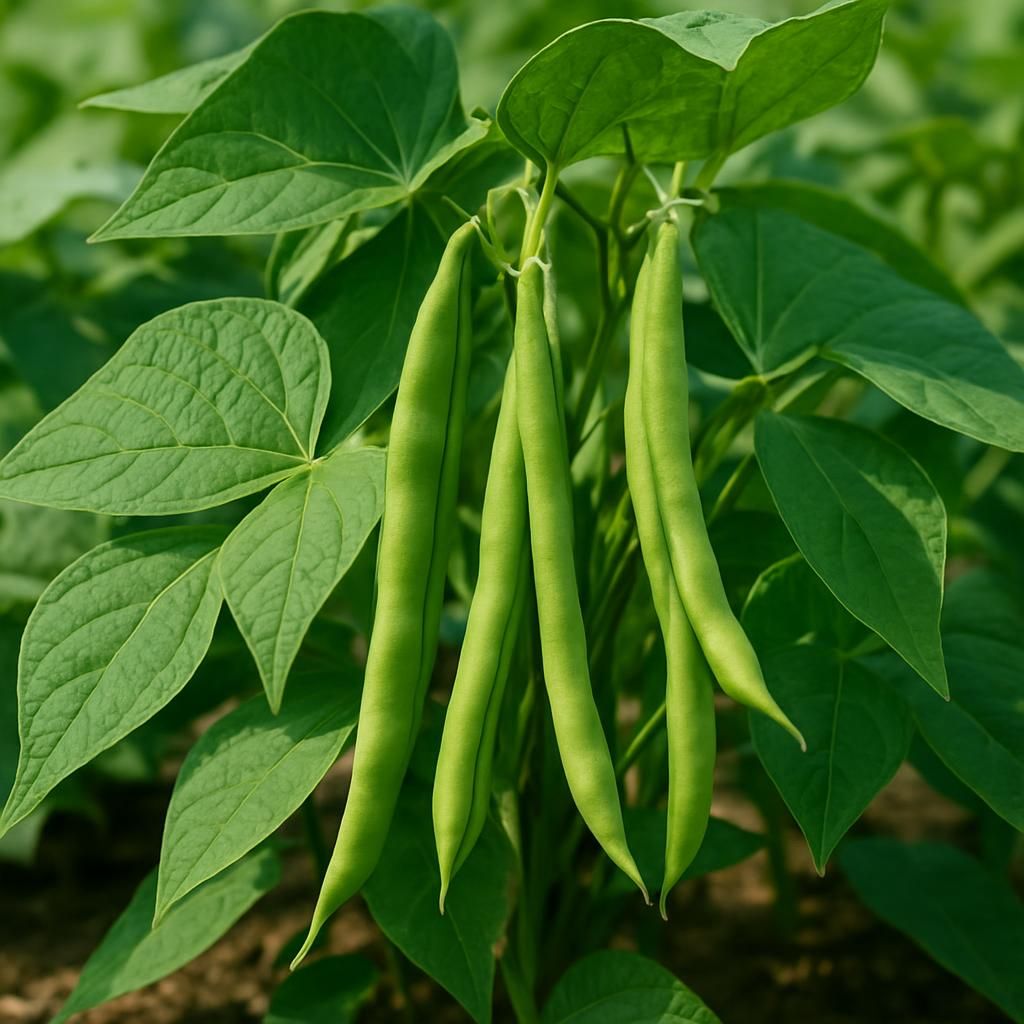
Introduction to common beans
Common beans (Phaseolus vulgaris) rank among the most widely cultivated legumes worldwide, providing essential dietary protein, fiber, and micronutrients to billions of people. Grown on every continent except Antarctica, they serve both subsistence farmers and commercial operations with bush and pole growth habits offering flexibility in production systems. Their ability to form symbiotic relationships with Rhizobium bacteria allows them to fix atmospheric nitrogen, improving soil fertility for subsequent crops in rotation.
Successful commercial production requires precise attention to soil temperature, moisture management, and timely harvest to maximize both yield and quality. Varieties range from green snap beans harvested immature to dry beans left on the plant until full maturity. This guide delivers actionable, research-backed practices suitable for smallholders and large-scale growers alike.
Botanical Profile of common beans
Common beans belong to the Fabaceae family and exhibit either determinate (bush) or indeterminate (pole) growth habits. Bush types typically reach 30-50 cm in height and mature in 50-65 days, while pole types can climb 2-3 meters and require trellising. Leaves are trifoliate with ovate leaflets, and flowers are white, pink, or purple depending on cultivar. Pods vary from flat to cylindrical and contain 4-10 seeds each.
The crop is photoperiod-sensitive in some varieties, but most modern cultivars are day-neutral. Roots develop extensive lateral systems with nodules housing nitrogen-fixing bacteria. Understanding these botanical traits helps growers select appropriate varieties and manage canopy architecture for optimal light interception and airflow.
Soil, pH, and Climate Requirements for common beans
Common beans demand well-drained, fertile soils with good structure. Heavy clay soils increase disease pressure while sandy soils require frequent irrigation. Ideal soil temperature at planting depth (5 cm) should be at least 15 °C. The following table summarizes optimal conditions:
| Parameter | Ideal Range | Notes |
|---|---|---|
| Soil pH | 6.0–7.0 | Below 5.5 increases aluminum toxicity |
| Soil Temperature | 15–29 °C | Germination fails below 10 °C |
| Air Temperature | 18–27 °C day / 12–18 °C night | Heat above 32 °C causes blossom drop |
| Annual Rainfall | 400–800 mm | Supplemental irrigation needed in dry periods |
| Altitude | 0–2,500 m | Higher elevations slow maturity |
| Soil Type | Loam to sandy loam | Good drainage essential |
Step-by-Step Planting & Propagation
- Test soil and amend to reach pH 6.0–7.0 with lime or elemental sulfur as needed.
- Inoculate seed with Rhizobium phaseoli strain specific to common beans immediately before planting.
- Sow seed 2.5–4 cm deep in rows 45–75 cm apart (bush) or 75–90 cm (pole with trellis).
- Maintain in-row spacing of 5–8 cm for bush types and 10–15 cm for pole types.
- Plant when soil temperature reaches 15 °C and risk of frost has passed.
- Irrigate lightly after planting to settle soil and initiate uniform germination.
Direct seeding is preferred; transplants are rarely used due to taproot sensitivity. For successive harvests, sow every 10–14 days until 60 days before expected frost.
Care & Maintenance regimes for common beans
Timely irrigation, balanced nutrition, and canopy management are critical for high yields. The table below outlines recommended schedules:
| Growth Stage | Irrigation Frequency | Fertilizer Application | Pruning / Training |
|---|---|---|---|
| Pre-plant | None | Incorporate 20–30 kg N, 40–60 kg P₂O₅ | None |
| Emergence–V4 | 15–20 mm every 4–5 days | Side-dress 20 kg N if needed | None |
| Flowering–Pod set | 25–30 mm weekly | Foliar micronutrients (Zn, B) if deficient | Remove lower leaves for airflow (pole) |
| Pod fill–Maturity | Reduce to avoid cracking | None | Continue trellising pole types |
Avoid excess nitrogen after flowering to prevent excessive vegetative growth at the expense of pods.
Pests, Diseases & Organic Management
Major insect pests include Bean Aphid, Mexican bean beetle, and bean leaf beetles. Monitor weekly and use insecticidal soaps or neem oil at threshold levels. Common diseases are Bean common mosaic virus, halo blight, and Fusarium root rot. Use certified seed, practice 3–4 year rotations, and remove crop debris to reduce inoculum.
Biological controls such as Bacillus thuringiensis for caterpillars and predatory beetles for aphids provide effective organic suppression. Maintain plant spacing and avoid overhead irrigation to minimize foliar disease.
Harvesting, Curing & Optimal Storage
Harvest snap beans when pods are 7–10 cm long but before seeds bulge. For dry beans, wait until 80–90 % of pods have turned tan and seeds rattle. Pull entire plants or pick pods selectively and dry to 12–14 % moisture. Store in cool (10–15 °C), dry conditions with <65 % relative humidity. Use hermetic bags or sealed containers to prevent Bruchids infestation.
Proper curing prevents mold and maintains germination viability for seed use. Aerate bulk storage regularly to equalize moisture.
Companion Planting for common beans
Common beans pair well with Corn and Squash in the traditional Three Sisters system, where corn provides support, beans fix nitrogen, and squash suppresses weeds. Other beneficial companions include Carrot, Celery, and Nasturtium which deter pests. Avoid planting near Onion, Garlic, or Chives as alliums can inhibit bean growth. Rotate beans with non-legumes every season to break disease cycles and maintain soil health.