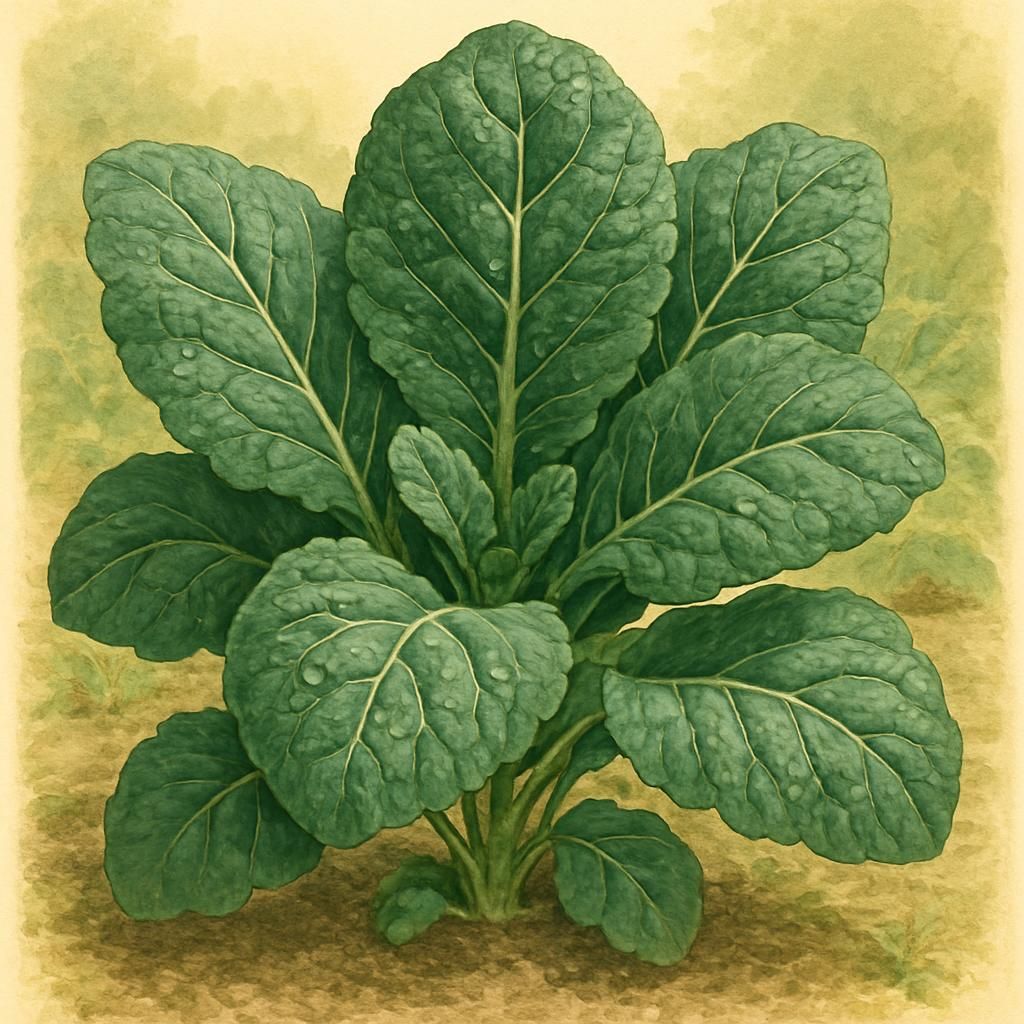
Introduction to Collards (Vates)
Collards (Vates) are renowned for their robustness and exceptional nutrient profile, making them a staple in many gardens and kitchens. These leafy greens, belonging to the Brassica oleracea species, are a favorite in southern culinary traditions due to their rich flavors and high vitamin content.
Botanical Profile of Collards (Vates)
Collards (Vates) are a variety of Brassica oleracea, which also includes Cabbage, Broccoli, and Kale. They are characterized by broad, dark blue-green leaves that form a loose head, and they can grow up to 2 feet in height. The plant is biennial but is primarily grown as an annual.
Soil, pH, and Climate Requirements for Collards (Vates)
Collards (Vates) thrive in a variety of conditions but have specific requirements for optimal growth:
| Parameter | Ideal Conditions |
|---|---|
| Soil Type | Well-drained, loamy soil |
| pH Level | 6.0 - 7.5 |
| Temperature | 60-75°F (15-24°C) |
| Sun Exposure | Full sun to partial shade |
Step-by-Step Planting & Propagation
- Timing: Best planted in early spring or late summer to avoid peak summer heat.
- Site Selection: Choose a site with full sun exposure and rich, well-drained soil.
- Soil Preparation: Amend the soil with compost to enhance drainage and nutrient content.
- Planting:
- Seeds: Directly sow seeds ¼ to ½ inch deep, spacing them about 18-24 inches apart in rows.
- Transplants: If using transplants, spacing should be similar, and they should be planted at the same depth as they were in pots.
- Watering: Ensure consistent moisture without waterlogging the soil.
Care & Maintenance regimes for Collards (Vates)
Proper care is crucial for maintaining healthy collards.
| Care Aspect | Regimen |
|---|---|
| Watering | 1 inch per week, more during dry periods |
| Fertilizing | Apply a balanced fertilizer every 4-6 weeks |
| Pruning | Remove yellowing leaves to reduce disease |
Pests, Diseases & Organic Management
Collards (Vates) can be affected by various pests and diseases:
- Aphids: These can be controlled with neem oil or insecticidal soap.
- Cabbage Worms: Use Bt (Bacillus thuringiensis) as an organic control.
- Spider Mites: Introduce natural predators like ladybugs or apply horticultural oil.
- Diseases: Clubroot and downy mildew are common diseases, managed by crop rotation and ensuring good air circulation.
Harvesting, Curing & Optimal Storage
- Harvesting: Begin harvesting leaves from the bottom of the plant once they reach mature size, usually around 10-12 inches.
- Curing: Not typically necessary for collards; however, washing and drying thoroughly can increase storage life.
- Storage: Collard leaves store well in the refrigerator for up to a week if kept in plastic bags or airtight containers.
Companion Planting for Collards (Vates)
Collards benefit from companion planting with certain species that improve growth or deter pests:
- Onions: Help repel aphids and caterpillars.
- Nasturtium: Attracts aphids away from collards.
- Marigold: Acts as a pest deterrent.
For further sustainable farming practices, refer to The Forgotten Art of Fall Soil Revival: 8 Organic Strategies for Small Farm Resilience.
Consider expanding your crop diversity by incorporating Soybeans or Dragon Fruit for enhanced yield and variety in your garden.