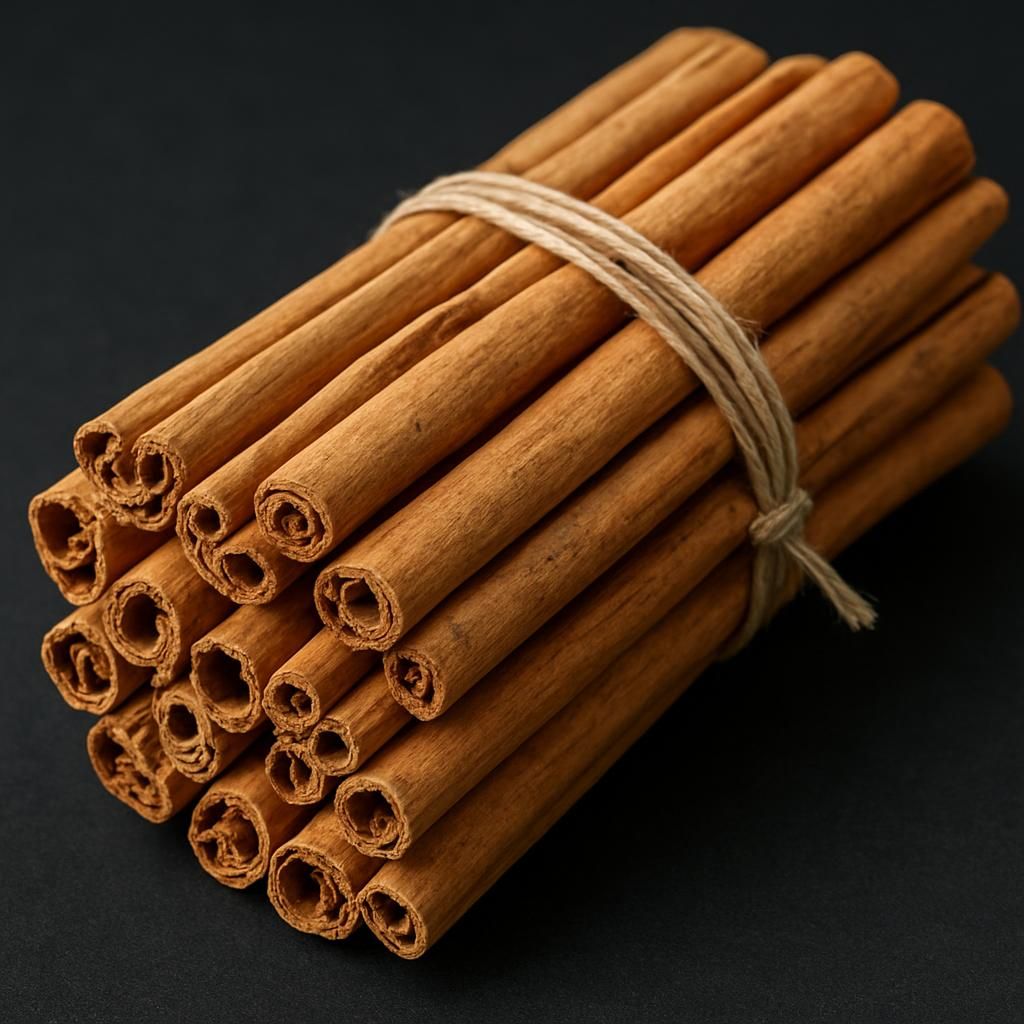
Introduction to Cinnamon (Ceylon - Alba)
Ceylon cinnamon, scientifically known as Cinnamomum verum, is the only species recognized as true cinnamon. The Alba grade represents the highest commercial standard, consisting of the thinnest, most delicate quills harvested from young shoots. Unlike the thicker, more pungent cassia varieties, Ceylon cinnamon offers a sweet, citrusy aroma with minimal coumarin, making it the preferred choice for gourmet, medicinal, and export markets.
Commercial cultivation of Alba-grade Ceylon cinnamon requires precise management of young coppice shoots, rigorous selection during harvest, and meticulous curing techniques. The crop thrives in tropical lowlands with well-distributed rainfall and benefits from consistent agronomic practices that promote rapid, straight growth of harvestable stems. Successful growers focus on clonal propagation of superior Alba selections, maintaining soil fertility through organic amendments, and implementing integrated pest management to protect both quality and yield.
Global demand for authentic Ceylon cinnamon continues to rise as consumers and food processors seek lower-coumarin alternatives to cassia. Establishing a productive Alba plantation involves careful site selection, long-term soil health strategies, and adherence to international quality standards that begin in the field.
Botanical Profile of Cinnamon (Ceylon - Alba)
Cinnamomum verum is an evergreen tree in the Lauraceae family that can reach 10–15 meters in height when left unpruned. In commercial Alba production, plants are maintained as multi-stemmed shrubs through regular coppicing. The bark is thin, smooth, and highly aromatic, containing essential oils rich in cinnamaldehyde, eugenol, and linalool. Leaves are opposite, ovate to elliptic, with prominent veins and a glossy upper surface.
The Alba cultivar is distinguished by its exceptionally thin bark, straight stem growth, and high essential-oil concentration even in young shoots. Flowers are small, pale yellow, and borne in axillary panicles, followed by dark purple drupes containing a single seed. The root system is relatively shallow and fibrous, making the species sensitive to waterlogging and mechanical damage.
Alba selections exhibit moderate genetic variability; clonal propagation through cuttings or air-layering is therefore essential to maintain consistent quill quality. Understanding the plant’s phenology—particularly the timing of flush growth and bark lignification—allows growers to optimize harvest windows for the thinnest, most valuable grades.
Soil, pH, and Climate Requirements for Cinnamon (Ceylon - Alba)
Ceylon cinnamon performs best on deep, well-drained sandy loam to loam soils rich in organic matter. The species is intolerant of saline or heavy clay soils that impede drainage. A slightly acidic to neutral pH range supports optimal nutrient uptake and essential-oil synthesis.
| Parameter | Ideal Range | Notes |
|---|---|---|
| Soil Type | Sandy loam to loam | Deep, friable, high organic matter |
| Soil pH | 5.5 – 6.5 | Avoid alkaline conditions |
| Temperature | 20 – 30 °C | Optimal growth; frost sensitive |
| Annual Rainfall | 1500 – 2500 mm | Well-distributed; supplemental irrigation if dry spells exceed 3 weeks |
| Altitude | 0 – 500 m | Lowland tropics preferred |
| Relative Humidity | 70 – 85 % | Supports lush vegetative growth |
| Light | Full sun to partial shade | Young plants benefit from light shade |
Site preparation should include deep ripping or plowing followed by incorporation of well-rotted compost or farmyard manure at 10–15 t/ha. Raised beds or contour ridges are recommended on flat land prone to temporary waterlogging.
Step-by-Step Planting & Propagation
- Select disease-free mother plants of verified Alba clonal lines. Semi-hardwood cuttings 15–20 cm long with 3–4 nodes are taken during the active growth flush.
- Treat basal ends with 0.3 % indole-3-butyric acid (IBA) rooting hormone and insert into a sterile medium of 1:1 cocopeat and perlite under 70 % shade.
- Maintain high humidity with misting; roots typically form in 6–8 weeks. Once rooted, harden off cuttings for 3–4 weeks before field transplanting.
- Prepare planting pits 60 × 60 × 60 cm, spaced 1.5 m × 1.5 m for intensive production or 2 m × 2 m for wider inter-row access.
- Incorporate 5 kg compost, 100 g rock phosphate, and 50 g muriate of potash per pit. Plant seedlings or rooted cuttings at the same depth as the nursery container.
- Water immediately after planting and apply a 5 cm layer of organic mulch to conserve moisture and suppress weeds.
- Provide temporary shade (30–40 %) for the first 4–6 weeks if planting during peak dry season.
Air-layering is an alternative for rapid multiplication of elite Alba selections when cuttings root poorly.
Care & Maintenance regimes for Cinnamon (Ceylon - Alba)
Consistent cultural practices are critical for producing straight, thin-barked stems suitable for Alba grading. The following table outlines seasonal water, fertilizer, and pruning schedules for mature plantations.
| Season | Water (mm/week) | Fertilizer (per plant) | Pruning Schedule |
|---|---|---|---|
| Pre-monsoon (Mar–May) | 15–20 | 200 g NPK 15-15-15 + 5 kg compost | Remove weak shoots; shape coppice |
| Monsoon (Jun–Sep) | Natural rainfall | 150 g ammonium sulfate + 100 g MOP | Light tipping of new flushes |
| Post-monsoon (Oct–Nov) | 10–12 | 100 g potassium sulfate | Selective thinning of overcrowded stems |
| Dry season (Dec–Feb) | 20–25 | Foliar micronutrient spray (Zn, B, Mg) | Harvest coppice for quills; basal cleaning |
Mulch replenishment twice yearly with 5–7 cm of leaf litter or rice straw maintains soil moisture and adds organic matter. Weed control is achieved through shallow cultivation or cover cropping with legumes during the establishment phase.
Pests, Diseases & Organic Management
Ceylon cinnamon is relatively hardy but can be affected by several pests and diseases that impact bark quality and tree vigor.
Common insect pests include scale insects, mealybugs, and aphids, which excrete honeydew leading to sooty mold. Monitor populations weekly and apply neem oil (0.5 %) or horticultural soap at the first sign of infestation. Spider mites may appear during prolonged dry spells; overhead misting and predatory mites provide effective biological control.
Fungal diseases such as leaf spot diseases and root rot caused by Phytophthora species are managed through improved drainage, avoidance of over-irrigation, and soil drenches with Trichoderma viride at 5 g/L. Regular removal of infected leaves and debris reduces inoculum load.
Nematode pressure, particularly root-knot nematodes, can be mitigated by crop rotation with antagonistic plants such as marigold and solarization of nursery beds prior to propagation.
Harvesting, Curing & Optimal Storage
Alba-grade quills are harvested from 18–24-month-old coppice shoots when bark slips easily. Cut stems at 5–10 cm above ground during the early morning. Immediately scrape outer cork and rub the inner bark to loosen it.
Sticks are bundled and fermented under shade for 24 hours, then sun-dried on raised racks for 3–5 days with daily turning. Proper curing produces the characteristic pale tan color and tight, paper-thin quills. Store finished quills in airtight containers at 10–15 °C and 60 % RH to preserve essential oils for up to 24 months.
Companion Planting for Cinnamon (Ceylon - Alba)
Intercropping cinnamon with nitrogen-fixing species improves soil fertility and provides additional income during the 3–4 year establishment period. Compatible companions include pigeon pea, sesame, and gliricidia grown in alternate rows. Aromatic herbs such as rosemary and thyme planted on bed edges help deter insect pests through volatile compounds.
Avoid planting shallow-rooted vegetables directly under cinnamon during the first two years to prevent root competition. Once the canopy closes, shade-tolerant crops such as turmeric or ginger can be introduced for diversified revenue.
Strategic companion planting also enhances biodiversity, supporting beneficial insects that contribute to natural pest suppression in the cinnamon understory.