Introduction to Chestnut Blight
Chestnut Blight, caused by the fungus Cryphonectria parasitica (Cryphonectria parasitica), represents one of the most catastrophic tree diseases in modern forestry history. First identified in New York City in 1904, it rapidly spread across the eastern United States, decimating over 3 billion American Chestnut trees within decades. This ascomycete fungus, native to Asia, arrived via imported Asian chestnut trees and found the naive American species highly susceptible.
The disease's impact extends beyond ecology; it reshaped Appalachian forests, economies dependent on chestnut wood and nuts, and wildlife habitats. Today, ongoing breeding programs aim to restore chestnuts through hybrid resistance, while organic management strategies offer hope for small-scale growers and orchardists. Understanding this blight is crucial for Chestnut cultivation, especially as climate change may alter its dynamics. Early detection and intervention remain key to protecting surviving stands and new plantings.
Identifying Symptoms & Damage
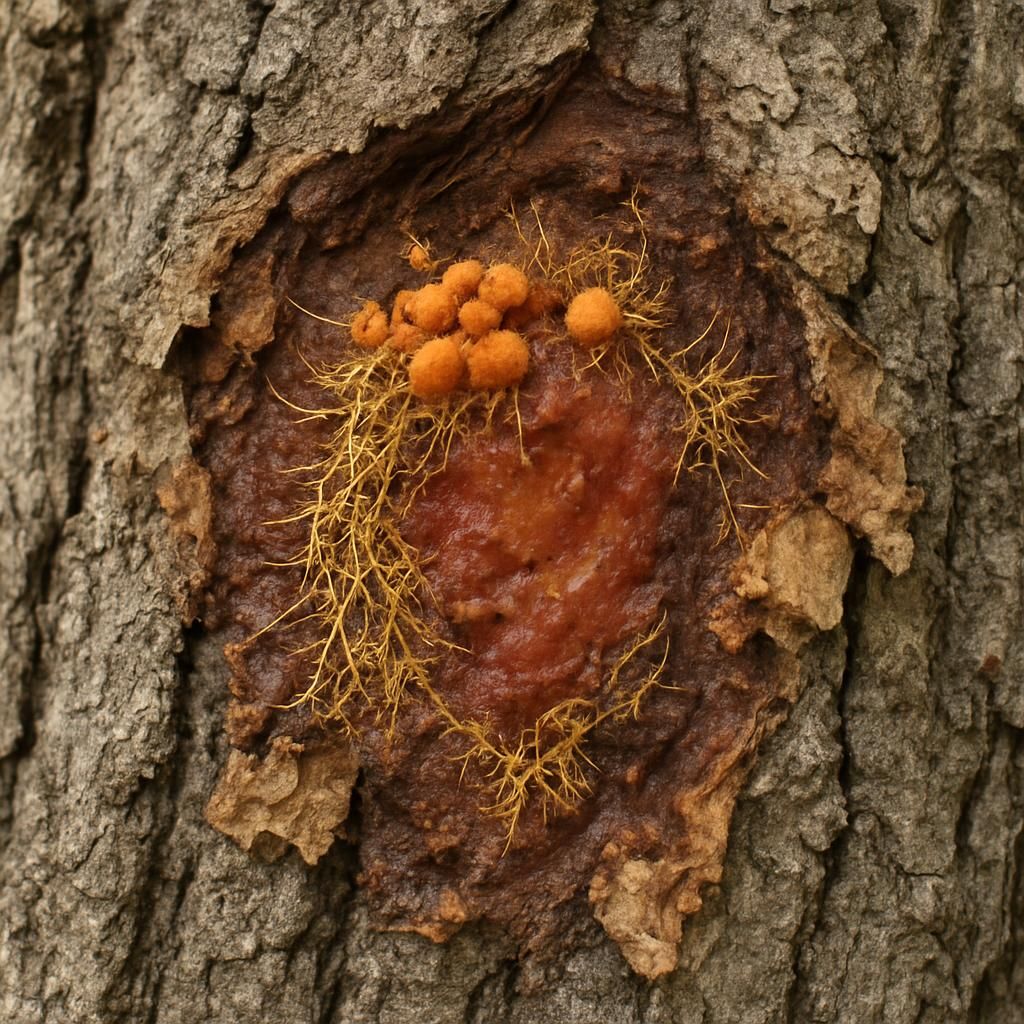
Recognizing Chestnut Blight early is vital for containment. Initial symptoms appear as small, reddish-brown spots on bark, often on the trunk or major branches, typically 1-2 inches in diameter. These spots expand into sunken cankers with raised, orange-brown edges, exhibiting a characteristic "zone line"—a dark, cracked line separating infected from healthy tissue.
Peeling back the bark reveals yellow-orange fungal stromata (spore masses) beneath, which produce tendrils in humid conditions. Cankers girdle stems, causing wilting leaves above, crown dieback, and epicormic sprouting from the base as the tree desperately regenerates. In advanced stages, trees develop multiple cankers, leading to death within 1-5 years for saplings, longer for mature trees.
Damage is not limited to foliage; nuts and burrs fail to develop properly in blighted trees. Differentiate from other issues like Phytophthora root rot (oozing at soil line) or chestnut gall wasp (galls on twigs). Lab confirmation via culturing or PCR is recommended for certainty. Regular scouting in spring and fall, when fungal activity peaks, prevents widespread loss.
Lifecycle and Progression of Chestnut Blight
Cryphonectria parasitica overwinters as stromata in cankers, releasing ascospores and conidia via rain splash and wind during wet springs. Ascospores infect fresh wounds or through lenticels, germinating in 4-6 hours under optimal 75-85°F temperatures and high humidity. Mycelium colonizes bark and cambium, producing enzymes that kill host tissue.
Cankers expand 1-2 inches per month, girdling in 1-3 years. In Europe and Asia, hypoviruses reduce virulence, causing superficial cankers, but North American strains lack this natural control. Progression accelerates in stressed trees, with spores spreading up to 100 meters via wind or birds. Secondary infections occur on sprouts, perpetuating decline.
Seasonal cycles align with rainfall: primary inoculum in spring, expansion summer, sporulation fall. Understanding this enables timed interventions, like pruning during dry periods to minimize spore dispersal.
Environmental Triggers & Risk Factors
Chestnut Blight thrives in temperate climates with cool, wet springs (50-80°F, >70% RH), favoring spore germination. High humidity and wounds from pruning, storms, or borers serve as entry points. Poor air circulation in dense stands increases infection risk, as does drought-stressed trees with compromised defenses.
Soil type matters little, but heavy clay or waterlogged sites exacerbate secondary root rots. Introduced to the U.S. via global trade, risk is highest near ports or nurseries importing Asian stock. Climate shifts may expand range northward, per models predicting wetter conditions. Risk factors include monoculture plantings, lack of diversity with oak or understory plants, and proximity to wild hosts.
Organic Control & Treatment Plans
Organic management emphasizes prevention over cure, as no fungicide fully eradicates established infections. Hypovirulence—using virus-infected, less virulent strains—is a cornerstone biological control. Collect orange stromata from healing cankers, culture on-site, and reintroduce to active cankers by drilling small holes and inserting paste. Success rates reach 80% in treated trees, per studies in Michigan.
Prune infected branches >2 inches diameter during dry weather, removing 4-6 inches beyond cankers, and burn debris immediately. For trunks, cut bark to expose cambium, apply hypovirus or silicon-based sealants. Boost tree vigor with organic mulching (wood chips, 4-6 inches), compost teas rich in mycorrhizae, and foliar kelp sprays for stress resistance.
Integrated plans: Scout biweekly, thin canopies for airflow, avoid wounding. In orchards, interplant with Thyme or Yarrow for biodiversity. For small farms, propagate resistant hybrids like Dunstan or Chinese-American crosses. Check Why Misidentifying Plants Costs Small Farms Thousands - And How AI Camera Diagnosis Fixes It Fast for rapid symptom ID tools. Monitor progress annually; treat sprouts promptly.
Preventing Chestnut Blight in the Future
Prevention starts with resistant stock: Plant hybrids (e.g., Chestnut (Colossal), Bouche de Betizac) bred for 90%+ blight tolerance. Source from certified nurseries, inspect for cankers pre-planting. Site selection: Well-drained slopes with airflow, avoiding lowlands prone to humidity.
Establish buffer zones: Quarantine new plantings, enforce 500-foot separation from wild chestnuts. Cultural practices include annual thinning to 40% canopy openness, mulching to retain moisture without excess, and wound protection with tree paint. Promote biodiversity with understory clover or native shrubs to deter vectors.
Long-term: Participate in breeding programs, vaccinate with hypovirus prophylactically. Soil tests for pH 5.5-6.5 optimize health. For small operations, read Soil Health Mastery: 5 Proven Strategies for Small Farms to Build Fertile Ground Without Breaking the Bank for resilient foundations. Community surveillance networks amplify early detection.
Crops Most Affected by Chestnut Blight
Primarily devastating to American Chestnut, killing mature trees and preventing regeneration. European chestnuts (Castanea sativa) show moderate susceptibility, with cankers on trunks. Asian species (C. mollissima) are largely resistant, serving as rootstocks.
Hybrids vary: Backcrosses (15/16 American) offer restoration potential but require management. Ornamental and edible Chestnut (Bouche de Betizac) plantings face risks in endemic areas. No other major crops affected, though related Fagaceae like oak rarely host. Focus protection on chestnut orchards; diversify with hazelnut or walnut for nut production resilience.