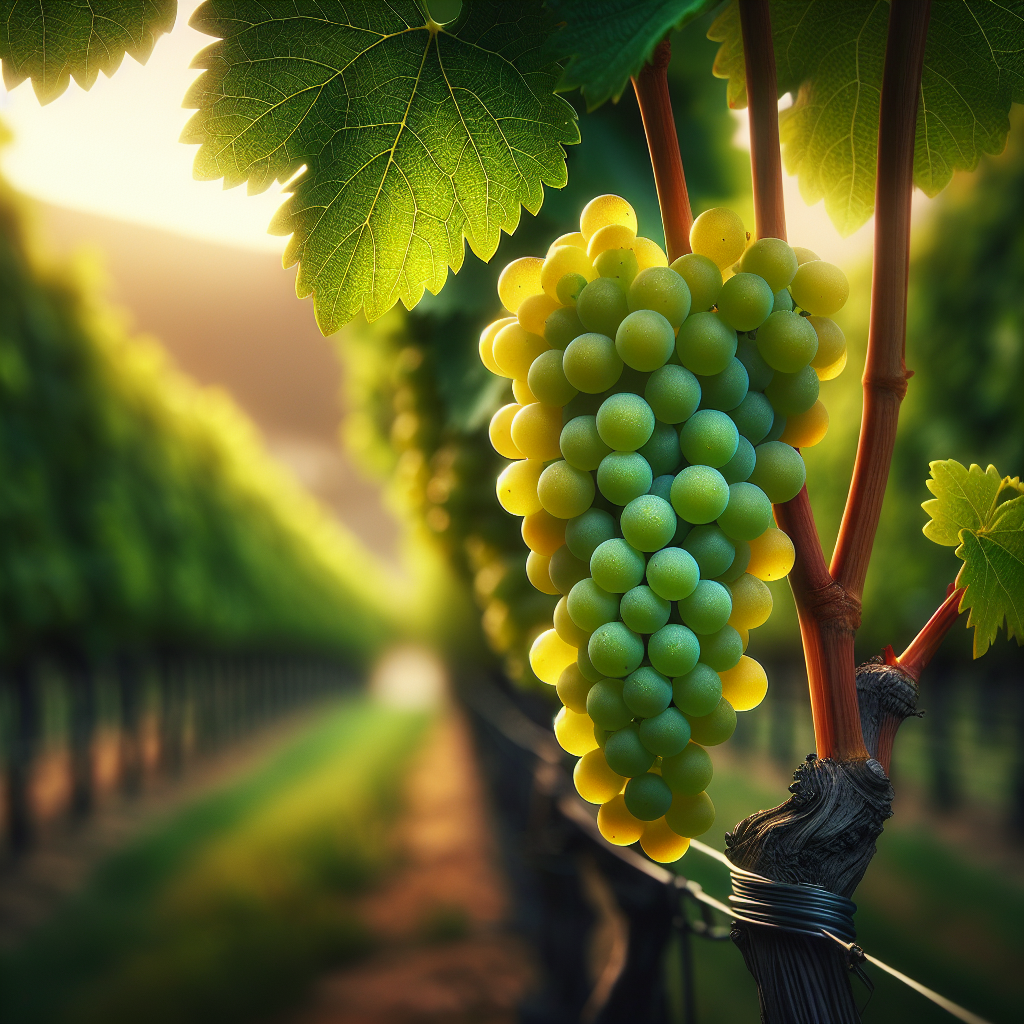
Introduction to Chardonnay Grapes
Originating in eastern France, most likely in Burgundy, this classic white wine grape is believed to be a natural cross between Pinot and Gouais Blanc. It has become globally important because it can produce dramatically different styles depending on site, climate, rootstock, harvest timing, and winemaking approach. In cool regions it often develops green apple, lemon, and mineral notes; in warmer regions it trends toward stone fruit, melon, and tropical character.
It is especially valued because it ripens relatively early compared with many other vinifera cultivars, which can reduce late-season rain risk, but that same earliness also makes it vulnerable to spring frost. Chardonnay is often described as “forgiving” in the winery, yet in the vineyard it is exacting: excessive vigor can dilute flavor, poor drainage can weaken roots, and improper crop load can flatten acidity and concentration. For a broader foundation on vineyard species and management, see our Grapes guide.
Commercially, Chardonnay is grown for still wines, sparkling wines, and blends. For sparkling production, growers usually target earlier harvests with lower sugar and firmer acidity. For barrel-fermented or full-bodied table wines, growers may allow slightly longer hang time, while carefully avoiding shrivel, sunburn, or loss of natural acid balance.
Botanical Profile of Chardonnay Grapes
This cultivar belongs to the family Vitaceae and the species Vitis vinifera. It is a deciduous woody perennial vine with a climbing growth habit, tendrils opposite the leaves, and compound inflorescences that develop into grape clusters. Chardonnay vines are generally moderate in vigor, though vigor varies strongly by rootstock, soil depth, fertility, and water availability.
Leaves are typically medium-sized, orbicular to slightly pentagonal, and often weakly lobed, with an open petiolar sinus in many clones. Young shoot tips can show light green to bronze tones. Clusters are usually small to medium, cylindrical to conical, and often fairly compact, which is important agronomically because compact bunch architecture increases risk of bunch rot under humid or rainy conditions.
Berries are small to medium, round, and green-yellow at maturity, often developing golden hues on the sun-exposed side. Skins are relatively thin, which contributes to vulnerability to splitting and Botrytis under wet conditions, though for some sparkling and dessert styles limited noble rot can be desirable. Budbreak is early, flowering is relatively early, and ripening is early to mid-season. This developmental calendar is one reason Chardonnay performs well in many temperate wine regions.
Clonal selection matters greatly. Some clones are chosen for loose clusters and lower rot risk, others for high yields, and others for concentration and low berry size. In professional vineyards, clone and rootstock pairing is not a cosmetic choice; it shapes vigor balance, nutrient uptake, drought response, and fruit chemistry.
Soil, pH, and Climate Requirements for Chardonnay Grapes
This variety performs best in well-drained soils with moderate water-holding capacity. Ideal textures include gravelly loams, sandy loams, limestone-rich loams, and structured clay-loams with excellent internal drainage. It can produce exceptional fruit on calcareous soils, especially where active lime is not so high that it induces severe chlorosis on sensitive rootstocks.
The target soil pH is generally 6.0 to 7.5, with an optimum around 6.5 to 7.2 for balanced nutrient availability. Chardonnay can tolerate mildly alkaline conditions if grafted on an appropriate rootstock, but excessively high pH above about 8.0 often leads to iron deficiency chlorosis, seen as yellowing between veins on young leaves. In overly acidic soils below pH 5.5, aluminum and manganese toxicity may impair root growth, while phosphorus becomes less available.
Drainage is non-negotiable. Standing water for even 24 to 48 hours in the root zone can stress or kill fine roots, reduce oxygen availability, and predispose vines to trunk and root diseases. If digging a test hole and filling it with water results in drainage slower than roughly 2.5 to 5 cm per hour, install drainage or choose another site. Root depth of at least 60 to 90 cm is desirable; deeper soils allow better resilience in drought years.
Climatically, Chardonnay prefers temperate regions with a long frost-free growing season, warm days, and cool to moderate nights. It generally thrives where the growing season mean temperature is about 14 to 20°C. Cool climates preserve acidity and produce lean, mineral styles. Warm climates accelerate sugar accumulation, often reducing malic acid quickly and increasing risk of overripe flavors. Very hot sites above 35°C during repeated heat events can lead to sunburn, berry dehydration, stalled flavor development, and diminished aromatic precision.
Spring frost is one of the main site risks because buds burst early. Avoid valley bottoms and frost pockets. Gentle slopes with air drainage are superior. South- or southeast-facing slopes are useful in cool climates, while east-facing or moderated exposures help reduce afternoon heat stress in warm regions.
Annual rainfall of 600 to 800 mm can support vineyards if well distributed, but irrigation is often needed in dry summers or young plantings. Chardonnay does best when moisture is steady but not excessive. Aim to keep soil moisture in the active root zone at roughly 60 to 80% of field capacity from shoot growth through fruit set, then moderately regulated from berry set to veraison to avoid excessive vigor. Severe drought before veraison can reduce berry size and canopy function; excessive water after veraison can dilute flavors and increase berry splitting.
For long-term fertility planning, practices similar to those described in soil health strategies can help maintain structure, microbial activity, and water infiltration in vineyard soils.
Step-by-Step Planting & Propagation
Use certified, disease-free planting material. Chardonnay should almost always be established as grafted vines rather than on its own roots in regions where Phylloxera is present, which is most commercial wine-growing regions. Select a rootstock based on soil pH, vigor goals, drought tolerance, and nematode pressure.
- Choose the site carefully. Prioritize full sun, airflow, slope drainage, and soil depth. Conduct soil testing 6 to 12 months before planting.
- Correct soil issues before planting. Incorporate lime if pH is too low, gypsum if sodicity is a concern, and compost only if organic matter is very low. Avoid over-enriching the soil, as excessive nitrogen stimulates rank vegetative growth.
- Install infrastructure first. Put in trellis posts, end assemblies, drip lines, and drainage before vines go into the ground.
- Plant during dormancy. In most temperate regions, late winter to early spring is best, after severe freeze risk declines but before vigorous growth begins.
- Hydrate roots before planting. Bare-root vines benefit from soaking roots in clean water for a few hours, but do not leave them submerged for a full day.
- Dig a hole wide enough to spread roots naturally. Do not curl roots upward. Plant so the graft union remains 5 to 10 cm above the final soil line to prevent scion rooting.
- Firm soil gently and water in thoroughly. Apply enough water to settle soil around roots, usually 5 to 10 liters per vine at planting.
- Cut back to one or two strong buds if required by nursery recommendations and training plan.
- Protect young trunks. Use grow tubes or guards where rabbits, rodents, herbicide drift, or sunscald are risks.
Spacing depends on vigor and training system. Typical within-row spacing is 1.0 to 1.8 m, with row spacing of 2.0 to 3.0 m. Lower-vigor sites can be planted more densely; vigorous sites require more canopy room.
Propagation by hardwood cuttings is possible for research or hobby settings, but commercial establishment relies on grafted nursery stock. If you do propagate from cuttings, use dormant one-year wood 25 to 40 cm long with at least 3 nodes, apply rooting hormone, and place in a sterile medium with bottom warmth. However, own-rooted Chardonnay should not be considered standard where Phylloxera exists.
Training systems commonly include Vertical Shoot Positioning (VSP), Guyot, or cordon systems. Chardonnay responds very well to VSP in moderate-vigor sites because upright shoot arrangement improves spray penetration, light distribution, and cluster-zone management.
Care & Maintenance regimes for Chardonnay Grapes
The central management goal is balance: enough canopy to ripen fruit fully, but not so much that the vine shades clusters and diverts resources into excess vegetation. Chardonnay can move from undercropped to overcropped quickly depending on bud fertility and seasonal conditions, so in-season assessment matters.
Irrigation: Young vines need consistent moisture during the first two growing seasons. A common benchmark is to wet the root zone deeply rather than applying shallow daily irrigation. In loamy soils, young vines may need 8 to 15 liters once or twice weekly depending on heat and evaporation; sandy soils need smaller, more frequent applications. Mature vines often perform best with regulated deficit irrigation once canopy establishment is complete. Avoid saturating soil. Signs of overwatering include soft, lush shoots, pale leaves, weak flavor concentration, poor lignification, algae or moss near emitters, and persistent wet soil below 20 cm depth. Signs of underwatering include shoot tip cessation, basal leaf yellowing in severe cases, tendril drying, reduced berry enlargement before veraison, and midday leaf cupping.
Fertilization: Base nutrition on leaf petiole or blade analysis plus soil tests. Chardonnay generally requires modest nitrogen compared with many vegetable crops. Excess nitrogen increases compact clusters, shading, delayed acclimation, and disease pressure. Many vineyards target split spring applications only if tissue tests indicate need. Phosphorus and potassium should be corrected pre-plant where possible. Potassium demand rises during berry ripening, but excess K can raise juice pH, reducing wine balance. Magnesium deficiency may appear on older leaves as interveinal chlorosis, especially on high-potassium soils. Zinc and boron can affect fruit set if deficient.
Pruning: Dormant pruning is the major annual yield-control tool. Chardonnay can be cane-pruned or spur-pruned depending on training system and bud fertility pattern. In many regions, balanced pruning formulas are used to match retained bud number to pruning weight. Remove dead, weak, crowded, or poorly placed wood. The goal is a stable trunk, well-spaced fruiting wood, and uniform canopy renewal.
Shoot thinning and positioning: In spring, remove non-count shoots, watersprouts, and crowded growth early while shoots are 10 to 20 cm long. Position retained shoots vertically between foliage wires to maintain an open canopy.
Leaf removal: Remove a limited number of basal leaves around clusters after fruit set, especially on the morning-sun side. This improves airflow and lowers bunch rot risk. In hot climates, excessive leaf stripping on the afternoon side can cause berry sunburn.
Crop thinning: If vines set heavily, reduce cluster number around pea-size to lag phase, particularly on weak vines or in premium production blocks. Chardonnay with excessive crop load may ripen sugars while flavors remain dilute and acids unbalanced.
Weed management: Keep a narrow undervine strip free from aggressive weeds during establishment. Mulch can help in young vineyards, but keep it away from trunks to avoid rot and rodent habitat. In mature vineyards, undervine cultivation or targeted mowing may be used, depending on erosion and soil structure goals.
Pests, Diseases & Organic Management
Chardonnay is notably susceptible to several fungal diseases, particularly because of its tight cluster structure and thin skins. Disease prevention is far more effective than rescue treatments.
Powdery mildew: A major threat in most grape-growing regions. Look for white, dusty growth on leaves, shoots, and berries, plus berry cracking and poor fruit quality. Manage with an open canopy, resistant rootstock where relevant for vigor control, sulfur sprays in suitable temperatures, potassium bicarbonate, and timely organic-approved fungicides. Avoid late detection because fruit infection can become economically serious quickly.
Downy mildew: More common under warm, humid, and wet conditions. Symptoms include oil spots on upper leaf surfaces and white downy growth below. Improve airflow, avoid overhead irrigation, and use copper-based products judiciously within organic programs.
Botrytis bunch rot: Especially important for Chardonnay due to compact bunches. Remove leaves strategically around the fruit zone, avoid excess nitrogen, manage irrigation after veraison, and maintain disease protection during bloom and pre-harvest wet periods.
Phomopsis, Anthracnose, and Trunk diseases: Sanitation matters. Remove and destroy infected pruning wood, disinfect tools between suspect blocks, and avoid pruning during wet weather if disease pressure is high.
Phylloxera: A root-feeding pest that devastated European vineyards historically. The standard defense is grafting onto resistant rootstocks.
Grape berry moth, Leafhoppers, Mealybugs, and Mites: Monitor regularly with scouting and traps. Leafhopper feeding can reduce photosynthetic capacity and lead to stippling. Mites often flare in dusty conditions or when broad-spectrum pesticides disrupt beneficials. Mealybugs can vector viruses and produce honeydew that promotes sooty mold.
Birds and wasps: Birds can destroy ripening Chardonnay rapidly, especially in small blocks. Netting is the most reliable solution. Wasp pressure increases where damaged berries leak sugar.
Organic management depends on integration rather than a single product. Use disease forecasting, canopy ventilation, sanitation, biologically active soils, balanced nutrition, and habitat for beneficial insects. Avoid excessive vegetative growth, because dense canopies create the humid microclimate in which disease thrives.
Harvesting, Curing & Optimal Storage
Harvest timing depends on the intended wine style rather than appearance alone. Chardonnay berries typically shift from bright green to yellow-green or golden, seeds turn brown, and pulp becomes sweeter and less sharply acidic. However, analytical maturity is more reliable than color. For sparkling wine, fruit is often harvested around 18 to 21°Brix with high acidity and lower pH. For still wines, 21 to 24°Brix is common, depending on region and style target.
Taste berries from multiple parts of the vineyard and from both sun and shade positions. Look for disappearance of harsh herbaceousness, development of varietal fruit character, and seeds that are brown rather than green. Also measure pH and titratable acidity if possible. Chardonnay can lose acidity quickly in hot climates, so delayed harvest may create broad but less vibrant wines.
Harvest in the cool morning. Use clean, sharp clippers and shallow bins to prevent crushing. Remove diseased, sunburned, or rotten clusters in the field. Unlike storage crops, grapes are not cured. They should be processed or cooled immediately after harvest.
For short-term fresh holding before processing, maintain 0 to 2°C with 90 to 95% relative humidity. Under ideal conditions, intact clusters may hold for a brief period, but wine grapes are generally not stored long because quality declines quickly through dehydration, oxidation, and microbial growth. Avoid washing harvested fruit unless necessary, and never leave filled bins in direct sun.
Companion Planting for Chardonnay Grapes
In vineyards, companion planting is less about close intercropping with competing cash crops and more about building a functional understory and beneficial insect habitat. The best companions reduce erosion, improve soil structure, support pollinators and predators, and avoid excessive competition for water and nitrogen.
Clover is one of the most useful understory companions because it stabilizes soil, feeds beneficial insects when flowering, and can contribute biologically fixed nitrogen if managed carefully. In low-vigor sites, this can be helpful; in vigorous Chardonnay blocks, mow before heavy nitrogen release to avoid overstimulating canopy growth.
Garlic can be useful along row ends or nearby garden-scale plantings where strong aroma may help deter some pests and where its shallow root system does not strongly compete with mature vines when kept outside the immediate trunk zone. It is most practical in small vineyards rather than mechanized commercial blocks.
Thyme and Yarrow are excellent biodiversity companions in border strips or alternating refuge patches. Thyme forms a low, drought-tolerant groundcover attractive to beneficial insects, while yarrow supports predatory wasps and hoverflies and improves insectary function. Neither should be allowed to create excessive humidity under vines.
General companion rules for Chardonnay are simple: keep the first 30 to 60 cm around young trunks relatively competition-free, prefer low-growing species with manageable root competition, mow or terminate cover before summer drought becomes severe, and avoid dense, tall understory vegetation in humid climates where airflow is already limited.