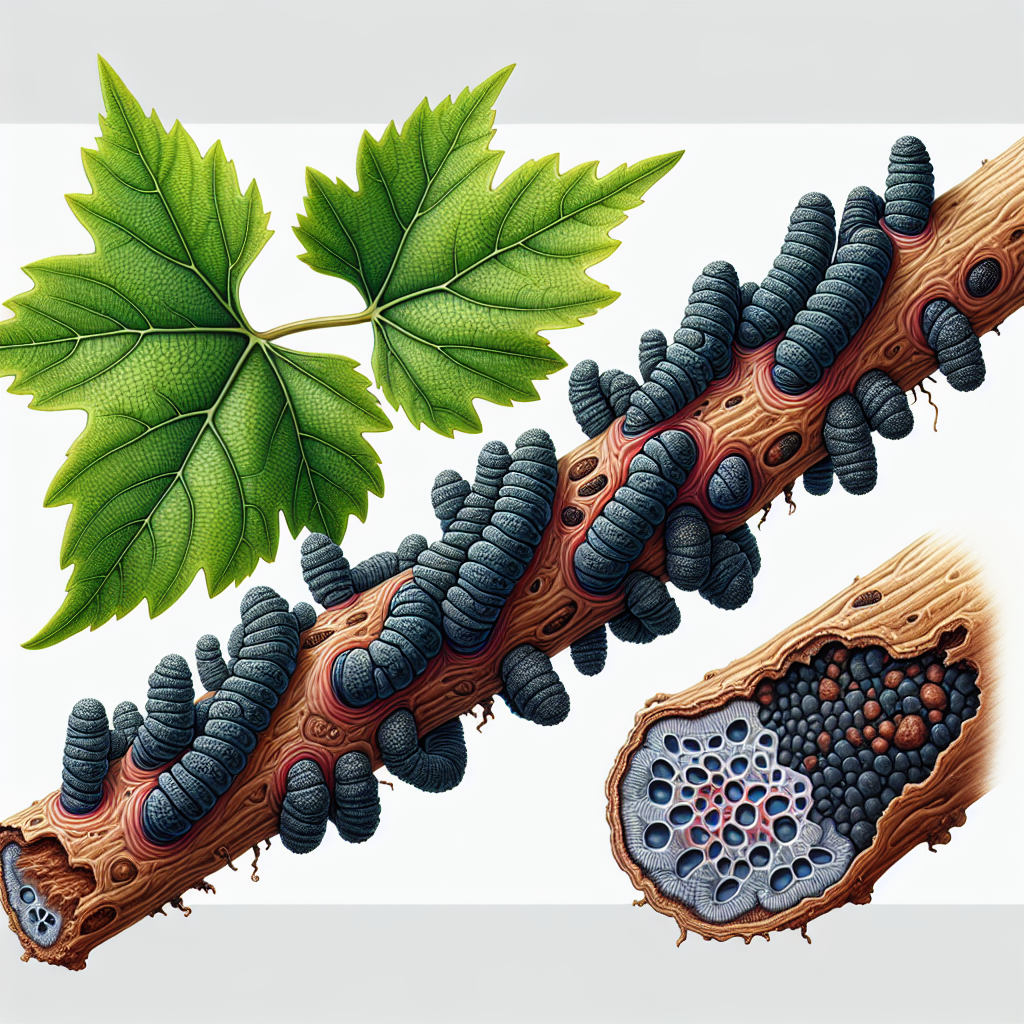
Introduction to Phomopsis
Phomopsis, caused by various species of the fungal genus Phomopsis (most notably Phomopsis viticola on grapes and Phomopsis vaccinii on blueberries), is a widespread plant pathogen that strikes vines, shrubs, and fruit trees. This necrotrophic fungus enters through wounds or natural openings, causing blight on shoots, leaves, and canes, as well as rot in fruits and twigs. First identified in the late 19th century on grapevines in Europe, it has since become a global concern for commercial and home growers alike, potentially reducing yields by 20-80% in severe outbreaks. Early detection is crucial, as symptoms mimic other diseases like anthracnose or Botrytis, but Phomopsis lesions are distinctly elongated and dark. In agricultural settings, it poses economic threats to high-value crops, with management relying on cultural practices, resistant varieties, and targeted organic fungicides. Understanding its biology allows proactive defense, minimizing chemical interventions while preserving crop health.
Identifying Symptoms & Damage
Phomopsis manifests through distinct symptoms that progress from subtle spots to severe dieback. On young shoots and leaves, look for small, oval to elongated black spots (pycnidia) with a grayish center, often appearing in spring after wet weather. These lesions expand, causing shoot tips to blacken and wilt, known as 'dead arm' in grapes. Cane infections show dark brown streaks or bands, especially at nodes, leading to spindle-shaped cankers that girdle the stem and kill tissue above.
Fruit symptoms are devastating: berries or drupes develop soft, sunken brown spots that expand into rot, often with black pycnidia embedded like pepper grains. In blueberries, twig blights cause reddish-brown discoloration and leaf drop, while in peaches, fruit rot leads to shriveled, mummified drupes. Damage severity correlates with infection timing—early spring infections cause the most defoliation and yield loss. Differentiate from powdery mildew by the absence of white powder and from bacterial canker by the lack of oozing gum. Use a hand lens to spot pycnidia, confirming diagnosis; lab culturing on PDA media reveals alpha and beta conidia. Yield impacts include 50% berry loss in grapes and 30-70% in blueberries during epidemics, underscoring the need for vigilant scouting.
Lifecycle and Progression of Phomopsis
Phomopsis follows a polycyclic lifecycle, overwintering as pycnidia in dead wood, cankers, and mummified fruit. Spores (alpha conidia) ooze from these structures in spring rains, splashing onto new growth. Infection occurs at 10-30°C (50-86°F) with free water on tissues for 8-24 hours. Hyphae penetrate stomata or wounds, colonizing vascular tissue.
After 2-4 weeks, new pycnidia form, releasing more spores in humid conditions. Beta conidia aid distant spread via wind/rain. Disease progression peaks during wet springs, with multiple cycles per season. In grapes, primary infections hit bud swell to bloom; secondary cycles infect fruit set. Latency periods allow undetected spread, with symptoms appearing 3-6 weeks post-infection. In cooler climates, a single cycle dominates; tropics see continuous cycles. Understanding this enables timed interventions, breaking the cycle at overwintering sites.
Environmental Triggers & Risk Factors
Phomopsis flourishes in moderate temperatures (15-25°C/59-77°F) with prolonged leaf wetness (>12 hours), especially during bud break to fruit set. High humidity (>85%) and rainfall (>20mm/week) are prime triggers, common in temperate and subtropical zones. Dense canopies trap moisture, exacerbating spread; poor air circulation in hedgerows amplifies risk.
Risk factors include susceptible varieties like Concord grapes or Jersey blueberries, mechanical wounds from pruning or hail, and excessive nitrogen promoting succulent growth. Acidic soils (pH<6) stress plants, increasing vulnerability. Overcrowding, overhead irrigation, and delayed dormancy pruning extend wet periods. Climate change intensifies outbreaks via erratic rains. For grapes, coastal fog belts are hotspots; blueberries suffer in poorly drained muck soils. Mitigate by monitoring weather data and avoiding stress.
Organic Control & Treatment Plans
Organic management emphasizes integrated approaches. Pruning: Remove infected canes 6-12 inches below lesions in late winter, destroying debris to eliminate 90% overwintering inoculum. Sanitation: Shred prunings off-site; mulch mummies.
Fungicides: Apply copper-based (e.g., Bordeaux mix) or sulfur at bud swell, repeat every 10-14 days pre-bloom (4-6 apps). OMRI-listed biofungicides like Bacillus subtilis or Reynoutria sachalinii suppress sporulation. Spring Pest Patrol: Organic AI Strategies to Shield Your Crops from Common Invaders offers timing tips.
Biologicals: Trichoderma spp. compete on wounds; apply as drenches. Resistant Varieties: Plant Viniferas like Chardonnay or rabbiteye blueberries. Nutrition: Boost potassium and calcium via compost teas to harden tissues. For active infections, strip blighted shoots weekly. Rotate with non-hosts. In small farms, this cuts losses 70% without synthetics.
Preventing Phomopsis in the Future
Prevention hinges on cultural resilience. Select resistant rootstocks (e.g., 101-14 for grapes) and certified clean stock. Prune for open canopies (VSP trellis), improving airflow and drying. Avoid spring wounds; delay pruning in wet regions till dry weather. Site selection: well-drained slopes over valleys.
Soil management: Maintain pH 6.0-7.0 with lime; cover crops like clover suppress splash dispersal. Irrigation: Drip only, avoiding foliage wetting. Monitor with weather stations for wetness hours, spraying preventively. Eradicate wild hosts nearby. Annual audits ensure compliance. Long-term, breed resistant cultivars. Combining these yields >95% control efficacy.
Crops Most Affected by Phomopsis
Phomopsis hits woody perennials hardest. Grapes (Phomopsis viticola): Cane blight, fruit rot; 50% losses. Blueberries (Phomopsis vaccinii): Twig blight, rot. Peaches/Plums ([/wiki/peach], [/wiki/plum]): Fruit/stem rot. Cherries ([/wiki/cherry]): Shoot dieback. Tomato ([/wiki/tomato]): Stem cankers in wet seasons. Others: strawberries ([/wiki/strawberry]), raspberries ([/wiki/raspberry]), soybeans ([/wiki/soybeans]). Global impact: $100M+ annual losses in viticulture alone.