Introduction to Carissa (Desert Star)
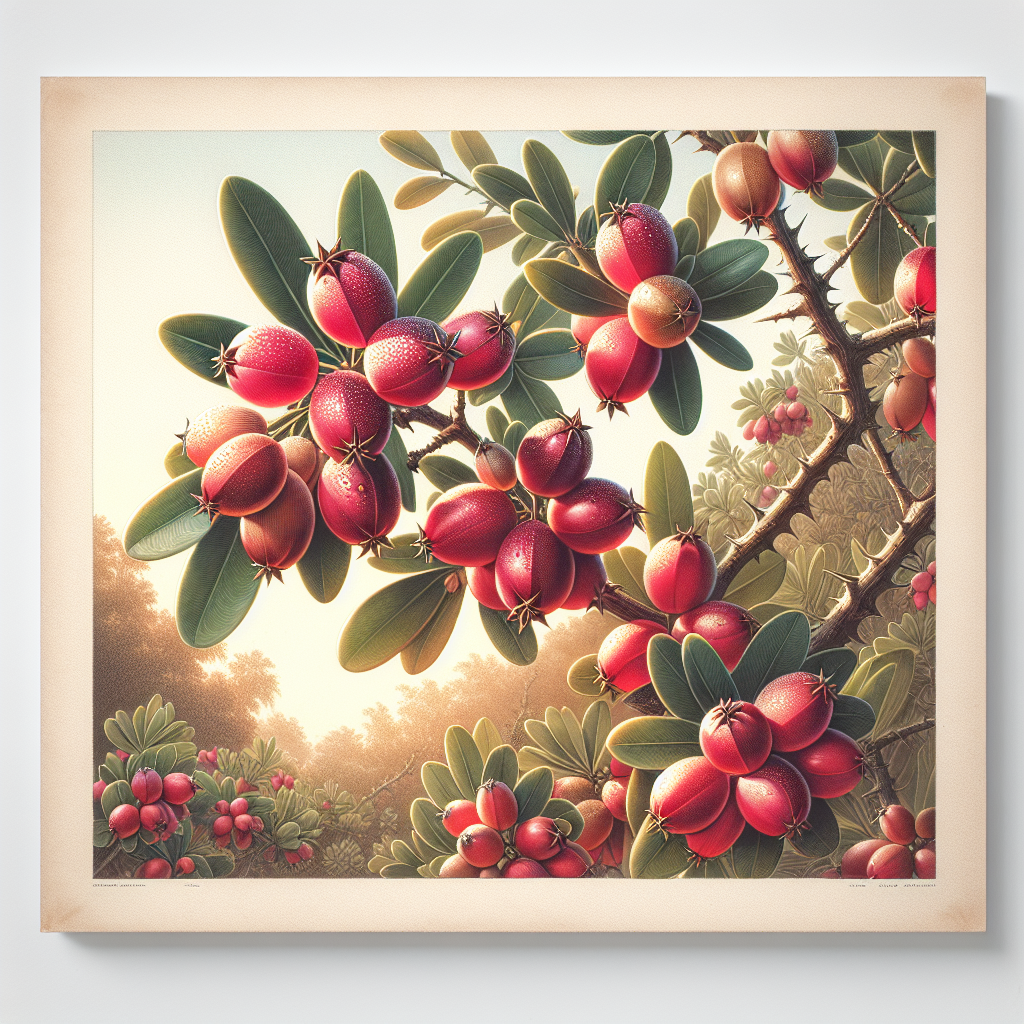
Carissa (Desert Star), a selected thornless variety of Carissa macrocarpa, stands out as a premier crop for arid and semi-arid regions. Native to South Africa's coastal dunes, this evergreen shrub produces abundant clusters of glossy, crimson fruits with a sweet-tart flavor reminiscent of cranberries crossed with plums. Unlike its thorny wild relatives, 'Desert Star' offers gardener-friendly handling, making it ideal for commercial hedges, home orchards, or wildlife attractors.
Farmers value its drought tolerance, salt resistance, and ability to fruit year-round in warm climates, yielding up to 20-30 kg per mature bush annually. Rich in antioxidants, vitamin C, and fiber, the berries command premium prices in health food markets. This guide provides professional-grade advice for maximizing yields, drawing from botanical expertise and field-tested practices. For heatwave resilience, check Why Summer Heatwaves Are Silently Killing Small Farm Yields - And 7 Organic Strategies to Fight Back. Expect first fruits in 1-2 years from planting, with plants living 20+ years.
Botanical Profile of Carissa (Desert Star)
Carissa macrocarpa 'Desert Star' belongs to the Apocynaceae family, closely related to oleander. This compact shrub grows 1.5-3 meters tall and wide, with dense, glossy green leaves (5-7 cm long) that provide excellent windbreaks. Stems are smooth and thornless, a key selection trait for 'Desert Star', distinguishing it from varieties like 'Flamingo' or 'Tuttle'.
Star-shaped white flowers (2-3 cm) bloom profusely in spring and intermittently year-round, exuding a sweet fragrance that attracts pollinators like bees and butterflies. Fruits develop in pairs at stem ends, ripening from green to deep red-crimson, each 2-4 cm long with 1-6 seeds embedded in juicy, edible pulp. The skin is thin and glossy, enclosing flesh that's 12-15% Brix sweet with tangy notes.
Roots form a deep taproot system, enabling survival in poor soils, while lateral roots spread widely for stability. Plants are dioecious or hermaphroditic in cultivars like 'Desert Star', self-fertile under good conditions. Hardiness zones 9-11 suit it best, tolerating brief dips to -4°C. Similar to guava in fruit profile but far more drought-hardy.
Soil, pH, and Climate Requirements for Carissa (Desert Star)
'Vertisol
' Desert Star excels in well-drained sandy or loamy soils, mimicking its dune origins. Avoid heavy clays prone to waterlogging, which invite root rot. Optimal pH is 6.0-7.5; test and amend with dolomite lime if below 6.0 or sulfur if above 8.0. Incorporate 20-30% organic matter like composted manure for initial planting to boost microbial activity without sacrificing drainage.
Climate-wise, it demands full sun (6-8+ hours daily) and thrives in USDA zones 9-11, with daytime highs of 24-38°C and nights above 10°C. Annual rainfall of 400-800 mm suffices, supplemented by deep watering during establishment (first 6-12 months). Salt spray tolerance makes it coastal superstar; it handles EC up to 8 dS/m. Protect from frost with covers or microclimates; prolonged freezes kill above-ground growth, though roots survive.
Mulch with 5-10 cm of bark or gravel to conserve moisture and suppress weeds. In high winds, plant as dense hedges. For similar drought-adapted crops, see dragon fruit.
Step-by-Step Planting & Propagation
Propagation
Semi-hardwood cuttings (10-15 cm) root fastest: take in late spring, dip in 3000 ppm IBA, plant in perlite:vermiculite (1:1) under mist. Roots form in 4-6 weeks at 24-27°C. Seeds germinate in 3-4 weeks at 25°C on sandy medium but yield variable offspring; scarify for 80% success. Air-layering works for mature plants: girdle, apply hormone, wrap in moist sphagnum—roots in 8-10 weeks.
Planting
Plant in early spring or fall. Dig holes 50x50x50 cm, spacing 1.5-2 m for bushes or 1 m for hedges. Mix native soil with 30% compost and 10 kg aged manure per hole. Set root ball level with ground, water deeply (20-30 L per plant). Stake if windy. For container growing, use 38-50 L pots with gravel base.
Initial irrigation: weekly deep soak (to 60 cm depth) for 6 months, then biweekly. Fertilize at planting with 10-10-10 (100 g/plant). Harden off gradually if greenhouse-raised.
Care & Maintenance regimes for Carissa (Desert Star)
Water established plants sparingly—drought stress enhances fruit flavor. Apply 20-40 L every 2-4 weeks in summer, less in winter. Drip irrigation optimizes efficiency.
Fertilize thrice yearly: spring (high N, e.g., 12-6-6 at 200 g/plant), summer (balanced 10-10-10), fall (high K, 0-0-50). Foliar sprays of micronutrients (Fe, Zn, Mn) prevent chlorosis in alkaline soils.
Prune post-harvest: remove 20-30% dead/crossing wood to open canopy, encourage fruiting spurs. Pinch tips for bushiness. Thin fruits to 4-6 per cluster for size.
Weed meticulously first year; mulch thereafter. Monitor for nutrient deficiencies: yellow leaves signal iron lack—apply chelated Fe.
Pests, Diseases & Organic Management
Common pests include aphids, scale insects, and mealybugs—blast with water or neem oil (2 ml/L weekly). Spider mites in dry heat: predatory mites or insecticidal soap. Fruit flies rare due to tough skin.
Diseases: Phytophthora root rot from overwatering—ensure drainage, apply phosphite drenches. Powdery mildew in humid spots: sulfur spray, prune for airflow. For advanced strategies, read Why 90% of Small Farms Fail at Pest Management - And 8 Organic Fixes That Actually Work.
Organic IPM: Introduce ladybugs, use reflective mulches, rotate copper fungicides sparingly.
Harvesting, Curing & Optimal Storage
Harvest when fully crimson and slightly soft, twisting gently—July to November peak, multiple pickings. Yield: 10-15 kg/plant year 3+. Wear gloves; sap is milky.
No curing needed; rinse, sort. Refrigerate at 4-7°C, 90% RH for 3-4 weeks. Freeze whole or pulp for 12 months. Dry for chews or process into jelly (pectin-rich). Market fresh for $5-8/kg.
Companion Planting for Carissa (Desert Star)
Pair with drought-lovers: lavender, rosemary, or thyme for pest repulsion. Nitrogen-fixers like pigeon pea improve soil. Avoid water-hogs like tomato. Plant marigold borders against nematodes. Hedges with nasturtium trap aphids. Explore Why Companion Planting Feels Like Guesswork for Small Farms - And How AI Makes It Foolproof for more.