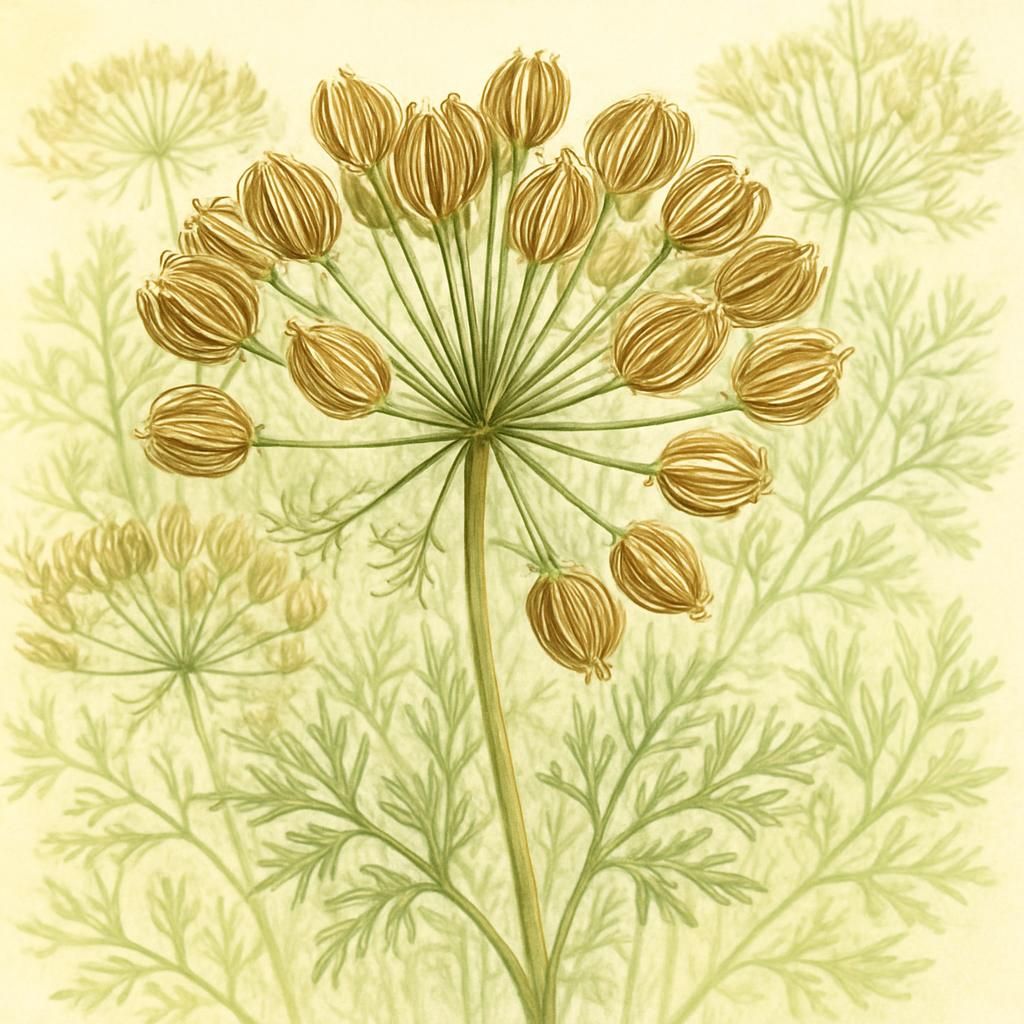
Introduction to Caraway Seed
Caraway (Carum carvi) is a hardy biennial herb cultivated for its crescent-shaped, aromatic seeds used in baking, distilling, and traditional medicine. Native to Europe, Western Asia, and North Africa, it has been grown for thousands of years and remains an important commercial crop in the Netherlands, Poland, and Canada. The seeds contain essential oils including carvone and limonene that deliver the distinctive anise-like flavor valued in rye bread, sauerkraut, and liqueurs.
Caraway is well-suited to cool temperate climates and fits easily into crop rotations on small farms. It produces a deep taproot that improves soil structure and can be grown organically with minimal inputs. Because it is a biennial, growers must plan for two seasons: vegetative growth in year one followed by flowering and seed set in year two.
Botanical Profile of Caraway Seed
Carum carvi belongs to the Apiaceae family, making it a relative of carrot, parsley, and celery. The plant develops a rosette of feathery, pinnate leaves in the first year and reaches 30–60 cm in height. In the second year it sends up a hollow, branching flower stalk that can grow to 1 m tall.
Umbels of small white to pinkish flowers appear in late spring, attracting pollinators. Each flower produces two mericarps that together form the familiar caraway seed. The plant is self-fertile but benefits from insect pollination for higher seed set. Caraway is photoperiod sensitive and requires long days to trigger bolting and flowering.
Soil, pH, and Climate Requirements for Caraway Seed
Caraway performs best in fertile, well-drained loamy soils with good structure. It tolerates a range of textures provided drainage is adequate and compaction is avoided. Heavy clay soils should be amended with organic matter to improve aeration around the taproot.
| Parameter | Ideal Range | Notes |
|---|---|---|
| Soil Type | Loam to sandy loam | Deep, friable structure preferred |
| Soil pH | 6.0–7.5 | Slightly acidic to neutral |
| Temperature Range | 15–22 °C daytime | Cool-season crop; frost tolerant |
| Annual Rainfall | 500–800 mm | Even distribution; supplemental irrigation helpful |
| Light Requirement | Full sun | Minimum 6–8 hours direct sunlight |
| Growing Zones | USDA 3–8 | Biennial lifecycle in cool climates |
Step-by-Step Planting & Propagation
Caraway is almost always grown from seed. Direct sowing is preferred because the taproot dislikes disturbance. Prepare a fine, weed-free seedbed in early spring or late summer for autumn sowing in mild climates.
Sow seeds 6–12 mm deep in rows 30–45 cm apart. Thin seedlings to 10–15 cm within the row once they reach 5 cm tall. Germination occurs in 10–21 days at soil temperatures of 15–20 °C. For overwintering crops, sow in late summer so plants establish rosettes before dormancy.
Care & Maintenance regimes for Caraway Seed
Consistent moisture is critical during establishment and seed fill. Mulching helps suppress weeds and retain soil moisture. Fertilization should be moderate; excessive nitrogen promotes leafy growth at the expense of seed production.
| Growth Stage | Watering Schedule | Fertilizer Application | Pruning / Other Care |
|---|---|---|---|
| Establishment | Keep top 5 cm moist; 2–3× weekly | 20–30 kg N/ha at sowing | Weed control; thin seedlings |
| Vegetative (Yr 1) | 25–40 mm/week if no rain | Light compost tea or 15 kg N/ha | Remove flower stalks if bolting early |
| Flowering (Yr 2) | Consistent 30 mm/week | 10–15 kg N/ha + 20 kg K/ha | Monitor for lodging; stake if needed |
| Seed Fill | Reduce to avoid disease | Stop nitrogen; maintain K | No pruning; allow natural ripening |
Pests, Diseases & Organic Management
Caraway is relatively pest-resistant but can be affected by aphids, carrot rust fly, and leafhoppers. Fungal issues such as powdery mildew and Alternaria leaf spot may appear in humid conditions. Practice crop rotation with non-Apiaceae crops and maintain good airflow.
Organic controls include insecticidal soaps for aphids, floating row covers for carrot rust fly, and neem oil or sulfur sprays for powdery mildew. Beneficial insects such as lady beetles and lacewings provide natural aphid suppression.
Harvesting, Curing & Optimal Storage
Harvest occurs in the second year when seeds turn brown and begin to shatter. Cut entire umbels or swath the crop and allow it to dry in windrows for 3–5 days. Thresh and clean seeds promptly.
Dry seeds to 10–12% moisture for storage. Store in cool, dark, airtight containers. Properly cured caraway seed retains flavor and germination for 2–3 years.
Companion Planting for Caraway Seed
Caraway pairs well with cabbage, onion, and lettuce because its deep roots do not compete heavily for surface nutrients. It is said to improve flavor and growth of nearby brassicas. Avoid planting near dill or fennel to prevent cross-pollination and hybridization.
Caraway also attracts beneficial insects when allowed to flower, making it a valuable addition to pollinator strips and mixed vegetable systems. Summer Companion Planting: 10 Organic Pairings to Boost Small Farm Resilience