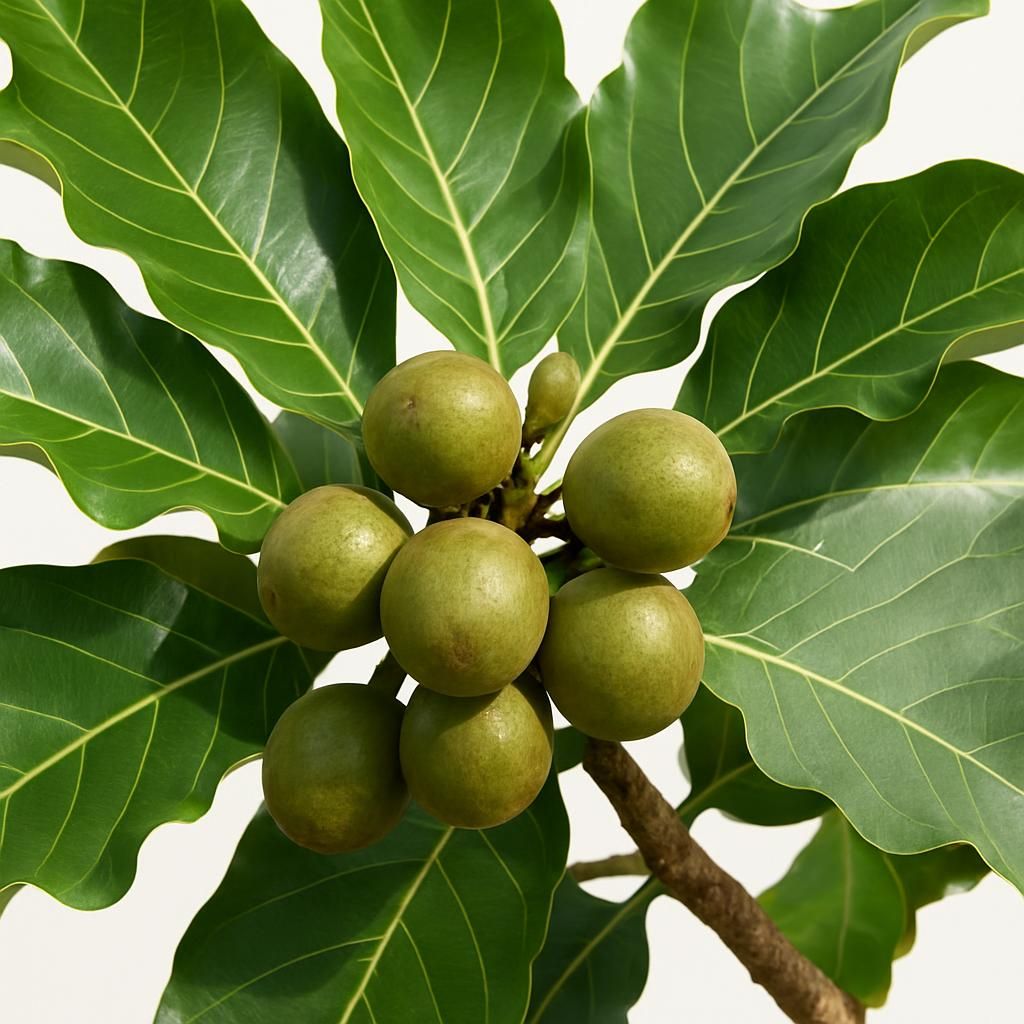
Introduction to Candlenut (Kukui)
Candlenut (Kukui), scientifically known as Aleurites moluccanus, is a versatile evergreen tree native to the Indo-Malayan region and widely naturalized throughout the Pacific Islands, Southeast Asia, and parts of Australia. The tree has been cultivated for centuries for its high-oil-content seeds, which were historically burned as candles—hence the common name. Today, Kukui remains important in traditional Hawaiian, Polynesian, and Southeast Asian cultures for food, medicine, dye, and woodworking. Commercial interest focuses on the oil-rich kernels for culinary uses, cosmetics, and biofuel research. Its rapid growth, attractive foliage, and ability to improve soil make it a valuable multipurpose crop for tropical agroforestry systems.
Botanical Profile of Candlenut (Kukui)
Aleurites moluccanus belongs to the Euphorbiaceae family. It is a medium to large tree reaching 10–20 meters in height with a broad, spreading canopy. The alternate leaves are palmately lobed, dark green above and silvery-white beneath due to dense stellate hairs. Small, creamy-white flowers appear in terminal panicles, followed by round, green-to-brown drupes containing one or two hard-shelled seeds. The seeds have a high oil content (up to 60%) rich in polyunsaturated fatty acids. The tree is dioecious or polygamous and produces abundant leaf litter that contributes to soil organic matter. Its fast growth rate (1–2 meters per year under optimal conditions) and nitrogen-fixing root associations make it suitable for reforestation and intercropping.
Soil, pH, and Climate Requirements for Candlenut (Kukui)
Candlenut performs best in deep, fertile, well-drained loamy soils but tolerates a wide range of textures from sandy loam to clay loam provided drainage is adequate. It prefers slightly acidic to neutral pH and warm, humid tropical to subtropical climates with consistent rainfall.
| Parameter | Ideal Range | Notes |
|---|---|---|
| Soil Type | Loam to sandy loam | Well-drained; avoid waterlogging |
| Soil pH | 5.5 – 7.0 | Slightly acidic to neutral |
| Temperature | 20–32 °C | Frost sensitive below 10 °C |
| Annual Rainfall | 1500–3000 mm | Evenly distributed; tolerates short dry spells once established |
| Altitude | 0–800 m | Best growth at lower elevations |
| Sunlight | Full sun to partial shade | Young trees benefit from light shade |
Step-by-Step Planting & Propagation
Candlenut is primarily propagated by seed, although air-layering and grafting are possible for selected cultivars. Fresh seeds germinate within 3–6 weeks when soaked in warm water for 24 hours prior to sowing. Choose a well-drained nursery bed or polybags filled with a 1:1:1 mix of sand, compost, and topsoil. Sow seeds 2–3 cm deep and maintain consistent moisture. Seedlings are ready for transplanting at 30–50 cm height, usually 4–6 months after germination. Field planting should occur at the start of the rainy season. Dig holes 60 × 60 × 60 cm and space trees 8–10 m apart in a square or triangular pattern. Incorporate well-rotted manure or compost into the planting hole. Water thoroughly after planting and apply a 5–10 cm mulch layer to conserve moisture and suppress weeds. Protect young trees from strong winds with temporary windbreaks.
Care & Maintenance regimes for Candlenut (Kukui)
Established trees require minimal intervention but benefit from regular weeding, mulching, and balanced nutrition during the first three years. Pruning is limited to removing dead or crossing branches to maintain an open canopy. Irrigation is generally unnecessary after the second year except during prolonged drought.
| Activity | Frequency | Details |
|---|---|---|
| Watering | Weekly for first 6 months; then as needed | Deep watering during dry periods; avoid waterlogging |
| Fertilizer | 3 applications per year (Year 1–3) | 200–300 g NPK 15-15-15 per tree; increase to 1–2 kg at maturity |
| Pruning | Annually at end of wet season | Remove dead wood and maintain 3–4 main scaffold branches |
| Mulching | Twice yearly | 10–15 cm organic mulch within 1 m radius of trunk |
| Weeding | Quarterly | Manual or light mechanical; avoid deep cultivation near roots |
Pests, Diseases & Organic Management
Candlenut is relatively pest-resistant but can be affected by Aphids, Scale insects, and occasional Spider mites during dry spells. Fungal issues such as Anthracnose and Phytophthora root rot occur in poorly drained soils. Monitor young foliage weekly. Organic controls include neem oil sprays for aphids and scale, introduction of predatory lady beetles, and improved drainage plus compost tea drenches for Phytophthora. Regular removal of fallen leaves reduces overwintering inoculum. Avoid excessive nitrogen that promotes succulent growth attractive to pests.
Harvesting, Curing & Optimal Storage
Trees begin bearing at 3–5 years and reach full production by year 8–10. Fruits are harvested when they turn brown and begin to drop naturally. Collect fallen nuts weekly to minimize mold. Remove the fleshy outer husk by soaking in water for 24–48 hours, then air-dry the hard-shelled seeds in the shade for 7–10 days until moisture content reaches 8–10%. Store cured nuts in breathable sacks or sealed containers in a cool, dry place (below 20 °C and <60% RH) for up to 12 months. For oil extraction, press within 3 months of harvest to preserve quality. Kernels can be lightly roasted for culinary use or pressed cold for cosmetic-grade oil.
Companion Planting for Candlenut (Kukui)
Kukui integrates well into mixed agroforestry systems. Compatible companions include Coconut, Banana, and Papaya for multi-layered canopies. Leguminous ground covers such as Pigeon pea or Gliricidia improve soil nitrogen and provide additional mulch. Aromatic herbs like Thai Basil and Rosemary help repel insect pests. Avoid planting heavy feeders such as Corn or Rice directly beneath the canopy, as competition for light and nutrients can reduce yields. The deep root system of Kukui also stabilizes slopes when interplanted with shallow-rooted species.