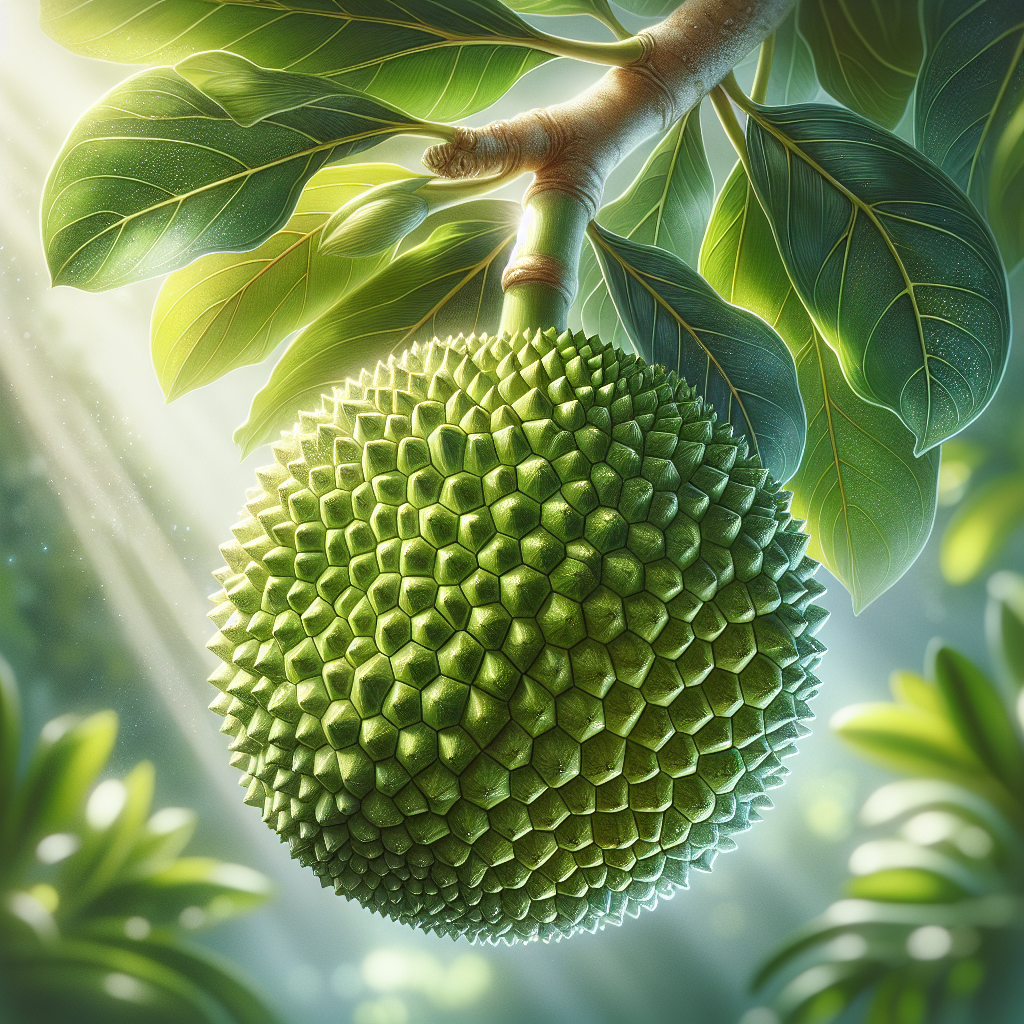
Introduction to Breadfruit (Ulu Fiti)
Breadfruit (Ulu Fiti), known scientifically as a select variety of Artocarpus altilis, stands as a cornerstone of tropical agriculture, particularly in Polynesian and Pacific Island cultures. This remarkable tree produces massive, globe-shaped fruits that serve as a high-yield carbohydrate source, often dubbed "the tree that feeds a village." Native to New Guinea and dispersed across Oceania by ancient voyagers, Ulu Fiti distinguishes itself with its creamy texture, nutty flavor, and prolific production—mature trees can bear 200-400 fruits per season, each weighing 2-10 pounds.
In modern sustainable farming, Breadfruit (Ulu Fiti) excels as a low-maintenance permaculture staple. It requires minimal inputs once established, fixes nitrogen through symbiotic relationships, and provides shade for understory crops. With global food security challenges, this crop's ability to produce abundant calories on marginal lands positions it as a climate-resilient solution. Farmers value its versatility: fruits ripen from green (ideal for cooking) to yellow (sweet for eating fresh). Whether roasted over coals, pounded into poi-like paste, or dried for flour, Ulu Fiti transforms into daily sustenance. Cassava growers often integrate it for diversified yields. This guide delivers professional protocols for cultivation, ensuring optimal productivity in home orchards or commercial groves.
Botanical Profile of Breadfruit (Ulu Fiti)
Breadfruit (Ulu Fiti) belongs to the Moraceae family, closely related to mulberry and fig trees. It manifests as a fast-growing, evergreen monoecious tree reaching 40-80 feet tall with a broad, spreading canopy up to 50 feet wide. The trunk, smooth and grayish, supports thick branches laden with large, glossy leaves—12-24 inches long, deeply lobed like outstretched hands, giving the tree its Hawaiian name "ulu" (bread) and "fiti" denoting its robust form.
Ulu Fiti produces separate male and female flowers on the same tree. Male catkins, cylindrical spikes 4-6 inches long, release pollen via wind. Female flowers develop into compound, syncarpial fruits: round to oval, 4-12 inches in diameter, covered in hexagonal warts. Immature fruits are green and latex-rich; ripening shifts to pale yellow with a sweet, pineapple-like aroma. Seeds are rare in seedless cultivars like Ulu Fiti, ensuring parthenocarpic reproduction for reliable harvests.
Root systems are extensive, with shallow laterals extending 50 feet, aided by symbiotic mycorrhizae for nutrient uptake. Growth rate hits 3-6 feet annually in optimal conditions, with first fruits in 3 years from root cuttings. Phenologically, flowering aligns with wet seasons, fruits maturing 3-4 months later. Nutrient profile boasts high starch (25g/100g), fiber, potassium, and vitamins, rivaling Taro or Sweet Potato. Wood is lightweight yet durable, used for crafts, while latex yields natural rubber.
Soil, pH, and Climate Requirements for Breadfruit (Ulu Fiti)
Breadfruit (Ulu Fiti) demands well-drained, fertile soils rich in organic matter—loamy volcanic soils ideal, mimicking Pacific atolls. Avoid heavy clays prone to waterlogging, which invite root rot. Optimal pH ranges 6.0-7.5; test and amend with lime if below 5.5 or sulfur if exceeding 8.0. Incorporate compost at 5-10 tons/acre pre-planting to boost tilth and microbial life.
Climate-wise, Ulu Fiti flourishes in USDA zones 10b-12, requiring average temperatures 70-85°F (21-29°C). It tolerates brief dips to 32°F but suffers below 50°F with leaf drop. Annual rainfall of 60-100 inches suits it best, supplemented by irrigation in dry spells (1-2 inches/week). Full sun (6-8 hours daily) essential; partial shade reduces yields by 30%. Windbreaks protect young trees from salt-laden gales in coastal sites. Humidity above 60% prevents fruit cracking. For subtropical margins, microclimates or high tunnels extend viability. Soil health mastery proves crucial—check our Soil Health Mastery: 5 Proven Strategies for Small Farms to Build Fertile Ground Without Breaking the Bank for integrated approaches.
Step-by-Step Planting & Propagation
Propagate Breadfruit (Ulu Fiti) vegetatively for true-to-type trees, as seeds produce variable offspring. Root cuttings (preferred) or air-layering yield 90% success.
- Select Material: Choose healthy branches 1-2 inches diameter from fruiting trees, late winter.
- Prepare Cuttings: Cut 12-18 inch segments, strip leaves from base, dip in rooting hormone (IBA 0.1%).
- Rooting Medium: Plant in 1:1:1 sand-perlite-vermicompost in shaded beds (70°F). Mist daily; roots form in 8-12 weeks.
- Hardening: Transplant to 5-gallon pots with mycorrhizal inoculant.
- Site Prep: Dig 3x3x3 ft holes, amend with 50% compost. Space trees 25-40 ft apart (12x12m for groves).
- Planting: Set at soil line in rainy season, stake, mulch 6 inches deep (banana leaves ideal). Water deeply weekly first year.
Air-layering: Girdle branch, apply hormone, wrap sphagnum moss/plastic; roots in 6-8 weeks. Grafting onto rootstock resists nematodes. Expect 95% survival with proper aftercare.
Care & Maintenance regimes for Breadfruit (Ulu Fiti)
Young Ulu Fiti trees need consistent moisture (1 inch/week), tapering to drought tolerance post-establishment. Fertilize quarterly: NPK 10-5-20 at 1 lb/tree/year 1, increasing 50% annually to maturity. Foliar sprays of micronutrients (Zn, B, Mn) correct deficiencies evident as yellowing leaves.
Prune post-harvest: remove deadwood, watersprouts, thin canopy for light penetration (20% removal max). Intercrop with legumes like Pigeon pea for nitrogen. Mulch annually to suppress weeds, retain moisture. Irrigate via drip for efficiency in dry tropics. Monitor growth: 10-15 ft by year 3 signals vigor. Pollination self-sufficient, but hand-pollinate females in low-density plantings for 20% yield boost. Annual inspections prevent structural failures in hurricane-prone areas.
Pests, Diseases & Organic Management
Ulu Fiti resists many pests but faces threats. Common invaders: Mealybugs cluster on tender shoots—hose off or apply neem oil (2% weekly). Scale insects on trunks: release ladybugs or insecticidal soap. Fruit flies pierce ripening fruits; bag with organza cloth at marble size.
Diseases include Phytophthora root rot from poor drainage—improve aeration, drench with phosphite. Anthracnose causes leaf spots; copper fungicide preventively. Nematodes (Root-knot nematodes): solarize soil, plant marigolds. Birds peck fruits—net mature trees. Organic IPM: scout weekly, introduce predatory wasps. Learn more in Why 90% of Small Farms Fail at Pest Management - And 8 Organic Fixes That Actually Work. Cultural controls like spacing and sanitation yield 85% efficacy.
Harvesting, Curing & Optimal Storage
Harvest Ulu Fiti when milky latex yields to thumb pressure (45-60 days post-set). Green fruits for cooking; yellow for fresh. Use pole pruners or climb with ladder—yield peaks every 40-50 days over 7 months. Mature tree: 500+ fruits/season.
Cure by stacking in shaded hut 3-5 days for latex evaporation, enhancing flavor. Store green fruits 2-3 weeks at 55-60°F, 85% humidity. Ripened last 1 week refrigerated. Process into chips (solar dry at 140°F), flour (ferment, dry, mill), or freeze halves. Postharvest losses <5% with proper handling. Yields 200-500 kg/tree/year, calorically surpassing Banana.
Companion Planting for Breadfruit (Ulu Fiti)
Ulu Fiti's canopy suits multi-tier agroforestry. Underplant nitrogen-fixers: Gliricidia, pigeon pea for fertility. Shade-tolerant roots: taro, ginger (Ginger), yam (Yam). Herbs like Thai Basil, marigold (Marigold) repel nematodes. Avoid water-hogging corn (Corn). Legumes suppress weeds, boost soil—yields up 25%. Discover synergies in Why Companion Planting Feels Like Guesswork for Small Farms - And How AI Makes It Foolproof. This system mimics Pacific food forests, maximizing 1-acre productivity.