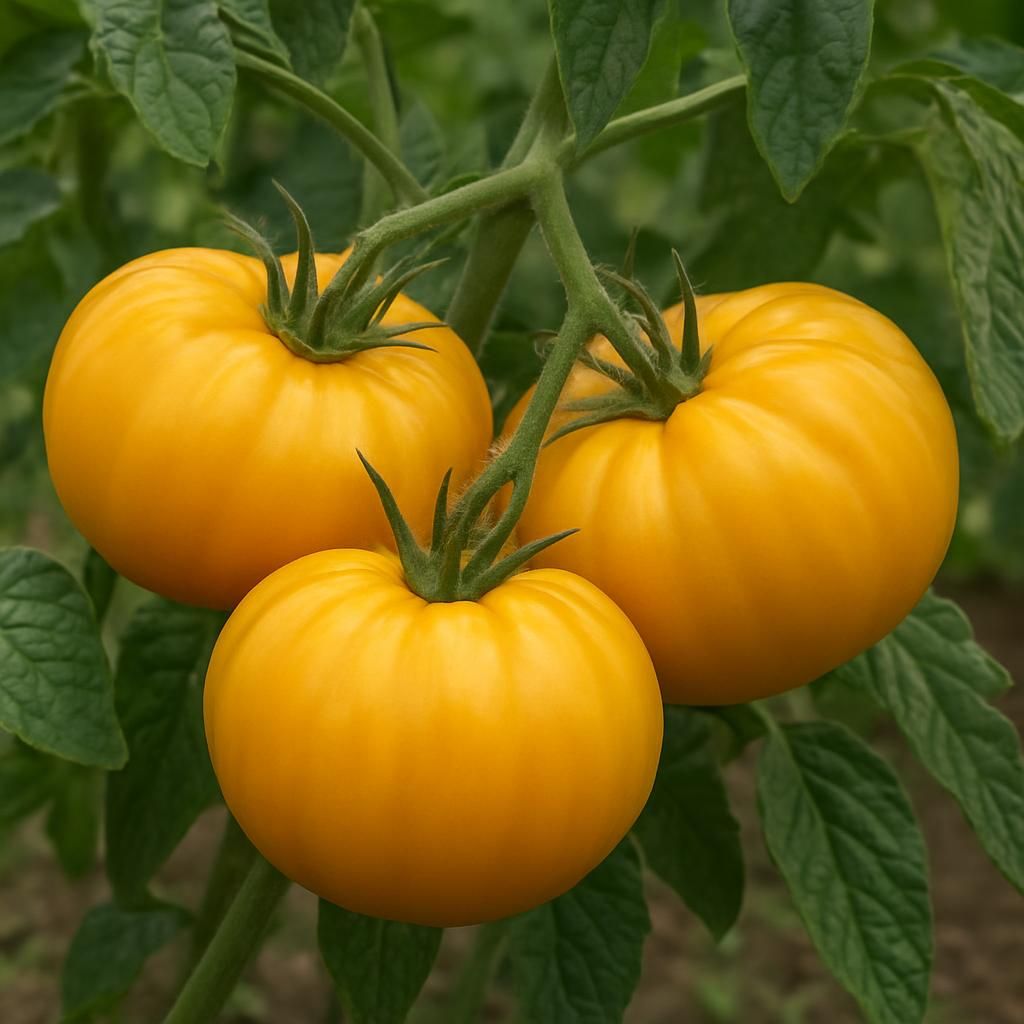
Introduction to Brandywine Yellow Tomato
The Brandywine Yellow Tomato stands as one of the most celebrated heirloom varieties among home gardeners and small-scale commercial producers. Developed from the original Brandywine lineage by Amish farmers in the late 19th century, this golden-fruited beefsteak delivers complex, fruity notes with lower acidity than many red types. Its vigorous indeterminate vines can reach 8–10 feet, requiring robust staking or caging systems to support heavy clusters of large, irregularly shaped fruits weighing 12–24 ounces each.
Growers value Brandywine Yellow for both fresh eating and culinary applications where its rich, buttery texture shines in sandwiches, salads, and sauces. While not the earliest producer, the variety rewards patient cultivators with exceptional flavor intensity that surpasses many modern hybrids. Success hinges on providing consistent moisture, balanced nutrition, and vigilant organic pest management throughout the long growing season.
Botanical Profile of Brandywine Yellow Tomato
Brandywine Yellow belongs to the nightshade family (Solanaceae) and shares the same genetic foundation as other Tomato cultivars. The plants exhibit classic indeterminate growth, continuing vegetative and reproductive development until frost terminates the season. Leaves are potato-leaf type—broad, slightly rugose, and dark green—distinguishing them from the more common feathery foliage of many hybrids.
Flowers are perfect and self-pollinating, typically appearing in clusters of 6–10 along the main stems and laterals. Fruits mature to a rich golden-yellow with occasional pink blush near the stem end when fully ripe. The flesh is meaty with few seeds and minimal gel, contributing to the variety’s signature flavor profile. Brandywine Yellow requires approximately 80–90 days from transplant to first ripe fruit under optimal conditions.
Soil, pH, and Climate Requirements for Brandywine Yellow Tomato
Brandywine Yellow performs best in well-drained, fertile loam enriched with organic matter. Soil should retain moisture without becoming waterlogged, as the variety is susceptible to root diseases in heavy clay. Raised beds or mounded rows improve drainage in marginal soils. A target pH range of 6.2–6.8 optimizes nutrient uptake, particularly calcium and magnesium critical for fruit quality.
The variety thrives in full sun with at least 8 hours of direct light daily. Daytime temperatures of 70–85 °F (21–29 °C) and nighttime lows above 55 °F (13 °C) promote vigorous growth and fruit set. Plants tolerate brief periods down to 50 °F but suffer blossom drop and slowed metabolism below this threshold. In regions with intense summer heat exceeding 95 °F (35 °C), afternoon shade or shade cloth helps maintain productivity.
| Parameter | Ideal Range | Notes |
|---|---|---|
| Soil Type | Loamy, well-drained | Amend heavy clay with compost and perlite |
| Soil pH | 6.2–6.8 | Test annually; lime if below 6.0 |
| Organic Matter | 5–8% | Incorporate 2–3 inches of compost |
| Day Temperature | 70–85 °F (21–29 °C) | Protect from extreme heat >95 °F |
| Night Temperature | 55–70 °F (13–21 °C) | Blossom drop occurs below 55 °F |
| Sunlight | 8+ hours direct | Morning sun preferred in hot climates |
| Spacing | 24–36 inches between plants | 48–60 inches between rows |
| Growing Season | 100–120 frost-free days | Start indoors 6–8 weeks before last frost |
Step-by-Step Planting & Propagation
Begin by starting seeds indoors 6–8 weeks before the expected last frost date. Sow seeds ¼ inch deep in sterile seed-starting mix and maintain soil temperature at 75–80 °F (24–27 °C) for rapid germination within 7–10 days. Provide 14–16 hours of supplemental light daily to prevent leggy seedlings. Harden off transplants for 7–10 days by gradually exposing them to outdoor conditions.
Transplant outdoors once soil temperature reaches 60 °F (16 °C) and nighttime air temperatures consistently exceed 55 °F. Dig planting holes 12–18 inches deep and wide, incorporating ½ cup of balanced organic fertilizer or well-aged compost into each hole. Set plants deeply, burying 2–3 inches of the stem to encourage adventitious root formation. Install sturdy 6–8 foot stakes or heavy-duty cages at planting time to avoid root disturbance later. Water thoroughly after transplanting and apply a 2–3 inch layer of organic mulch to conserve moisture and suppress weeds.
Care & Maintenance regimes for Brandywine Yellow Tomato
Consistent cultural practices are essential for maximizing yield and fruit quality in Brandywine Yellow. Regular monitoring of soil moisture, nutrient status, and plant architecture prevents common physiological disorders and disease pressure.
| Task | Frequency | Details |
|---|---|---|
| Watering | 1–1.5 inches per week | Deep, infrequent irrigation; maintain even moisture to prevent cracking |
| Fertilizer | Every 3–4 weeks after fruit set | Side-dress with compost tea or balanced organic 4-6-4; avoid excess N |
| Pruning | Weekly | Remove suckers below first flower cluster; limit to 2–3 main stems |
| Mulching | At planting and as needed | 3 inches organic mulch; replenish mid-season |
| Staking/Caging | At planting | Secure vines every 8–12 inches to prevent lodging |
| Weeding | As needed | Hand-pull or shallow cultivate; avoid deep hoeing near roots |
Pests, Diseases & Organic Management
Brandywine Yellow is susceptible to several common tomato pests and diseases, though its genetic diversity confers better resilience than many hybrids. Regular scouting and integrated organic strategies keep populations below damaging thresholds.
Major insect pests include Aphids, Hornworms, Spider Mites, and Flea Beetles. Introduce beneficial insects such as lady beetles and lacewings, and apply insecticidal soap or neem oil at the first sign of infestation. Handpick hornworms and destroy egg masses on leaf undersides.
Diseases of concern include Early Blight, Late Blight, Septoria Leaf Spot, and Fusarium Wilt. Practice strict crop rotation (minimum 3–4 years), remove and destroy infected debris at season end, and select disease-resistant rootstocks when grafting. Copper-based fungicides and Bacillus subtilis products provide preventive organic control under high disease pressure. Maintain good airflow through proper spacing and pruning to reduce foliar humidity.
Harvesting, Curing & Optimal Storage
Harvest Brandywine Yellow fruits when they reach full golden-yellow color with slight softening at the blossom end. Pick at peak ripeness for best flavor; fruits left on the vine too long may split or attract pests. Use pruning shears to sever the stem cleanly, leaving a short calyx attached.
For short-term storage, keep ripe tomatoes at room temperature away from direct sun for up to 5 days. To extend usability, harvest mature-green fruits before frost and ripen indoors in a single layer at 65–70 °F (18–21 °C). Avoid refrigeration, which diminishes flavor and causes mealy texture. For preservation, can or freeze excess harvest within 48 hours of picking.
Companion Planting for Brandywine Yellow Tomato
Strategic companion planting enhances Brandywine Yellow productivity while providing natural pest suppression. Basil planted nearby repels Aphids and improves flavor perception in taste tests. Marigolds deter nematodes and attract beneficial pollinators when interplanted in rows. Nasturtium acts as a trap crop for aphids and provides edible flowers.
Avoid planting near Potato, Fennel, and members of the Brassica family, which compete for nutrients or harbor shared pathogens. Borage improves pollination and adds trace minerals to the soil when leaves are chopped and dropped as mulch. Carrot and Parsley make excellent understory companions that do not compete heavily for resources.
For deeper guidance on seasonal timing and small-farm resilience strategies, see The Overlooked Art of Seasonal Harvest Timing for Small Farm Profit.