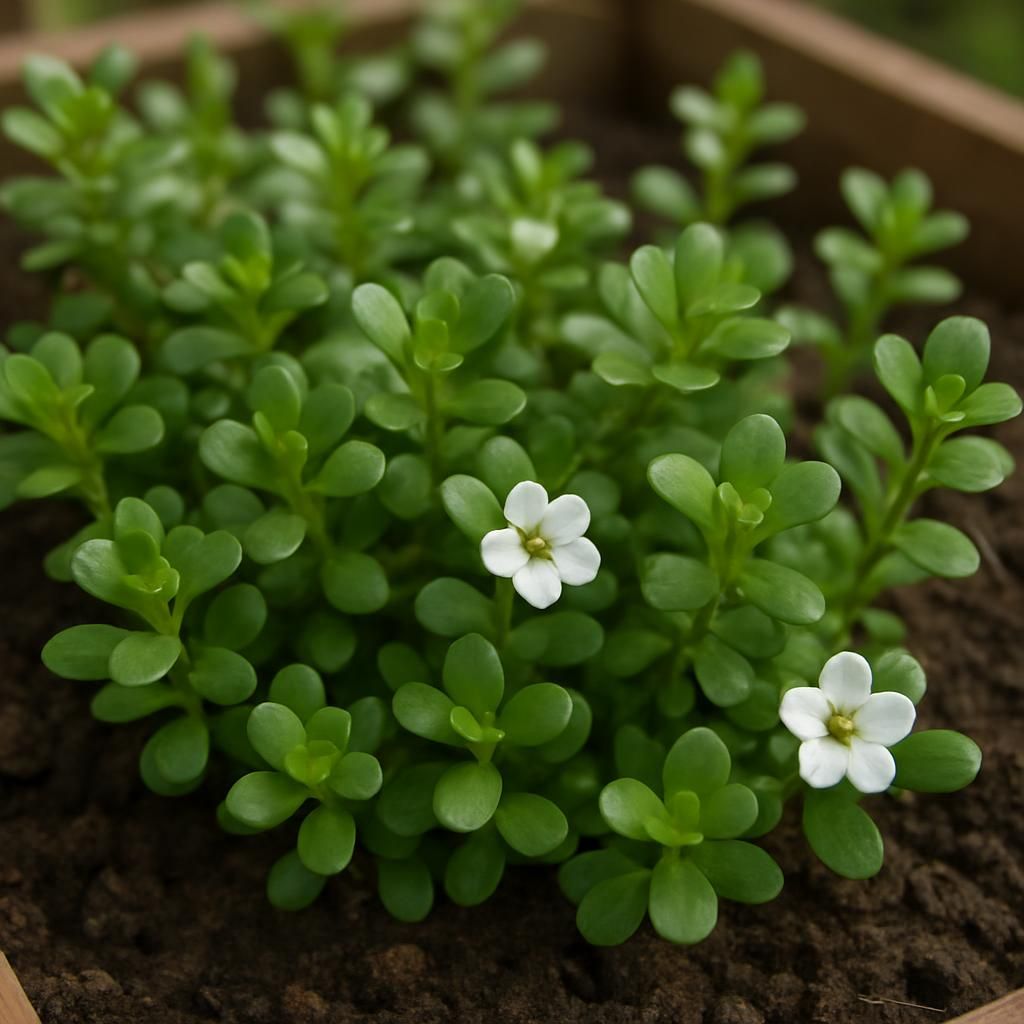
Introduction to Brahmi Root
Brahmi Root, scientifically known as Bacopa monnieri, is a low-growing perennial herb native to wetlands across India, Southeast Asia, and parts of Australia. Valued for centuries in Ayurvedic medicine, its roots and aerial parts contain bacosides that support cognitive function and stress resilience. Modern commercial cultivation focuses on the dried root for nutraceutical extracts, making it a high-value specialty crop for small farms and herbal producers. Successful production demands consistent soil moisture, organic fertility management, and protection from common wetland pests.
Botanical Profile of Brahmi Root
Bacopa monnieri belongs to the Plantaginaceae family and exhibits a prostrate, creeping growth habit with succulent stems that root at nodes. Leaves are small, obovate, and arranged oppositely along the stem. The plant produces tiny white to pale blue flowers year-round in suitable climates, though seed set is limited and vegetative propagation dominates commercial production. The root system is fibrous and shallow, typically extending 10–15 cm deep, making the crop sensitive to both waterlogging and surface drying.
Soil, pH, and Climate Requirements for Brahmi Root
Brahmi Root performs best in rich, organic soils with excellent moisture retention. Heavy clay soils should be amended with compost and coarse sand to improve drainage while maintaining humidity around the root zone. The crop tolerates a wide pH range but yields highest-quality roots between 6.0 and 7.5.
| Parameter | Ideal Range | Notes |
|---|---|---|
| Soil Type | Loamy to sandy loam | High organic matter (3–5%) essential |
| Soil pH | 6.0–7.5 | Slight acidity improves nutrient uptake |
| Temperature | 20–35 °C (day) | Frost sensitive below 10 °C |
| Annual Rainfall | 1000–2000 mm | Supplemental irrigation required in dry periods |
| Relative Humidity | 70–90% | High humidity reduces transplant shock |
| Light | Full sun to partial shade | 4–6 hours direct sun optimal |
Step-by-Step Planting & Propagation
Propagation is almost exclusively vegetative using stem cuttings or division of established clumps. Select healthy mother plants free of Aphids and Spider mites. Take 8–10 cm cuttings with at least three nodes and remove lower leaves. Root cuttings in well-drained media under 70–80% humidity for 14–21 days before transplanting. Field spacing is 20 cm × 20 cm on raised beds 15 cm high to ensure drainage. Plant during the onset of monsoon or when soil temperature exceeds 18 °C.
Care & Maintenance regimes for Brahmi Root
Consistent moisture is critical; the top 5 cm of soil should never dry completely. Mulch with rice straw or coconut coir to reduce evaporation and suppress weeds. Fertilization relies on well-decomposed compost and liquid seaweed extracts applied bi-weekly during active growth. Light pruning every 4–6 weeks encourages lateral branching and higher root biomass.
| Task | Schedule | Details |
|---|---|---|
| Irrigation | Daily light watering or drip | Maintain 60–70% field capacity; avoid waterlogging |
| Fertilizer | Every 14 days (growing season) | 1:1 compost tea + seaweed at 5 L/100 m² |
| Pruning | Every 4–6 weeks | Pinch terminal shoots 2–3 cm above node |
| Weeding | Weekly until canopy closes | Hand-weed or shallow hoe; mulch heavily |
Pests, Diseases & Organic Management
Common pests include Aphids, Spider mites, and Thrips that distort new growth. Root-knot nematodes can reduce root quality in poorly rotated beds. Fungal issues such as Pythium and Phytophthora cause collar rot under waterlogged conditions. Organic controls rely on neem oil sprays, beneficial nematodes, and strict sanitation. Crop rotation with Ginger or Turmeric breaks pest cycles effectively.
Harvesting, Curing & Optimal Storage
Roots reach harvestable size 6–8 months after planting. Harvest by carefully lifting beds with a fork to avoid breakage. Wash roots gently, trim aerial parts, and sun-dry or dehydrate at 40 °C until moisture content drops below 10%. Store in airtight containers away from light and humidity. Properly cured roots retain bacoside content for up to 18 months.
Companion Planting for Brahmi Root
Brahmi Root benefits from association with moisture-loving herbs such as Thai Basil and Coriander that provide light shade and attract beneficial insects. Avoid planting near heavy feeders like Corn that compete for surface moisture. Interplanting with Marigold suppresses nematode populations while adding visual appeal to wetland beds.