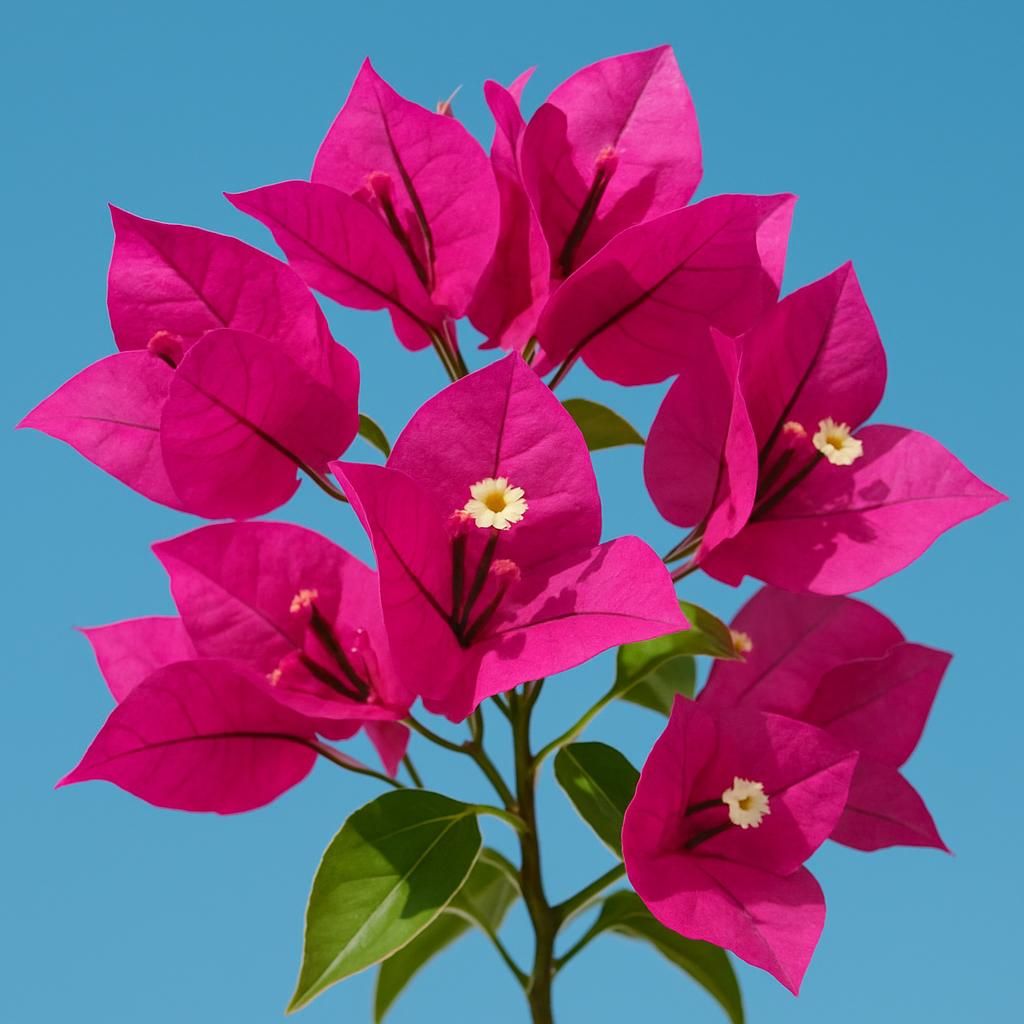
Introduction to Bougainvillea
Bougainvillea is one of the most recognizable flowering vines in subtropical and tropical horticulture. Originally discovered in Brazil by French botanist Philibert Commerson in the 18th century and named after his companion Louis Antoine de Bougainville, the plant has since become a global icon of vibrant color. Its true flowers are small and inconspicuous, but the surrounding modified leaves (bracts) provide the intense hues that define the species. Gardeners value Bougainvillea for its ability to cover walls, arbors, and fences rapidly while tolerating heat, wind, and salt spray. Commercial nurseries propagate millions of plants annually for both retail and landscape contracts because the crop requires little ongoing input once established.
Botanical Profile of Bougainvillea
Bougainvillea belongs to the four o'clock family (Nyctaginaceae) and comprises roughly 18 species, with three—B. glabra, B. spectabilis, and B. peruviana—dominating commercial cultivation. The plant is a woody, scrambling vine or shrub that can reach 10–40 feet depending on support and pruning regime. Stems are armed with sharp thorns that aid climbing. Leaves are alternate, simple, and ovate to elliptic. The showy bracts surround clusters of three small, tubular, cream-colored true flowers. Most cultivars are tetraploid hybrids that exhibit enhanced bract size, color intensity, and repeat flowering. Growth habit ranges from compact shrubs to rampant climbers; thorn density and leaf retention vary by cultivar and climate.
Soil, pH, and Climate Requirements for Bougainvillea (MUST INCLUDE A MARKDOWN TABLE OF IDEAL CONDITIONS)
Bougainvillea demands excellent drainage and high light intensity. It performs best in USDA zones 9–11 and tolerates brief dips to 28 °F (-2 °C) once mature. Prolonged frost will kill stems to the ground, although plants often resprout from the base. The crop is highly salt tolerant, making it suitable for seaside plantings. Overly fertile or moisture-retentive soils reduce flowering; lean, sandy or rocky substrates encourage prolific bloom.
| Parameter | Ideal Range | Notes |
|---|---|---|
| Soil Type | Sandy loam to rocky, well-drained | Avoid heavy clay; amend with pumice or perlite |
| Soil pH | 5.5–7.0 | Slightly acidic to neutral; tolerates mild alkalinity |
| Temperature (day) | 75–95 °F (24–35 °C) | Optimal bloom production above 70 °F |
| Temperature (night) | 60–70 °F (15–21 °C) | Cooler nights enhance bract coloration |
| USDA Hardiness Zones | 9–11 | Protect below 28 °F |
| Sun Exposure | Full sun, minimum 6–8 hours | Reduced light decreases flowering |
| Annual Rainfall | 20–40 inches (500–1000 mm) | Supplemental irrigation needed in drier areas |
| Humidity | 40–70 % | High humidity increases disease risk |
| Salinity Tolerance | Moderate to high | Suitable for coastal plantings |
Step-by-Step Planting & Propagation
Choose a site receiving at least six hours of direct sun. Dig a hole twice the width of the root ball and equal in depth. Amend heavy soils with coarse sand or gravel to ensure rapid drainage. Position the plant so the top of the root ball sits level with the surrounding grade. Backfill, tamp gently, and water thoroughly. Apply a 2-inch layer of inorganic mulch such as gravel to suppress weeds and retain soil warmth. For container culture, use a cactus or succulent mix amended with 20 % perlite.
Propagation is achieved via semi-hardwood cuttings taken in late spring or early summer. Select 4–6 inch stems with two to three nodes; remove lower leaves and dip in 0.3 % IBA rooting hormone. Insert into a sterile mix of perlite and peat (3:1) under intermittent mist. Rooting occurs in 4–8 weeks at 75–80 °F bottom heat. Air-layering mature stems provides larger starter plants for landscape use. Grafting is occasionally used to combine desirable bract color with a vigorous, disease-resistant rootstock such as B. glabra.
Care & Maintenance regimes for Bougainvillea (MUST INCLUDE A MARKDOWN TABLE OF WATER, FERTILIZER, AND PRUNING SCHEDULES)
Bougainvillea is drought tolerant once established but benefits from deep, infrequent irrigation. Overwatering is the leading cause of root decline. Fertilization should be low-nitrogen to promote flowering rather than vegetative growth. Pruning immediately after each bloom cycle keeps plants compact and encourages repeat flowering.
| Season | Watering Schedule | Fertilizer Application | Pruning Action |
|---|---|---|---|
| Spring | Deep soak every 10–14 days | 5-10-10 NPK at 1 lb per 100 sq ft | Remove winter-damaged wood; shape framework |
| Summer | Deep soak every 7–10 days if no rain | 0-10-10 or bone meal monthly | Tip prune new shoots after bract fade |
| Fall | Reduce to every 14–21 days | Cease nitrogen; apply potassium only | Light thinning to improve air circulation |
| Winter | Minimal; protect from frost | None unless container grown | Hard prune only in frost-free climates |
Pests, Diseases & Organic Management
Common insect pests include aphids, mealybugs, scale insects, and spider mites. Monitor new growth weekly; blast soft-bodied insects with a strong water spray or apply insecticidal soap and neem oil. Root-knot nematodes can affect container plants; solarize soil or use resistant rootstocks. Fungal issues such as powdery mildew and leaf spot diseases arise in humid, shaded conditions. Improve airflow, avoid overhead irrigation, and apply sulfur or potassium bicarbonate sprays. Phytophthora root rot occurs in poorly drained soils; preventive measures include raised beds and strict irrigation control. Beneficial insects such as lady beetles and lacewings provide natural aphid suppression.
Harvesting, Curing & Optimal Storage
Bougainvillea is grown primarily as an ornamental; therefore “harvesting” refers to cut-flower or bract production for floral arrangements. Select stems with fully colored, firm bracts in the morning. Use sharp, sterilized shears and place immediately in clean water with floral preservative. For dried arrangements, hang small bunches upside down in a warm, dark, well-ventilated space for 2–3 weeks. Store dried material in acid-free tissue away from direct light to prevent fading. Fresh cut stems remain viable 7–10 days in a cool room (60–65 °F). For landscape rejuvenation, remove spent bracts and lightly prune to stimulate the next flush.
Companion Planting for Bougainvillea
Pair Bougainvillea with drought-tolerant companions that share similar cultural needs. Rosemary and Thyme provide aromatic ground cover that deters pests while conserving soil moisture. Marigold and Nasturtium attract beneficial insects and add contrasting flower color at ground level. In large containers, combine with succulents such as Echeveria for textural interest. Avoid planting with heavy feeders like Tomato that compete for nutrients and increase disease pressure. Tall Bougainvillea can serve as a living trellis for lighter vines such as Black-eyed peas when both receive full sun and lean soil.