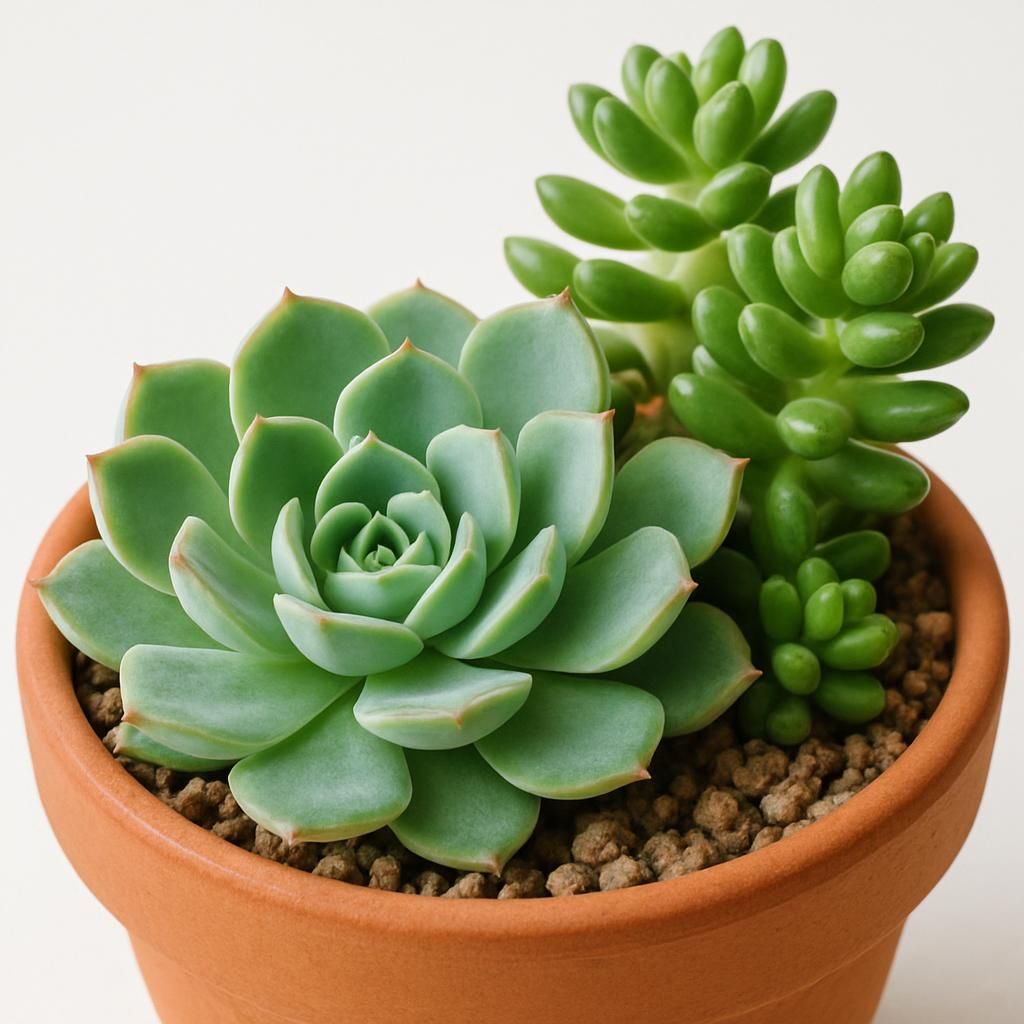
Introduction to succulents
Succulents are a diverse group of plants that have evolved specialized tissues to store water in leaves, stems, or roots, allowing survival in arid and semi-arid environments. Their thick, fleshy structures reduce transpiration and enable long periods between waterings, making them ideal for water-wise agriculture, xeriscaping, and container production. Commercial growers value succulents for their rapid turnover in nursery sales, resilience to shipping stress, and broad consumer appeal across temperate and subtropical markets.
Botanical Profile of succulents
Succulents belong to more than 60 plant families, with the largest representation in Crassulaceae (sedums, echeverias), Aizoaceae (lithops, ice plants), and Cactaceae (cacti). Most species exhibit CAM photosynthesis, opening stomata at night to minimize water loss. Leaf succulents such as Echeveria and Crassula store moisture in expanded mesophyll cells, while stem succulents like columnar cacti rely on ribbed, photosynthetic stems. Root systems are typically shallow and fibrous, rapidly absorbing episodic rainfall. Many species produce adventitious roots along stems, facilitating vegetative spread in natural habitats.
Soil, pH, and Climate Requirements for succulents (MUST INCLUDE A MARKDOWN TABLE OF IDEAL CONDITIONS)
Successful succulent cultivation begins with a fast-draining, low-fertility substrate that prevents root-zone saturation. A mineral-based mix containing coarse sand, pumice, or perlite combined with minimal organic matter provides the aeration and rapid drying required by most species. Soil pH should remain slightly acidic to neutral; alkaline conditions above 7.5 can induce micronutrient lockout. Temperature tolerance varies by species, but the majority perform best between 15–27 °C during active growth and tolerate brief dips to 5 °C when dry. High light intensity (minimum 6 hours direct sun or 10,000–20,000 lux under supplemental LED) is essential for compact growth and vivid coloration.
| Parameter | Ideal Range/Value | Notes |
|---|---|---|
| Soil Type | 50–70 % mineral (pumice, perlite, coarse sand); 30–50 % organic | Prevents compaction and waterlogging |
| pH | 5.5–7.0 | Slightly acidic to neutral; test annually |
| Temperature (day) | 18–27 °C | Optimal photosynthesis and growth |
| Temperature (night) | 10–15 °C | Encourages compact habit and color |
| Light | 6+ hours direct or 10k–20k lux | Full sun for most; bright shade for soft-leaved types |
| Humidity | 30–50 % | Low humidity reduces fungal risk |
| USDA Zones | 9–11 (most species) | Protect below 5 °C; hardy sedums to zone 4 |
Step-by-Step Planting & Propagation
- Select healthy, disease-free parent plants showing firm leaves and no signs of rot.
- Prepare a sterile, well-draining propagation mix (equal parts pumice and perlite).
- For leaf cuttings, gently twist a mature leaf from the stem, ensuring the base remains intact; allow 3–7 days for callusing.
- Lay callused leaves on the surface of the mix; do not bury. Maintain 20–24 °C and bright indirect light.
- For stem cuttings, use a sterile blade to remove 5–10 cm of healthy stem; remove lower leaves and callus 5–7 days before inserting 2–3 cm deep.
- Keep the medium barely moist until roots form (2–6 weeks); increase light gradually once new growth appears.
- Pot rooted plants into final containers using the soil recipe above; water lightly after transplanting.
Care & Maintenance regimes for succulents (MUST INCLUDE A MARKDOWN TABLE OF WATER, FERTILIZER, AND PRUNING SCHEDULES)
Watering frequency depends on season, pot size, and microclimate; the “soak and dry” method remains the gold standard. Fertilize sparingly during the active growing season using a balanced, low-nitrogen formula diluted to quarter strength. Pruning removes spent flower stalks and damaged tissue, improving airflow and aesthetics.
| Season | Watering Frequency | Fertilizer Schedule | Pruning Tasks |
|---|---|---|---|
| Spring | Every 10–14 days | ¼-strength balanced liquid monthly | Remove winter-damaged leaves; shape plants |
| Summer | Every 7–10 days | ¼-strength balanced liquid every 3–4 weeks | Deadhead flowers; propagate from trimmings |
| Autumn | Every 14–21 days | Cease fertilization by late September | Light cleanup of spent growth |
| Winter | Every 21–30 days or less | None | Remove desiccated leaves only |
Pests, Diseases & Organic Management
Common succulent pests include mealybugs, scale insects, and spider mites. Overwatering encourages root rot and Pythium infections. Organic control begins with cultural practices: isolate new plants, maintain airflow, and avoid overhead irrigation. For mealybugs and scale, apply 70 % isopropyl alcohol on cotton swabs or horticultural oil at 1 % concentration. Spider mite populations are suppressed by strong water sprays and predatory mites. Remove and destroy severely infected tissue; repot survivors in fresh, sterile medium.
Harvesting, Curing & Optimal Storage
Most succulents are not harvested for edible yield; instead, commercial value lies in whole plants or cuttings. Harvest cuttings in early morning when turgor is highest. Allow cut surfaces to callus 3–7 days in a shaded, ventilated area before packing. Finished plants should be held at 10–15 °C with minimal watering for up to four weeks prior to shipping. Long-term storage of dormant specimens requires 5–10 °C and <40 % humidity to prevent etiolation and rot.
Companion Planting for succulents
Succulents pair well with other drought-tolerant species that share similar irrigation and soil requirements. Compatible companions include Thyme, Yarrow, and Rosemary for aromatic pest deterrence and visual contrast. Avoid planting with high-water-demand crops such as Tomato or Lettuce that can create overly moist microclimates. In mixed containers, position succulents on the south or west side to maximize light exposure while the companions occupy the cooler east or north edges.