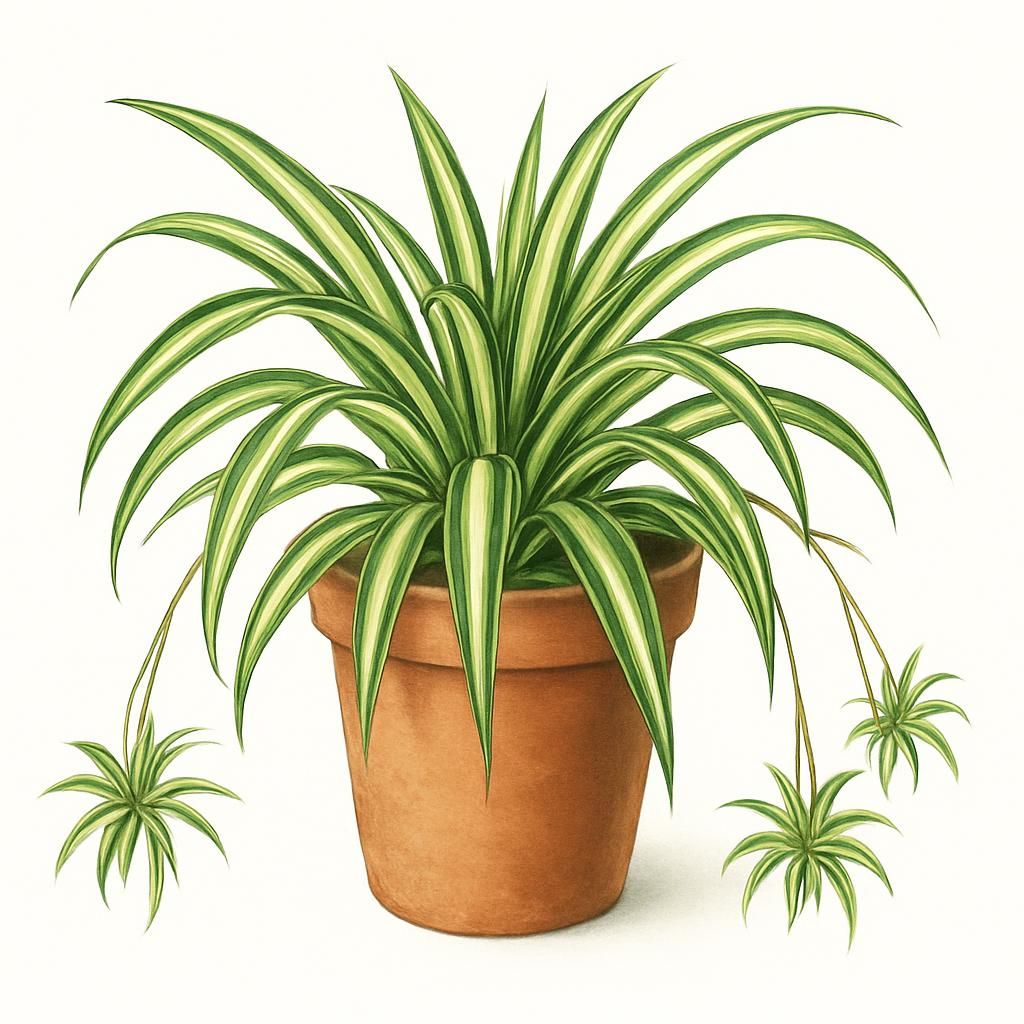
Introduction to Spider Plant
Spider plant (Chlorophytum comosum) is one of the most widely cultivated ornamental foliage plants globally, valued for its resilience, air-purifying qualities, and rapid production of offsets. Originally native to southern Africa, it has become a staple in both interior landscapes and protected outdoor gardens. Its arching, variegated leaves and cascading plantlets make it a favorite among professional growers and hobbyists alike.
Beyond aesthetics, spider plant is recognized for its ability to tolerate a range of light and humidity conditions while remaining relatively pest-resistant. Commercial nurseries propagate it at scale due to its fast turnaround and low input requirements. Home gardeners appreciate its forgiving nature, making it suitable for beginners and experienced cultivators seeking low-maintenance greenery.
Botanical Profile of Spider Plant
Chlorophytum comosum belongs to the Asparagaceae family and is characterized by its clumping growth habit, fleshy tuberous roots, and long, narrow leaves that may be solid green or variegated with white or yellow stripes. Mature plants produce wiry stolons that terminate in miniature plantlets, enabling vegetative reproduction.
The species typically reaches 30–45 cm in height with an equal or greater spread when grown in containers. Flowers are small, white, and star-shaped, appearing on branched inflorescences, though they are often secondary to the plant’s foliage display. The root system stores water and nutrients, contributing to its drought tolerance once established.
Soil, pH, and Climate Requirements for Spider Plant
Spider plant performs best in loose, well-aerated substrates that prevent waterlogging while retaining adequate moisture. A slightly acidic to neutral pH supports optimal nutrient uptake. Temperature and humidity ranges should mimic its subtropical origins for vigorous growth.
| Parameter | Ideal Range | Notes |
|---|---|---|
| Soil Type | Loamy, well-draining mix | 2 parts potting soil + 1 part perlite or coarse sand |
| Soil pH | 6.0–7.0 | Avoid extremes below 5.5 or above 7.5 |
| Temperature | 18–27 °C daytime | Minimum 10 °C; protect from frost |
| Relative Humidity | 40–60 % | Tolerates lower humidity; misting optional |
| Light | Bright indirect or 4–6 hours filtered sun | Avoid direct harsh midday sun |
| Spacing (containers) | 20–30 cm between plants | Allows air circulation and stolon development |
Step-by-Step Planting & Propagation
- Select healthy mother plants free of pests and showing vigorous variegation.
- Prepare a sterile, well-draining potting mix and fill containers with drainage holes.
- For division: carefully separate root clumps during repotting in spring, ensuring each section has roots and foliage.
- For plantlet propagation: allow stolons to develop 5–8 cm plantlets, then root them in water or directly in moist medium.
- Maintain consistent moisture and bright indirect light until new roots form (typically 2–4 weeks).
- Transplant rooted plantlets into individual pots once they reach 8–10 cm in height.
Care & Maintenance regimes for Spider Plant
Routine care focuses on balanced watering, periodic feeding, and removal of spent leaves to maintain appearance and health.
| Task | Frequency | Details |
|---|---|---|
| Watering | Every 7–10 days | Allow top 2–3 cm of soil to dry; reduce in winter |
| Fertilizer | Every 4–6 weeks (spring–summer) | Dilute balanced liquid fertilizer (10-10-10) at half strength |
| Pruning | As needed | Remove yellow or damaged leaves; trim stolons to control spread |
| Repotting | Every 2–3 years | Upgrade pot size when roots fill container; best done in spring |
Pests, Diseases & Organic Management
Spider plant is generally resistant to major pests, but spider mites and mealybugs can occasionally appear under stressed conditions. Overwatering may lead to root rot caused by Pythium or Phytophthora species. Organic management includes improving air circulation, avoiding overwatering, and applying neem oil or insecticidal soap at the first sign of infestation.
Regular inspection of leaf undersides and wiping foliage with a damp cloth helps prevent outbreaks. Maintaining optimal humidity and avoiding temperature extremes reduces plant stress that invites pests.
Harvesting, Curing & Optimal Storage
While spider plant is primarily grown for foliage rather than harvest, offsets (plantlets) can be “harvested” for propagation year-round. Remove mature plantlets once they have several leaves and visible root initials. No curing is required; immediately place in water or soil for rooting.
Mature plants can be divided during repotting. Store divisions in moist sphagnum moss at 15–20 °C for up to one week if immediate planting is not possible. Keep newly potted plants in bright indirect light and gradually acclimate to normal conditions.
Companion Planting for Spider Plant
Spider plant pairs well with other low-maintenance foliage plants such as Thai Basil and Lettuce in mixed indoor or greenhouse displays. Its air-purifying properties complement edible crops, while its tolerance for varying light levels allows flexible placement alongside Cherry Tomato in bright indoor settings. Avoid pairing with heavy feeders that compete for nutrients in the same container.
For additional guidance on seasonal transitions and soil health practices that benefit foliage crops, see The Forgotten Art of Fall Soil Revival: 8 Organic Strategies for Small Farm Resilience.