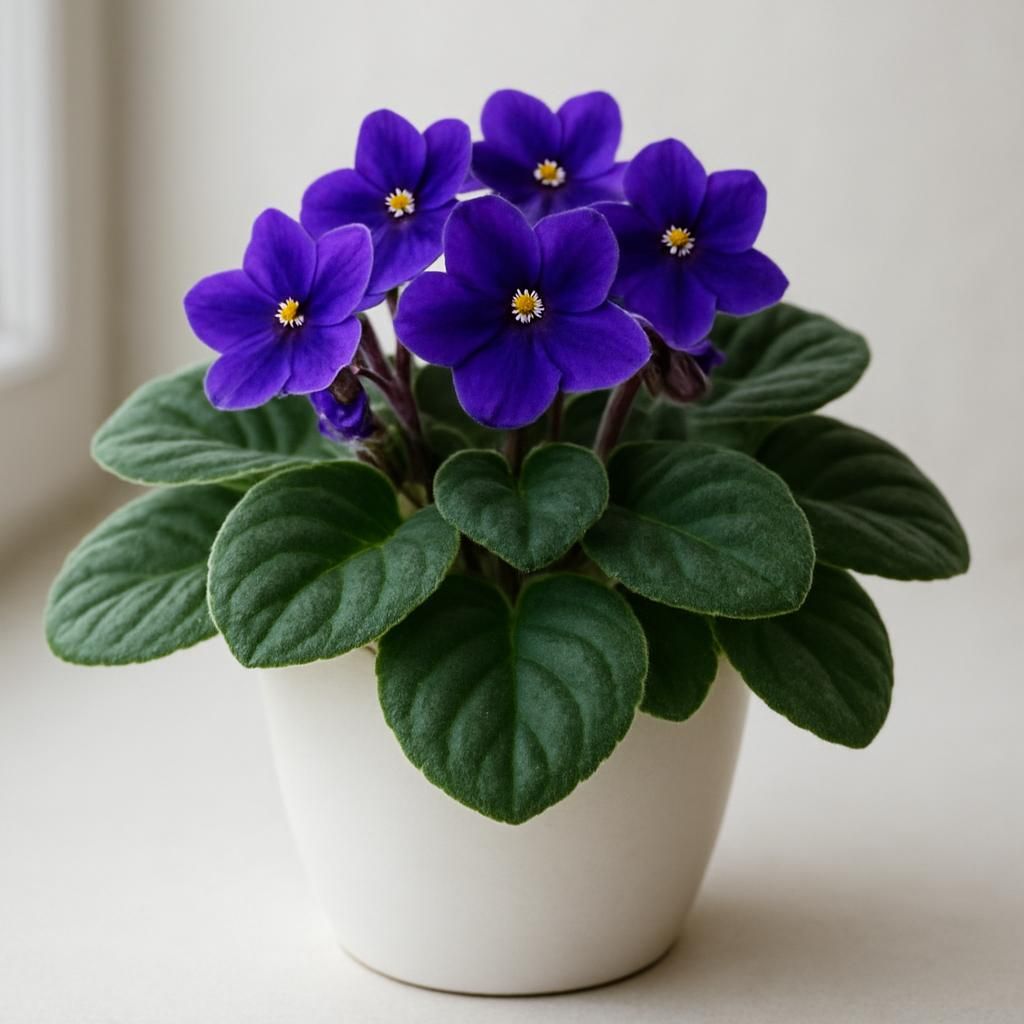
Introduction to African Violet
African Violet (Saintpaulia ionantha) is one of the most beloved flowering houseplants worldwide, known for its compact rosette growth and continuous production of velvety, colorful blooms. Originally discovered in the mountainous regions of East Africa, it has become a staple for indoor gardeners seeking reliable color with minimal space. Its adaptability to artificial light and controlled indoor environments makes it ideal for apartments, offices, and greenhouses.
Successful cultivation hinges on replicating its native humid, shaded understory conditions while avoiding common pitfalls such as overwatering and leaf wetting. With proper attention to light intensity, soil moisture, and balanced nutrition, growers can achieve continuous flowering cycles lasting 8–10 months annually.
Botanical Profile of African Violet
Saintpaulia ionantha belongs to the Gesneriaceae family and features thick, pubescent leaves arranged in a basal rosette. Flowers emerge on slender peduncles and display five-lobed corollas in shades of purple, pink, white, and bicolor patterns. The plant produces both male and female reproductive structures within each flower, facilitating self-pollination under favorable conditions.
Mature specimens typically reach 15–20 cm in diameter with individual leaves measuring 5–8 cm. Roots are fibrous and shallow, making the species highly responsive to container size and soil aeration. Genetic diversity within commercial cultivars has produced trailing, variegated, and miniature forms suited to varied display styles.
Soil, pH, and Climate Requirements for African Violet
African Violet demands a lightweight, well-aerated medium that retains moisture yet drains rapidly. A peat-based or coir-based soilless mix amended with perlite or vermiculite provides optimal structure. The ideal pH range is slightly acidic to neutral, supporting nutrient uptake without risking manganese toxicity.
Temperature consistency between 18–24 °C during the day and no lower than 15 °C at night prevents physiological stress. Relative humidity of 50–70 % mimics native cloud-forest conditions and reduces transpiration stress. Bright, indirect light of 10,000–12,000 lux for 12–14 hours daily promotes compact growth and prolific blooming.
| Parameter | Ideal Range/Value | Notes |
|---|---|---|
| Soil Type | Peat/perlite/coir soilless mix | 50 % peat, 25 % perlite, 25 % vermiculite |
| pH | 6.0–6.8 | Avoid below 5.8 or above 7.2 |
| Temperature | 18–24 °C day / 15–18 °C night | Protect from cold drafts and heat vents |
| Relative Humidity | 50–70 % | Use pebble trays or room humidifiers |
| Light Intensity | 10,000–12,000 lux (bright indirect) | East or west windows with sheer curtains |
| Container | 10–15 cm diameter, drainage holes | Shallow pots encourage root health |
Step-by-Step Planting & Propagation
Begin propagation by selecting a healthy, mature leaf with 3–5 cm of petiole attached. Insert the petiole at a 45-degree angle into moist propagation mix, ensuring the leaf blade remains above the surface. Maintain 22–24 °C and high humidity under a clear dome or plastic bag for 4–6 weeks until plantlets emerge.
Once plantlets develop 2–3 true leaves, carefully separate them from the parent leaf and transplant into 6 cm pots filled with the standard soil mix. Water gently from the bottom to avoid wetting foliage. Within 6–8 months, well-cared-for divisions reach flowering size.
Seed propagation is possible but slower; surface-sow fine seeds on sterile medium and provide 16-hour photoperiods with bottom heat of 24 °C. Germination occurs in 14–21 days, followed by pricking out at the first true-leaf stage.
Care & Maintenance regimes for African Violet
Consistent watering, measured feeding, and timely grooming sustain continuous bloom cycles. Bottom watering prevents crown rot and leaf spotting while allowing precise moisture control. Fertilization should be light and frequent rather than heavy and infrequent.
| Task | Frequency | Method & Rate | Seasonal Adjustments |
|---|---|---|---|
| Watering | Every 7–10 days | Bottom water with room-temperature water until soil is evenly moist | Reduce to every 10–14 days in winter |
| Fertilizer | Every watering in growing season | ¼–½ strength balanced liquid fertilizer (20-20-20) | Switch to bloom booster (10-30-20) in spring |
| Pruning | Monthly | Remove spent blooms and yellowed leaves at base | Increase grooming after heavy bloom flush |
Rotate plants 90 degrees weekly for symmetrical growth. Repot annually in fresh medium when roots fill the container, typically increasing pot diameter by no more than 2 cm.
Pests, Diseases & Organic Management
Common insect pests include Mealybugs, Spider Mites, and Thrips. Inspect leaf axils and undersides weekly. Organic controls begin with wiping leaves using a cotton swab dipped in 70 % isopropyl alcohol, followed by applications of insecticidal soap or neem oil at 7-day intervals.
Fungal issues such as Botrytis and crown rot arise from excess moisture and poor air circulation. Remove affected tissue immediately and improve airflow with small fans. Soil-borne Pythium and Rhizoctonia are prevented by using sterile media and avoiding overwatering.
Harvesting, Curing & Optimal Storage
Although African Violet is grown primarily as an ornamental, spent flowers can be harvested for seed saving or dried for decorative use. Collect mature, fully opened blooms in the morning when turgor is highest. Air-dry on screens in a dark, well-ventilated room at 20–22 °C for 5–7 days.
Store dried flowers in airtight glass jars away from direct light to preserve color. For live plants, no curing is required; simply maintain standard cultural conditions to encourage reblooming within 6–8 weeks.
Companion Planting for African Violet
African Violet pairs well with humidity-loving foliage plants such as Boston Fern and Peperomia in shared terrariums or humid corners. These companions increase localized humidity and provide visual contrast without competing for nutrients. Avoid placing near ethylene-producing fruits such as bananas, which can accelerate flower senescence.