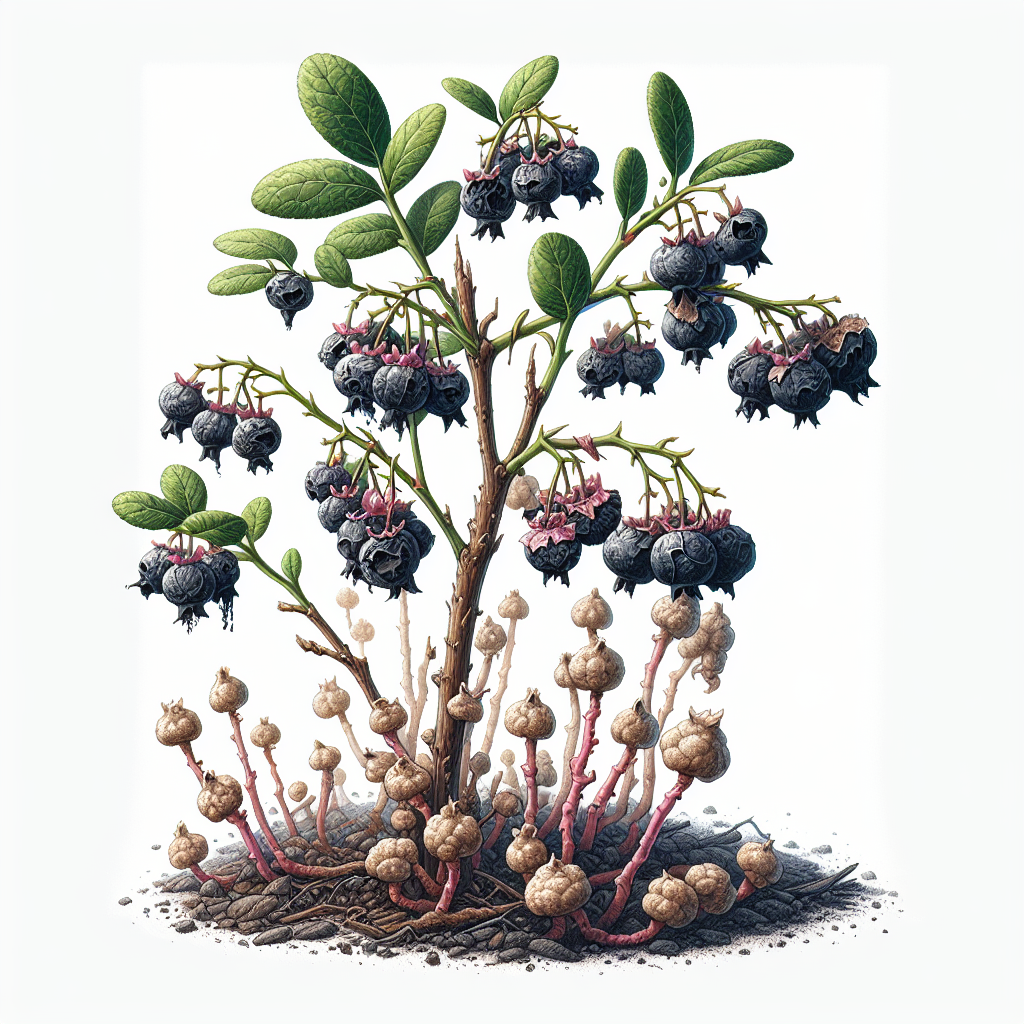
Definitive Diagnostic and Management Guide for Mummy Berry
Introduction to Mummy berry
Mummy berry, caused by the fungus Monilinia vaccinii-corymbosi, stands as one of the most devastating diseases confronting blueberry growers worldwide. This pathogen transforms succulent, promising berries into grotesque, hardened mummies, rendering them inedible and slashing yields by up to 50-80% in severe outbreaks. First identified in the early 1800s in the northeastern United States, mummy berry has since spread across major blueberry production regions, including the Pacific Northwest, Midwest, and parts of Europe.
The disease's economic toll is immense, with losses exceeding millions annually for commercial operations. For small-scale and organic farmers, it poses a unique challenge due to limited chemical options and the need for precise timing in interventions. Understanding its biology is crucial: the fungus overwinters in fallen mummies on the orchard floor, releasing ascospores in spring that infect emerging leaves, leading to shoot blight. Infected shoots produce conidia that spread to flowers, ultimately mummifying berries.
This guide provides professional-grade, SEO-optimized strategies for diagnosis, organic management, and prevention. Whether you're battling mummy berry on highbush, lowbush, or rabbiteye varieties, these evidence-based practices will help safeguard your harvest. Early detection and proactive measures are key to minimizing damage while maintaining organic certification. For more on integrated pest management, check out this insightful Spring Pest Patrol blog post.
Identifying Symptoms & Damage
Accurate diagnosis begins with recognizing mummy berry's distinct phases. The disease progresses through several stages, each with hallmark signs that differentiate it from mimics like Botrytis gray mold or anthracnose.
Stage 1: Leaf Infection (Shoot Blight) In early spring, as new leaves emerge, watch for small, yellowish-green spots on young foliage. These expand into brown, necrotic lesions with a yellow halo, often along leaf margins or veins. Infected leaves wilt and turn tan to reddish-brown, resembling frost damage. Shoots may flag or droop, with blackened stems. Cut lengthwise to reveal blackened vascular tissue—a diagnostic hallmark.
Stage 2: Flower and Fruit Infection (Blossom Blight) Conidia from blighted shoots infect open flowers, causing petals to turn brown and shrivel. Infected blossoms drop prematurely, leaving peduncles that remain attached. Developing berries abort or turn reddish-brown, becoming leathery and pinkish ('pink berry' stage). This is often mistaken for frost injury but lacks the watery appearance.
Stage 3: Mummy Formation True mummification occurs 2-4 weeks post-infection. Berries harden, turn gray-black, and shrivel to 1/3 original size, resembling raisins. Mature mummies sink into clusters, covered in white fungal mycelium under humid conditions. Severely affected bushes produce few marketable berries, with mummies serving as next season's inoculum.
Damage Assessment Yield losses correlate with infection timing: early shoot blight reduces vegetative growth; mid-season flower infections devastate fruit set. In highbush blueberries, 10% blossom blight can cause 30% crop loss. Scout weekly from bud break, using a 10x hand lens to spot pseudothecia on mummies. Differentiate from powdery mildew by absence of white powder and presence of fungal mats on mummies.
Lifecycle and Progression of Mummy berry
Mastering mummy berry's complex lifecycle is essential for timed interventions. The fungus Monilinia vaccinii-corymbosi survives winter as sclerotia inside berry mummies on the soil surface or in leaf litter.
Overwintering Phase (Fall-Winter) Mummies drop to the orchard floor post-harvest. By late fall, sclerotia form internally, resisting desiccation and cold. Buried mummies >2 inches deep rarely produce apothecia.
Ascospore Production (Spring) In spring (soil temps 50-60°F), apothecia—small, elongated, beige 'club fungi' (1/8-1/4 inch)—emerge from mummies. They release ascospores during wet periods (leaf wetness >9 hours at 55-70°F). Ascospores infect new leaves, causing shoot blight within 72 hours.
Conidial Phase (Late Spring) Blighted shoots produce conidia in humid conditions. Wind and rain splash these to flowers, infecting during bloom (optimal: 60-75°F, wet petals). Incubation is 3-7 days.
Mummy Development and Repeat Cycle Infected berries mummify by mid-summer, dropping to perpetuate the cycle. A single apothecium releases millions of ascospores over 2-3 weeks. Disease progression accelerates in dense canopies with poor air flow. For detailed blueberry cultivation tips, see the Bluecrop Blueberry wiki page.
Environmental Triggers & Risk Factors
Mummy berry thrives under specific conditions, making risk prediction vital.
Key Weather Triggers Primary infection requires prolonged leaf wetness (12+ hours) at 50-70°F during green tip to petal fall. Secondary spread favors high humidity (>90%) and temps 60-80°F. Rain events splash conidia up to 3 feet; wind carries ascospores miles.
Orchard Risk Factors
- High Inoculum Load: >5 mummies/bushel soil = severe risk.
- Cultivar Susceptibility: Half-highs and northern highbush most vulnerable; rabbiteye more resistant.
- Site Issues: Poor drainage, heavy shade, tight row spacing (<6 ft).
- Cultural Practices: Delayed pruning, excessive nitrogen, irrigation wetting foliage.
Regional Hotspots Prevalent in Michigan, Oregon, New Jersey, Maine. Acidic soils (pH <5.0) enhance apothecia formation. Monitor via local extension trap networks for ascospore flights.
Organic Control & Treatment Plans
Organic management emphasizes sanitation, cultural controls, and OMRI-listed fungicides. Integrated programs reduce inoculum by 90%.
Sanitation (Foundation) Rake and destroy all mummies pre-bud swell (flail mow + burn/compost at 160°F). Tarp rows for 2 weeks to kill sclerotia via solarization. Remove blighted shoots promptly.
Cultural Practices
- Prune for 20-30% canopy openness; space rows 8-10 ft.
- Mulch with 4-6 inches sawdust/wood chips to bury mummies.
- Fertilize balanced; avoid lush growth.
- Irrigate at base; promote dry canopies with fans.
Organic Fungicides (Timed Applications)
- Bud Swell: Serenade (Bacillus subtilis) or Double Nickel (Bacillus amyloliquefaciens) at 2-3 gal/A.
- Early Leaf Emergence: Alternate with Captan (organic in some regions) or sulfur.
- Bloom: Stargus or Grandevo (chromobacterium) every 7 days during high risk.
- Post-Petal Fall: Continue until berry touch.
Biologicals: BotryStop (Gliocladium virens) suppresses apothecia. Apply pre-bud swell.
Monitoring Plan: Use mummy berry predictor models (UMass app) for spray timing. Scout 20 bushes/acre weekly.
Preventing Mummy berry in the Future
Long-term prevention builds resilient orchards:
Resistant Varieties: Plant 'Aurora,' 'Liberty,' 'Calypso' (highbush); 'Tifblue' (rabbiteye).
Orchard Design: Wide alleys, windbreaks for drying. Raised beds in wet areas.
Annual Protocols:
- Fall cleanup: Mow + mulch.
- Spring: Scout apothecia; apply pre-bloom fungicide.
- Summer: Destroy pink berries.
Soil Management: Maintain pH 4.5-5.5; incorporate cover crops like clover for suppression.
Rotation & Diversification: Interplant with less susceptible raspberry varieties.
Success stories show 95% control with 3-year commitment. Track via farm journals.
Crops Most Affected by Mummy berry
Mummy berry targets Ericaceae family, primarily:
- Blueberries (Vaccinium spp.): Highbush (V. corymbosum), lowbush (V. angustifolium), rabbiteye (V. virgatum)—90% of cases.
- Cranberries (Vaccinium macrocarpon): Less common but severe in wet bogs.
Rare on strawberry, blackberry. No reports on non-Ericaceae like apple or grape. Focus efforts on Vaccinium plantings. Global impact: 100,000+ acres affected yearly.