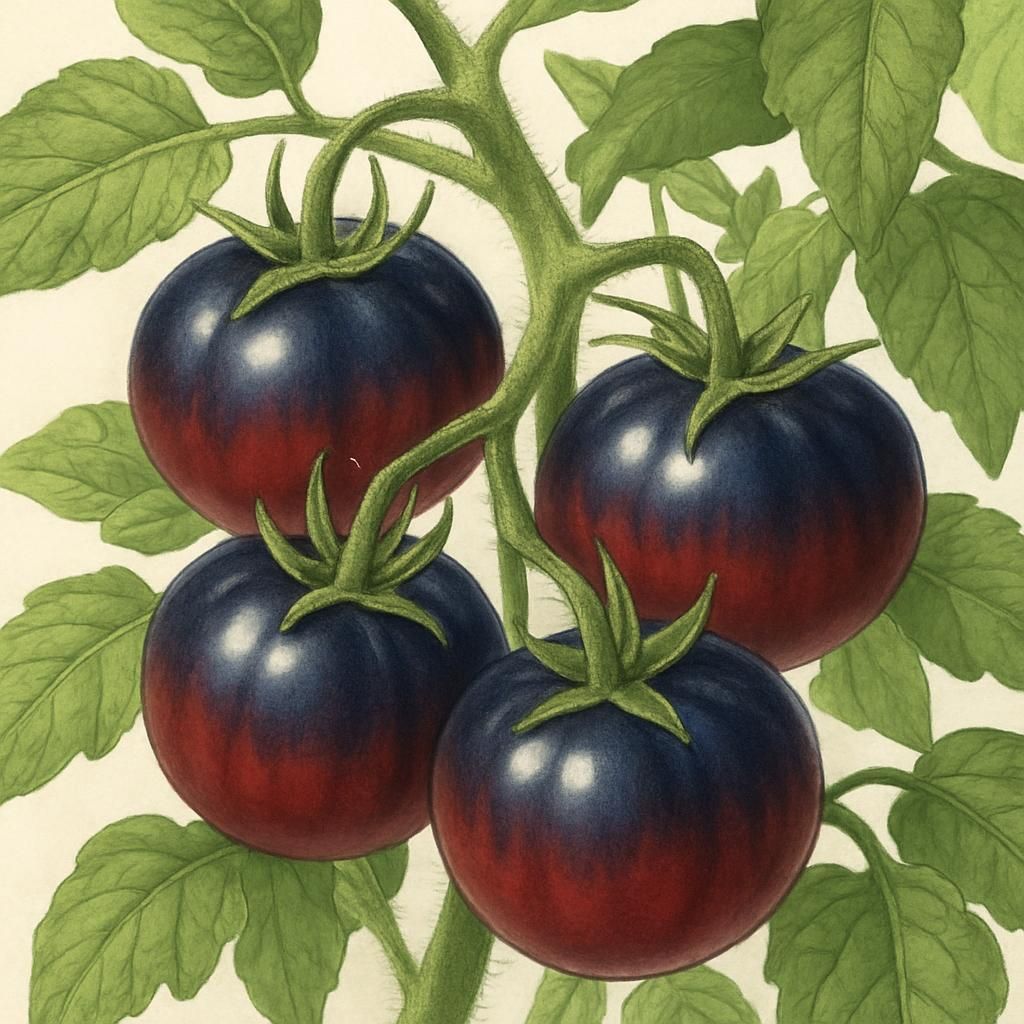
Introduction to Blue Bayou Tomato
Blue Bayou Tomato is a distinctive hybrid variety celebrated for its deep indigo-blue shoulders that develop from high anthocyanin content. This determinate tomato combines the visual appeal of specialty heirlooms with reliable production and strong resistance to common tomato ailments. Growers value its firm texture, balanced sweet-tart flavor, and ability to hold well on the vine or after harvest. The variety performs exceptionally in both open-field and protected cultivation systems, making it suitable for commercial growers and home gardeners alike.
Botanical Profile of Blue Bayou Tomato
Blue Bayou belongs to the Solanaceae family and exhibits typical tomato morphology with compound leaves, yellow flowers, and fleshy berries. The plant reaches 3–4 feet in height with a bushy, determinate growth habit that sets fruit in concentrated clusters. Fruits average 4–6 ounces with smooth, glossy skin that transitions from green to indigo-blue on the shoulders and deep red at the blossom end. Anthocyanins concentrated in the epidermis provide natural protection against ultraviolet light and oxidative stress. The variety demonstrates moderate vigor with sturdy stems and good leaf cover that reduces sunscald.
Soil, pH, and Climate Requirements for Blue Bayou Tomato
Successful cultivation of Blue Bayou Tomato begins with well-drained, fertile soil enriched with organic matter. The crop prefers a slightly acidic to neutral pH and consistent warmth during the growing season.
| Parameter | Ideal Range | Notes |
|---|---|---|
| Soil Type | Loamy, well-drained | Incorporate compost or aged manure |
| Soil pH | 6.2 – 6.8 | Test annually; adjust with lime or sulfur |
| Temperature (Day) | 70–85 °F (21–29 °C) | Optimal fruit set occurs in this range |
| Temperature (Night) | 60–70 °F (15–21 °C) | Avoid prolonged nights below 55 °F |
| Spacing | 18–24 inches between plants | Rows 36–48 inches apart |
| Sunlight | Full sun, 8+ hours | Partial shade reduces anthocyanin color |
| Frost Sensitivity | Tender | Transplant after last spring frost |
Step-by-Step Planting & Propagation
Start seeds indoors 6–8 weeks before the last expected frost. Sow seeds ¼ inch deep in sterile seed-starting mix and maintain soil temperature at 75–80 °F. Provide 14–16 hours of supplemental light daily. Harden off seedlings for 7–10 days before transplanting. Set transplants outdoors when soil has warmed to at least 60 °F and night temperatures remain above 55 °F. Plant deeply, burying the stem up to the first true leaves to encourage adventitious roots. Space plants 18–24 inches apart in rows 36–48 inches wide. Install stakes or cages at planting to support future fruit load.
Care & Maintenance regimes for Blue Bayou Tomato
Consistent moisture, balanced nutrition, and timely pruning maximize yield and fruit quality. Mulch with 2–3 inches of organic material to conserve moisture and suppress weeds.
| Task | Frequency | Details |
|---|---|---|
| Watering | 1–2 inches per week | Deep, infrequent irrigation; avoid foliage |
| Fertilizer (N-P-K) | Every 3–4 weeks | 5-10-10 or balanced organic blend after fruit set |
| Side-dressing | At flowering & fruit set | Compost tea or fish emulsion |
| Pruning | Weekly | Remove suckers below first flower cluster; maintain 2–3 main stems |
| Mulching | At transplant | Straw, shredded leaves, or black plastic |
| Weeding | As needed | Shallow cultivation to protect roots |
Pests, Diseases & Organic Management
Blue Bayou Tomato shows good resistance to many foliar diseases but remains susceptible to common tomato pests and soil-borne pathogens. Monitor regularly for Aphids, Whiteflies, and Spider Mites. Use floating row covers early in the season and introduce beneficial insects such as lady beetles and lacewings. Practice crop rotation and solarization to reduce Fusarium wilt and Verticillium wilt pressure. Apply neem oil or insecticidal soap at the first sign of infestation. Remove and destroy infected plant material promptly.
Harvesting, Curing & Optimal Storage
Harvest Blue Bayou Tomatoes when the blossom end reaches full red and the shoulders show deep indigo coloration. Gently twist or cut the stem to avoid bruising. For peak flavor, allow fruit to ripen fully on the vine. Store ripe tomatoes at 55–60 °F away from direct sunlight. Green fruit can be ripened indoors in a paper bag with an ethylene-producing fruit. Avoid refrigeration, which diminishes flavor and texture. Properly stored fruit maintains quality for 7–10 days.
Companion Planting for Blue Bayou Tomato
Pair Blue Bayou Tomato with aromatic herbs and flowers that deter pests and improve soil health. Basil repels Hornworms and enhances flavor. Marigold roots exude compounds that suppress nematodes. Nasturtium acts as a trap crop for aphids. Avoid planting near Fennel or Walnut trees, which can inhibit tomato growth. Interplant with Lettuce or Carrot for efficient space use and microclimate benefits.