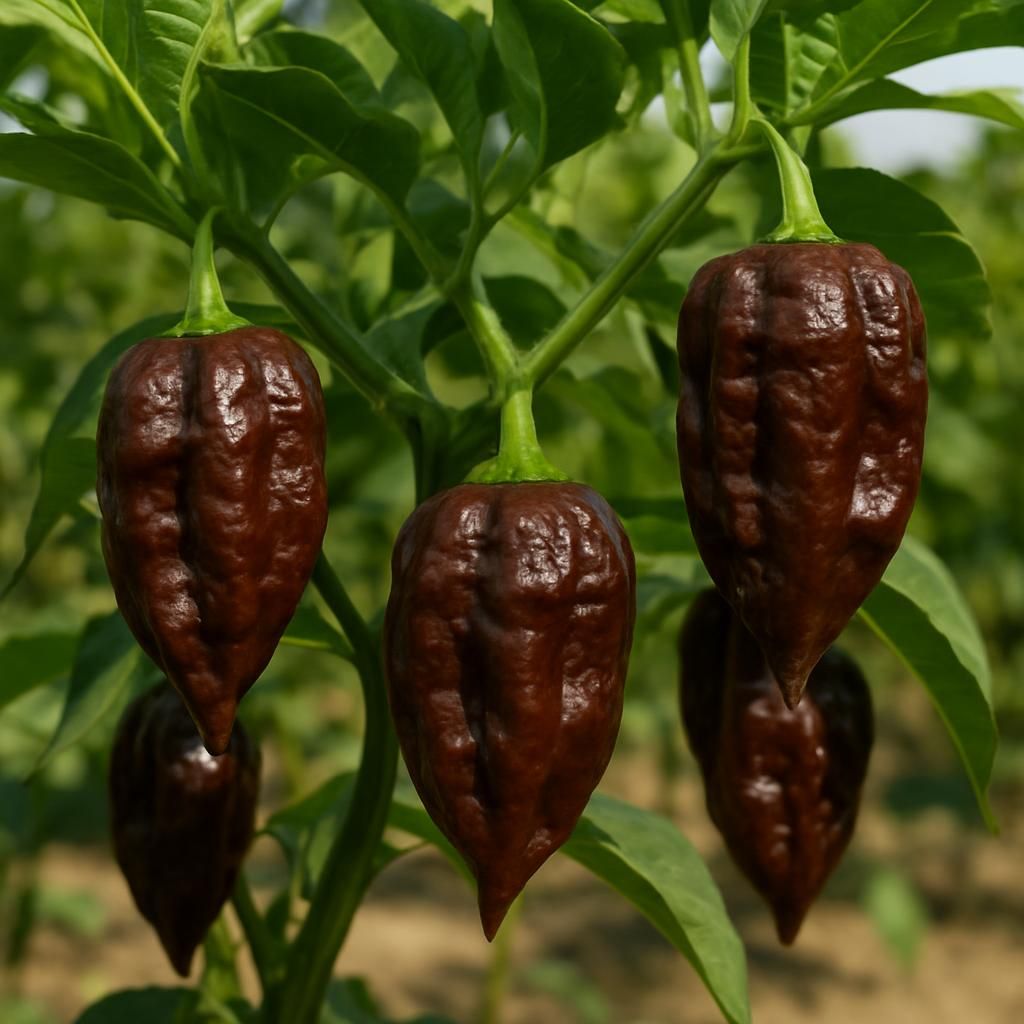
Introduction to Bhut Jolokia Chocolate
Bhut Jolokia Chocolate, also known as Chocolate Ghost Pepper, is a distinctive cultivar of the Ghost Pepper family renowned for its extreme heat and deep, earthy flavor. Originating from selective breeding of traditional Bhut Jolokia strains, this variety produces pods that mature from green to a rich, dark chocolate brown. Growers value it both for its culinary heat and its striking appearance, which makes it popular in specialty markets and hot sauce production.
With Scoville heat units often exceeding 1 million, Bhut Jolokia Chocolate sits among the hottest peppers commercially grown. Its thick-walled pods develop complex notes of smoke, cocoa, and dried fruit, distinguishing it from brighter red Ghost Pepper variants. The plant itself is vigorous, producing high yields under optimal tropical or subtropical conditions.
Commercial and home growers alike seek this cultivar for its combination of heat, flavor, and visual appeal. Successful cultivation requires attention to soil fertility, consistent warmth, and careful pest management to protect the long growing season needed for full pod development.
Botanical Profile of Bhut Jolokia Chocolate
Bhut Jolokia Chocolate belongs to the species Chili Pepper within the Solanaceae family. It exhibits the characteristic wrinkled, lantern-shaped pods of Capsicum chinense, though its pods are notably larger and darker than many other chinense types. Mature plants reach 3–5 feet in height with a bushy, branching habit.
The flowers are small, creamy-white with greenish-yellow anthers, typical of the species. Fruit set occurs after successful pollination, with pods developing over 80–100 days from flowering. The chocolate coloration develops during the final ripening stage as chlorophyll breaks down and anthocyanins and carotenoids accumulate.
Seeds are small, tan to light brown, and remain viable for 2–3 years when stored properly. The variety is perennial in frost-free climates but is most commonly grown as an annual in temperate regions.
Soil, pH, and Climate Requirements for Bhut Jolokia Chocolate
Bhut Jolokia Chocolate thrives in warm, well-drained soils rich in organic matter. It performs best in loamy or sandy loam textures that retain moisture without becoming waterlogged. Heavy clay soils should be amended with compost and perlite or coarse sand to improve drainage.
| Parameter | Ideal Range | Notes |
|---|---|---|
| Soil Type | Loamy / Sandy Loam | Well-drained, high organic matter |
| Soil pH | 6.0 – 6.8 | Slightly acidic to neutral |
| Temperature (Day) | 75–90 °F (24–32 °C) | Consistent warmth essential |
| Temperature (Night) | 60–70 °F (15–21 °C) | Avoid drops below 55 °F |
| Growing Season | 120–150 frost-free days | Long season required for full maturity |
| Sunlight | Full sun, 8+ hours | Maximize fruit set and heat development |
| Spacing | 24–36 inches between plants | Rows 36–48 inches apart |
Adequate airflow between plants reduces disease pressure while maintaining the warm microclimate these peppers prefer. In cooler climates, black plastic mulch or row covers can raise soil temperature and extend the effective season.
Step-by-Step Planting & Propagation
Start seeds indoors 8–10 weeks before the last expected frost. Sow seeds ¼ inch deep in sterile seed-starting mix and maintain soil temperature at 80–85 °F using a heat mat. Germination typically occurs in 7–14 days.
Once seedlings develop their first true leaves, transplant into 4-inch pots. Harden off plants for 7–10 days before moving outdoors, gradually increasing exposure to sun and wind. Set transplants in the garden only after nighttime temperatures remain above 60 °F.
Direct sowing is possible in tropical regions with consistently warm soil. Space plants 24–36 inches apart in rows 36–48 inches wide. Install drip irrigation at planting to ensure even moisture without wetting foliage.
Care & Maintenance regimes for Bhut Jolokia Chocolate
Consistent care throughout the long growing season maximizes both yield and pod quality. Regular monitoring of soil moisture, nutrient levels, and plant structure prevents stress that can reduce fruit set or increase susceptibility to pests.
| Task | Frequency | Details |
|---|---|---|
| Watering | 1–2 inches per week | Deep, infrequent watering; maintain even moisture, avoid waterlogging |
| Fertilizer | Every 3–4 weeks | Balanced NPK (5-5-5) early; switch to high-phosphorus (2-5-5) at bloom |
| Pruning | Once at 12–18 inches height | Pinch growing tip to encourage branching; remove lower leaves for airflow |
| Mulching | At planting and mid-season | 2–3 inches organic mulch to retain moisture and suppress weeds |
| Support | When plants reach 24 inches | Stake or cage to prevent lodging under heavy fruit load |
Side-dress with aged compost or worm castings mid-season to replenish nutrients. Avoid excessive nitrogen after flowering to prevent lush foliage at the expense of fruit.
Pests, Diseases & Organic Management
Common pests include Aphids, Spider Mites, and Thrips. Monitor undersides of leaves weekly and use insecticidal soap or neem oil at the first sign of infestation. Beneficial insects such as lady beetles and lacewings provide natural control.
Diseases of concern are Phytophthora, Fusarium wilt, and Powdery mildew. Prevent soil-borne pathogens with crop rotation, well-drained beds, and avoiding overhead irrigation. Copper-based fungicides or potassium bicarbonate sprays offer organic protection against foliar diseases.
Remove and destroy infected plant material promptly. Maintain good airflow through proper spacing and pruning to reduce humidity around the canopy.
Harvesting, Curing & Optimal Storage
Harvest pods when they reach full chocolate-brown color and firm texture, typically 90–110 days after transplant. Use clean pruners to cut stems, leaving a short peduncle attached. Wear gloves during harvest to avoid capsaicin contact with skin or eyes.
For fresh use, store pods in the refrigerator for up to two weeks. For longer storage, dry whole pods in a dehydrator at 125 °F until brittle, then store in airtight containers away from light. Alternatively, smoke-dry pods for enhanced flavor before grinding into powder.
Companion Planting for Bhut Jolokia Chocolate
Pair Bhut Jolokia Chocolate with Thai Basil and Marigold to repel aphids and nematodes while attracting pollinators. Nasturtium serves as a trap crop for aphids and provides edible flowers.
Avoid planting near Fennel or members of the Brassica family, which can compete for nutrients or attract shared pests. Interplant with Tomato or Eggplant for efficient use of space and similar cultural requirements.
Ghost Pepper shares identical growing needs and can be intercropped for staggered harvests and market diversity.