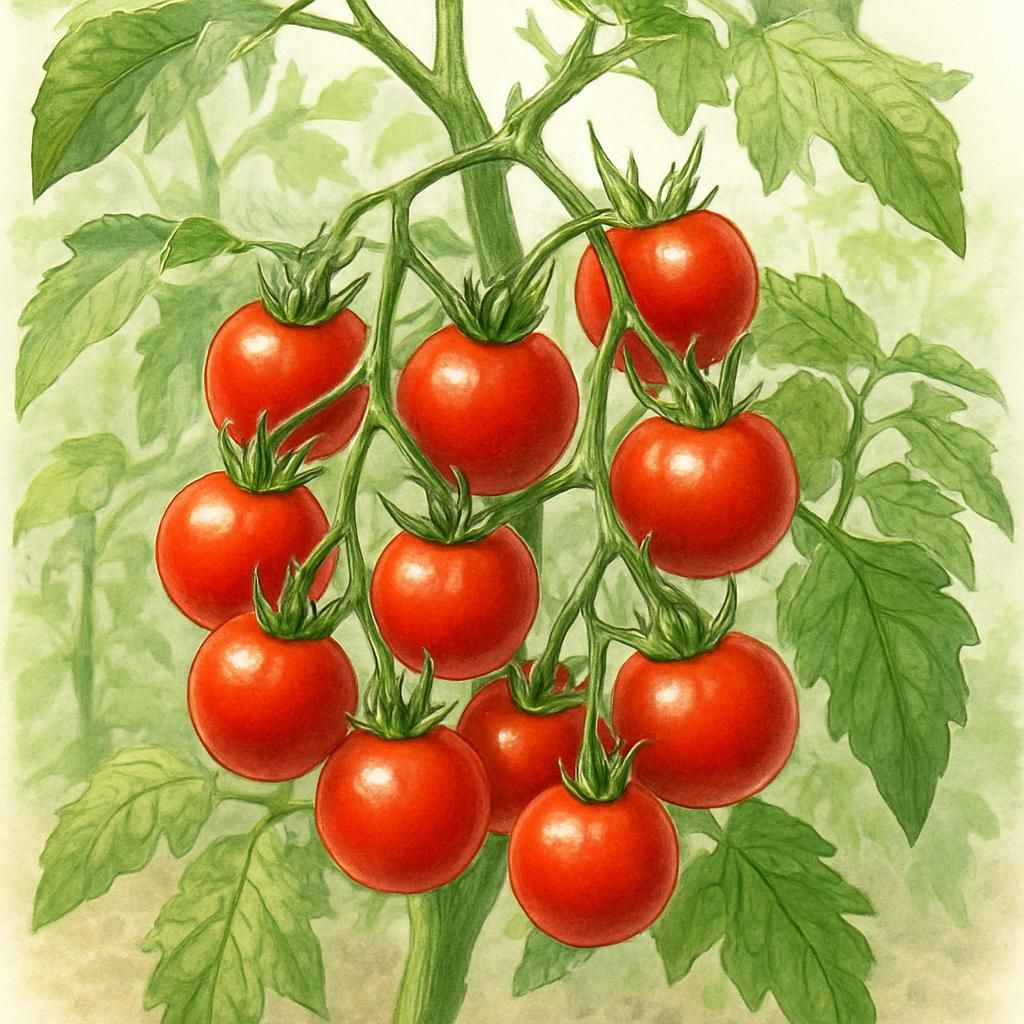
Introduction to Barry's Crazy Cherry Tomato
Barry's Crazy Cherry Tomato is a standout indeterminate cherry tomato variety developed for exceptional flavor, high yields, and resilience. Its vigorous vines can reach 6–8 feet, producing clusters of small, round, intensely sweet fruits that resist cracking even in fluctuating moisture conditions. Growers appreciate its early maturity, continuous production through the season, and suitability for both greenhouse and open-field cultivation.
Botanical Profile of Barry's Crazy Cherry Tomato
Barry's Crazy Cherry Tomato belongs to the Solanaceae family. It features highly branched indeterminate growth with compound leaves, yellow star-shaped flowers, and fruit clusters containing 8–12 berries. Fruits average 15–20 grams, exhibit a deep red color at maturity, and deliver a balanced Brix level of 8–10. The plant's extensive root system supports heavy fruit loads when provided with consistent nutrition and support structures.
Soil, pH, and Climate Requirements for Barry's Crazy Cherry Tomato (MUST INCLUDE A MARKDOWN TABLE OF IDEAL CONDITIONS)
Optimal soil for Barry's Crazy Cherry Tomato is a well-drained sandy loam or loam rich in organic matter. The crop performs best in slightly acidic to neutral conditions with consistent moisture and warm temperatures.
| Parameter | Ideal Range | Notes |
|---|---|---|
| Soil Type | Sandy loam to loam | High organic matter improves fertility |
| Soil pH | 6.0–6.8 | Avoid below 5.5 or above 7.5 |
| Temperature (Day) | 21–29 °C (70–85 °F) | Optimal fruit set occurs in this range |
| Temperature (Night) | 15–20 °C (59–68 °F) | Below 13 °C reduces pollination |
| Spacing | 45–60 cm between plants | Rows 90–120 cm apart |
| Sunlight | Full sun (6–8+ hours) | Supplemental lighting in low-light regions |
Step-by-Step Planting & Propagation
Start seeds indoors 6–8 weeks before the last frost. Sow 1 cm deep in sterile seed-starting mix at 24–27 °C. Transplant seedlings outdoors when soil reaches 18 °C and all frost danger has passed. Harden off plants for 7–10 days. Install sturdy cages or trellises at planting. Space plants 45–60 cm apart in rows 90–120 cm wide. Water immediately after transplanting and apply a balanced starter fertilizer.
Care & Maintenance regimes for Barry's Crazy Cherry Tomato (MUST INCLUDE A MARKDOWN TABLE OF WATER, FERTILIZER, AND PRUNING SCHEDULES)
Consistent irrigation, targeted nutrition, and regular pruning are essential for maximizing fruit quality and preventing disease.
| Growth Stage | Watering Schedule | Fertilizer Schedule | Pruning Schedule |
|---|---|---|---|
| Seedling/Transplant | Keep evenly moist, 2–3 times/week | Low-nitrogen starter at transplant | Remove lower leaves touching soil |
| Vegetative | 2.5–4 cm/week, deep infrequent | High-nitrogen every 2 weeks until flowering | Remove suckers below first flower cluster |
| Flowering/Fruiting | 3–5 cm/week, morning applications | Balanced NPK (5-10-10) every 10–14 days | Continue sucker removal; top vines at 6 ft |
| Late Season | Reduce to avoid cracking | Switch to potassium-rich formula | Remove diseased foliage promptly |
Pests, Diseases & Organic Management
Common challenges include Aphids, Spider Mites, Whiteflies, Early Blight, and Late Blight. Implement integrated pest management: scout weekly, use insecticidal soaps and neem oil, and release beneficial insects such as lady beetles and lacewings. Rotate crops every 3–4 years and maintain good airflow through pruning to reduce fungal pressure.
Harvesting, Curing & Optimal Storage
Harvest when fruits reach full color and slight softness. Pick clusters by cutting stems to avoid damage. For short-term storage, keep at 13–15 °C with 85–90 % humidity. Do not refrigerate. Excess fruit can be sun-dried or frozen whole for later use. See The Overlooked Art of Seasonal Harvest Timing for Small Farm Profit for advanced timing strategies.
Companion Planting for Barry's Crazy Cherry Tomato
Pair Barry's Crazy Cherry Tomato with Basil, Marigold, Nasturtium, and Garlic to deter pests and improve flavor. Avoid planting near Fennel or Walnut trees. Interplant with Lettuce or Carrot for efficient space use and microclimate benefits.