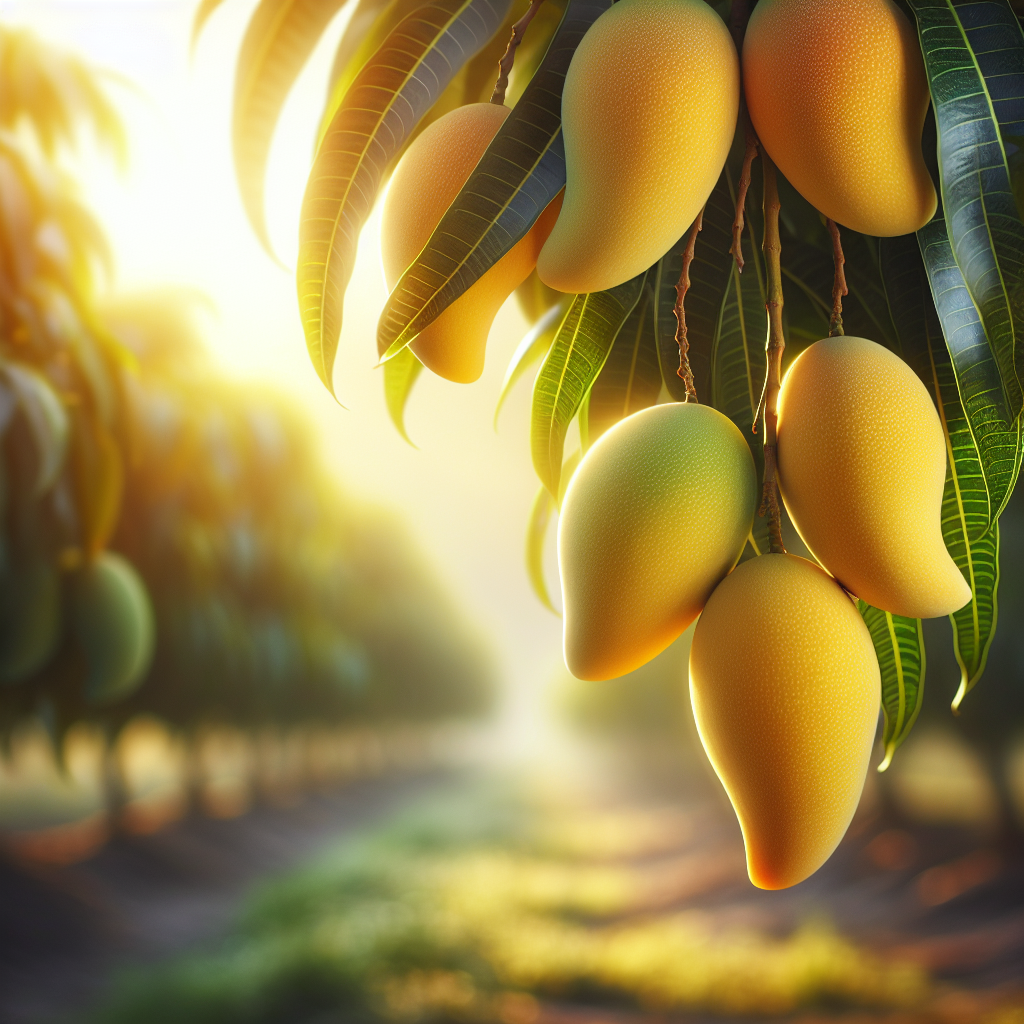
Introduction to Ataulfo Mango
Originating in the Soconusco region of Chiapas, Mexico, this cultivar became internationally famous under names such as honey mango, champagne mango, and young mango in some export channels, though true Ataulfo fruit has a specific genetic and horticultural identity. It is widely recognized for its deep yellow flesh, almost fiberless eating quality, thin seed, and a distinctive kidney-shaped, slightly flattened fruit form that sets it apart from larger, more fibrous commercial mangoes.
For growers, the attraction is not only flavor but market position. Ataulfo fruit often commands a premium because consumers value its creamy texture, excellent brix potential, and manageable size. However, that premium quality comes with production nuances: the cultivar benefits from excellent drainage, careful disease prevention during flowering, and balanced fertilization that supports fruit quality without producing overly vigorous, nonproductive vegetative flushes. If you already grow other mangoes, compare habit and management with the broader Mango guide.
Ataulfo is especially well suited to warm lowland and mid-elevation mango zones where dry weather coincides with floral induction and fruit set. In humid regions it can still perform well, but Anthracnose pressure rises sharply, and crop loss during bloom can become the defining challenge. In cooler subtropics, performance depends on winter minimums, frost protection in the juvenile phase, and choosing warm microsites with maximum sun exposure.
Botanical Profile of Ataulfo Mango
This cultivar belongs to the Anacardiaceae family and the species Mangifera indica. Like other mangoes, it is an evergreen tree with leathery lanceolate leaves, panicle-type inflorescences, and a drupe fruit. Young foliage often emerges bronze to reddish before maturing to glossy green. Ataulfo typically develops a moderately vigorous canopy, somewhat more compact and manageable than some sprawling commercial cultivars, though vigor varies strongly with rootstock, soil fertility, and irrigation.
The tree can eventually reach 6-10 meters or more if unpruned, but commercial orchards usually maintain it lower for harvest efficiency, spray coverage, and canopy light penetration. In managed systems, 3.5-5 meters is a practical target. The root system is dominated by a strong taproot in seedling stages plus a broad network of feeder roots concentrated in the upper 30-60 cm of soil, particularly where organic matter and oxygen are adequate.
Flowering occurs in terminal panicles that can carry hundreds to thousands of small flowers, most of which are male, with a smaller proportion of hermaphroditic flowers capable of setting fruit. Fruit set is naturally low relative to flower count, so successful production depends more on flower health, pollinator activity, weather stability, and disease control than on flower abundance alone.
Ataulfo fruit is small to medium, usually 170-350 g, with a golden-yellow peel at maturity and deep yellow flesh. The seed is notably thin and small, giving the fruit a high flesh-to-seed ratio, one reason it performs so well in fresh markets. The flesh is nearly fiberless, with high sweetness and a rich, buttery mouthfeel. Skin color alone is not always the best harvest index; shoulder fill, nose development, lenticel appearance, dry matter, and days from flowering are more reliable where professional quality standards matter.
Soil, pH, and Climate Requirements for Ataulfo Mango
Ataulfo performs best in deep, well-drained loam, sandy loam, or gravelly loam with strong internal drainage and good aeration. The absolute priority is avoiding waterlogging. Mango roots tolerate short dry periods far better than oxygen-starved soil. If water stands around the root zone for more than 24-48 hours after irrigation or rain, the risk of feeder root death, Phytophthora infection, nutrient lockout, and chronic decline rises sharply.
Ideal soil pH is roughly 5.5-7.0, with acceptable production often possible up to about 7.5 if micronutrients are managed carefully. In alkaline soils above pH 7.8, iron, zinc, and manganese deficiencies become more common, expressed as interveinal chlorosis on young leaves, shortened internodes, and weak flushing. In very acidic soils below pH 5.0, aluminum toxicity and poor calcium availability can reduce root performance. Before planting, conduct a complete soil test including pH, organic matter, cation exchange capacity, salinity, calcium, magnesium, boron, zinc, and available phosphorus.
Drainage targets for professional planting are straightforward: a 45-60 cm test hole should drain within a few hours, not remain saturated overnight. In marginal soils, establish raised mounds 40-75 cm high and 1.5-2.5 m wide rather than digging deep pits that create a bathtub effect. Heavy clay can support mango only if it is structured, sloped, and never compacted.
Climatically, Ataulfo prefers tropical to warm subtropical conditions with annual mean temperatures around 24-30°C. Vegetative growth slows markedly below 15°C, and tissue damage can occur near 0°C, especially in young trees. Flowering and fruit set are usually best where a mild dry season precedes bloom. High humidity during bloom increases Anthracnose and Powdery Mildew pressure, while prolonged cool wet weather can reduce pollination and fruit retention.
Rainfall between 750 and 2500 mm can be workable depending on distribution, but dry weather during flowering and early fruit development is ideal. In monsoonal or summer-rain climates, orchard floor drainage and canopy airflow become critical. Wind protection is useful during establishment because strong winds scar fruit, shred leaves, and can distort young tree structure, yet total stillness is not ideal either; gentle air movement lowers humidity around flowers and fruit.
Full sun is mandatory for commercial-quality flowering and sugar accumulation. Shade reduces flowering intensity, elongates weak vegetative growth, and increases disease persistence in the canopy interior. Plant where trees receive at least 8 hours of direct sun year-round.
Step-by-Step Planting & Propagation
Commercial Ataulfo production should rely on grafted trees, not seedlings, unless the goal is rootstock production. Seedling-grown mangoes are genetically variable and may take much longer to fruit. Veneer grafting, side grafting, and cleft grafting are commonly used, with rootstocks selected for local soil and disease tolerance. Purchase certified, true-to-type nursery stock with a healthy graft union, no bark cracking, no circling roots, and no signs of Anthracnose lesions or scale infestation.
- Choose the site carefully. Select a frost-free location with full sun, good air drainage, and no history of standing water. Avoid low frost pockets and hardpan soils.
- Prepare the soil. Clear perennial weeds in at least a 1-1.5 m radius. Correct pH if needed months ahead of planting. Incorporate mature compost only into the surface zone if soil is poor, but do not create a rich pocket surrounded by inferior soil.
- Lay out spacing. Standard orchard spacing is often 6 x 6 m to 8 x 8 m depending on vigor, pruning intensity, and mechanization. High-density systems can be tighter but require disciplined annual pruning.
- Plant on a mound if drainage is imperfect. This is one of the most effective safeguards against root disease.
- Dig a planting hole no deeper than the root ball. Make it 2-3 times as wide. The top of the root ball should sit level with or slightly above finished soil grade.
- Remove the container gently. Tease out or slice circling roots if present. Set the tree so the graft union remains well above the soil line.
- Backfill with native soil. Avoid heavy amendment in the hole. Water thoroughly to settle soil and remove air pockets.
- Mulch immediately. Apply 5-10 cm of coarse organic mulch, keeping it 15-20 cm away from the trunk to prevent collar rot.
- Stake only if windy. Use soft ties and remove supports once the trunk is stable.
- Protect young trunks. Whitewash exposed trunks or use tree wraps in very hot, high-radiation climates to prevent sunburn.
For propagation, fresh polyembryonic mango seeds can produce nucellar seedlings similar to the mother type in some cultivars, but named Ataulfo production still depends on clonal grafting for orchard uniformity. Scion wood should come from mature, disease-free mother trees with known productivity. Grafting is most successful when rootstocks are actively growing but not overly soft, and when temperatures are warm enough for rapid callusing.
Planting is best at the start of the warm rainy season in tropical climates, provided soils drain well. In irrigated dry regions, early spring is excellent because trees establish before peak summer heat. Avoid planting just before cold weather or during periods of persistent heavy rain.
Care & Maintenance regimes for Ataulfo Mango
Irrigation management changes with tree age and phenological stage. Newly planted trees need frequent light-to-moderate watering until roots move into surrounding soil. As a working guide, apply enough water to moisten the top 30-40 cm of soil, then allow the upper few centimeters to dry before watering again. In sandy soil this may mean 2-3 irrigations per week during hot weather; in loam, once weekly may suffice. The root zone should be moist, never swampy. Overwatering signs include dull yellow leaves, blackened feeder roots, sour-smelling soil, reduced flushing despite warmth, and eventually stem dieback near the collar.
Mature trees should receive deeper, less frequent irrigation. During active fruit enlargement, maintaining fairly even moisture reduces fruit drop and supports sizing. A useful target is to irrigate when soil moisture in the main root zone falls to moderate depletion rather than severe drought. In practical field terms, soil at 15-30 cm depth should feel cool and lightly moist, not powder-dry. Severe cycles of drought followed by heavy irrigation can cause fruit splitting in susceptible conditions and promote uneven fruit development.
Nutrient management should be based on leaf analysis and soil tests, but general principles are consistent. Young trees need modest nitrogen to build structure, applied in split doses through the warm growing season. Excess nitrogen causes lush, disease-prone shoots and delays the transition to reproductive maturity. Mature bearing trees need balanced nutrition with emphasis on potassium for fruit quality, calcium for tissue strength, magnesium for chlorophyll, and boron plus zinc for flowering and fruit set. Use nitrogen cautiously before bloom; too much vegetative stimulation can suppress flowering.
A practical program often includes 3-5 annual nutrient applications in tropical conditions: post-harvest recovery, pre-floral support if needed, fruit set support, mid-fruit development, and late-season maintenance where climates allow. Compost and well-managed organic mulches improve microbial activity and water buffering, but avoid piling organic matter against the trunk.
Pruning is essential. Train young trees to develop 3-4 main scaffold branches at balanced angles. Remove weak, crossing, inward-growing, and very low branches. After harvest, reduce tree height and thin dense interiors to admit light and improve spray penetration. Mango flowers terminally, so timing matters: severe late pruning can remove the wood that would otherwise bloom the following season. In humid areas, open-center tendencies with strong light penetration reduce Anthracnose persistence.
Flowering can be erratic where winters are too warm or nitrogen and irrigation remain excessive through the induction period. Reducing irrigation before expected flowering in mature trees, where climate and soil permit, can help promote reproductive behavior. Do not impose severe drought on young trees.
Fruit thinning is not always practiced commercially on mango, but where trees set excessively, selective thinning can improve size and reduce limb breakage. Support heavily loaded branches if structural splits are likely.
Weed management should keep a grass-free ring around the trunk, especially in the first 2-3 years. Turf competition can strongly reduce establishment. Living groundcovers are acceptable beyond the drip zone if they do not compete aggressively for moisture. General orchard soil stewardship principles are similar to those used in perennial fruit systems; see soil health tips.
Pests, Diseases & Organic Management
The most important disease in many regions is Anthracnose, caused by Colletotrichum species. It attacks flowers, young fruit, leaves, and ripening fruit, especially under humid conditions. Black necrotic spots on panicles, blossom blight, and latent fruit infections that appear after harvest are classic symptoms. Organic management depends on prevention: prune for airflow, avoid overhead irrigation during bloom, remove mummified fruit and diseased debris, and apply approved copper or biological protectants before and during susceptible bloom windows where regulations allow.
Powdery Mildew is another serious bloom-time disease, favored by humid nights and dry days. It appears as whitish fungal growth on panicles, flowers, and young fruit, causing flower drop and poor set. Sulfur-based products can help in suitable temperatures, but never apply sulfur during excessively hot conditions that risk phytotoxicity.
Bacterial Black Spot may occur in windy, wet regions, producing angular black lesions on leaves and fruit. Windbreaks, sanitation, and avoiding overly dense canopies reduce spread. Stem-end Rot and Postharvest Rots increase when fruit are harvested immature, bruised, or stored warm and humid after picking.
Common insect pests vary by region and may include Mango Hoppers, Mealybugs, Scales, Thrips, Fruit Flies, and Mites. Mealybugs and Scales often increase in canopies with high nitrogen and poor biological balance. Their honeydew supports Sooty Mold, lowering photosynthesis and fruit appearance. Organic control options include horticultural oils during non-sensitive growth stages, ant control to disrupt mealybug protection, release or conservation of natural enemies, and removal of heavily infested shoots.
Fruit Flies are especially damaging in warm regions. Sanitation is the foundation of management: collect fallen fruit daily, destroy infested fruit, use bait traps, and harvest promptly at maturity. Bagging fruit clusters can work on a small scale. Thrips and Mites are most problematic in hot dry spells and can scar young fruit; monitor carefully after bloom.
Nutritional disorders can resemble pest injury. Zinc deficiency causes small leaves and rosetting; boron deficiency can affect flowering and fruit set; calcium imbalance can weaken tissue integrity. Diagnose before spraying. Excess salts in irrigation water may burn leaf margins and reduce root efficiency over time.
Integrated organic management depends on scouting. Check bloom panicles weekly during flowering, inspect leaf flushes for scale and Mites, and sample fruit for early lesions. The most effective orchards combine sanitation, open-canopy pruning, balanced fertility, mulch management, beneficial insect conservation, and weather-timed preventive sprays rather than reacting only after visible damage becomes severe.
Harvesting, Curing & Optimal Storage
Ataulfo fruit quality depends heavily on harvest maturity. Unlike some large shipping mangoes, this cultivar is valued for flavor and texture, so picking too early produces flat sweetness and poor aroma. Harvest indicators include fuller shoulders, subtle change from green to lighter green-yellow background, development of the characteristic curved form, latex reduction compared with very immature fruit, and appropriate days from flowering for the region. Commercial operations often use dry matter or specific gravity testing to standardize maturity.
Harvest by clipping fruit with a short stem piece to reduce sap burn, then de-sap carefully. Mango latex can scar skin and create dark patches, especially if fruit are piled immediately after harvest. Keep harvested fruit shaded and never leave bins in direct sun, where internal temperatures can rise quickly and accelerate breakdown.
Curing in the mango context is less about hardening and more about careful postharvest handling and ripening management. After harvest, allow fruit to settle in a clean, ventilated packing area. De-sapped fruit can be air-dried briefly before grading. Remove damaged, diseased, undersized, or misshapen fruit. If hot-water treatment is required for quarantine or disease suppression in your market, follow local protocols precisely because overheating can injure flesh.
For ripening, Ataulfo usually performs best around 20-24°C. At these temperatures, fruit color develops well and aroma compounds mature properly. Storage below about 10-13°C can induce chilling injury depending on maturity stage, expressed as uneven ripening, grey flesh, pitting, poor flavor, and increased susceptibility to decay. For short-term holding of mature-green fruit, use the higher end of safe cool storage and maintain high relative humidity, around 85-90%, to reduce shrivel while preventing condensation.
Fully ripe fruit should be marketed quickly. At room temperature they soften fast, often within a few days. Retail-ready fruit should yield slightly to gentle pressure and emit a sweet aroma near the stem end. Because Ataulfo has thin skin and tender flesh, rough handling causes bruising more readily than in firmer export cultivars.
Companion Planting for Ataulfo Mango
In young orchards, companion planting should support soil biology, pollinator activity, and moisture regulation without competing heavily with the tree. The best companions are low-growing, non-vining, and easy to mow or manage. Clover is valuable as a living mulch in alleyways or beyond the immediate trunk zone because it contributes nitrogen, suppresses erosion, and supports beneficial insects. Keep it cut short near young trees so it does not monopolize moisture.
Thyme works well in dry orchard edges and well-drained berms, attracting pollinators while remaining relatively noncompetitive. Yarrow is useful for attracting predatory insects and improving biodiversity in orchard margins. Nasturtium can function as a low trap and pollinator-support plant in small mixed plantings, though it is better suited to home-scale orchards than tightly managed commercial blocks.
Avoid heavy-feeding annual vegetables directly beneath mango canopies. They compete for water and nutrients, interfere with harvest sanitation, and can increase humidity around the trunk. Also avoid tall companion species that shade the lower canopy or restrict airflow. The first 60-100 cm around the trunk is best kept mulched and vegetation-free, especially while the tree establishes.
In mature orchards, managed cover crops belong mainly in row middles, not at the trunk base. The goal is to build organic matter, reduce erosion, support beneficial insects, and improve infiltration while preserving a clean harvest zone. Choose companions according to rainfall, irrigation regime, and mowing capacity. In dry climates, low-water species are preferable; in wetter climates, species that dry quickly and do not harbor excess humidity near the canopy are better choices.