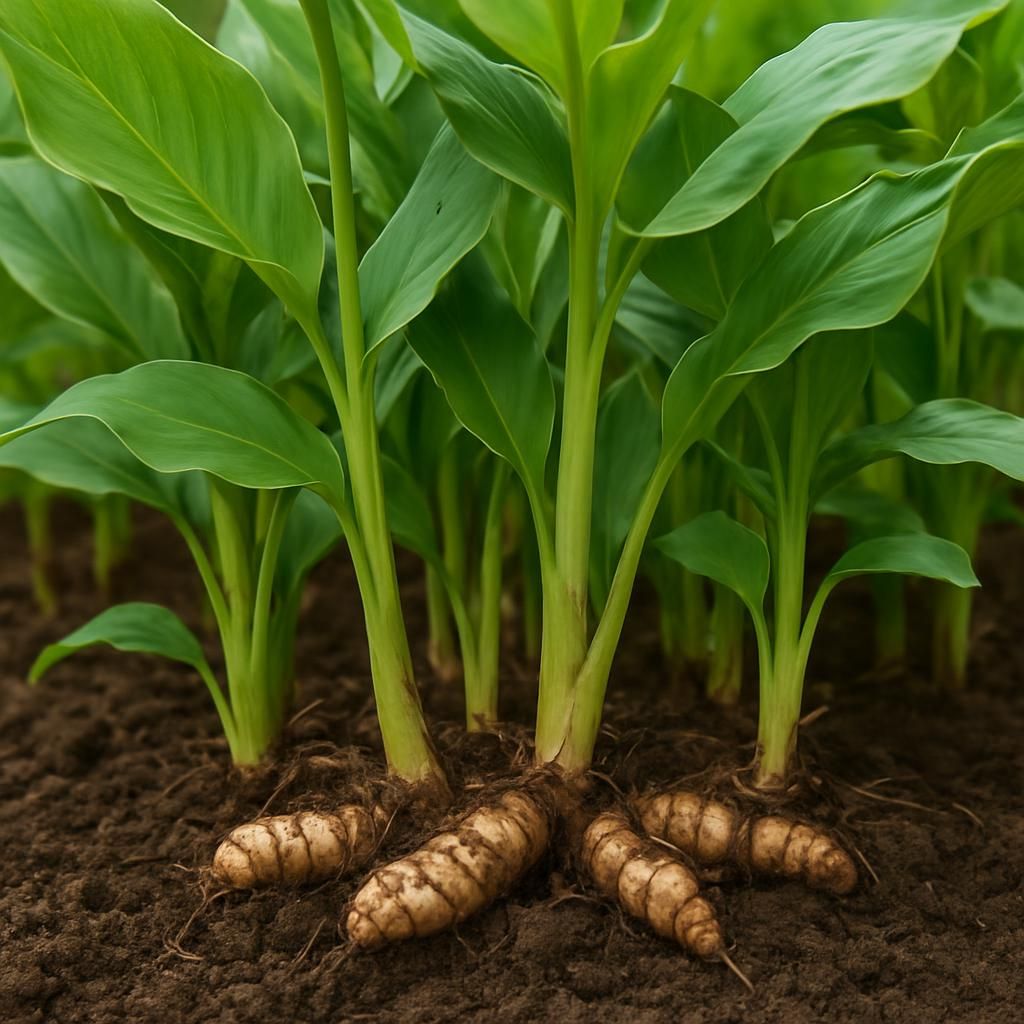
Introduction to Arrowroot (Maranta arundinacea)
Arrowroot (Maranta arundinacea) is a herbaceous perennial native to the Caribbean and tropical Americas, cultivated for centuries for its high-quality starch. The plant produces large, fleshy rhizomes that are processed into a fine, white powder valued for its digestibility and neutral flavor. In modern agriculture, arrowroot serves both smallholder farmers seeking diversified income and industrial processors supplying gluten-free and hypoallergenic markets. Its ability to grow under partial shade and on marginal lands makes it an attractive option for sustainable tropical farming systems.
Botanical Profile of Arrowroot (Maranta arundinacea)
Maranta arundinacea belongs to the Marantaceae family and features broad, ovate leaves with prominent veins and a characteristic purple underside on some cultivars. The plant grows 1–2 meters tall, sending up erect stems from an underground network of rhizomes. Small, white to pale lavender flowers appear in terminal clusters but rarely set seed under cultivation; propagation is almost exclusively vegetative. The rhizomes contain 20–25% starch by fresh weight and develop over 8–12 months depending on climate and management.
Soil, pH, and Climate Requirements for Arrowroot (Maranta arundinacea)
Successful arrowroot production begins with matching site conditions to the crop’s tropical origins. The following table summarizes ideal parameters:
| Parameter | Ideal Range | Notes |
|---|---|---|
| Soil Type | Sandy loam to clay loam | High organic matter improves yields |
| Soil pH | 5.5 – 6.5 | Avoid alkaline soils that reduce nutrient uptake |
| Temperature | 20–32 °C daytime | Frost sensitive below 10 °C |
| Annual Rainfall | 1500–2500 mm | Supplemental irrigation needed in dry spells |
| Relative Humidity | 70–90% | High humidity supports leaf growth |
| Elevation | 0–1500 m | Performs well in lowland tropics |
| Light | Full sun to 30% shade | Excessive shade reduces rhizome size |
Step-by-Step Planting & Propagation
- Select healthy, disease-free rhizome pieces 5–8 cm long, each containing at least one viable bud.
- Prepare raised beds or ridges 20–30 cm high to ensure drainage.
- Plant pieces 5–7 cm deep at 30 cm spacing within rows and 60–75 cm between rows.
- Water immediately after planting and maintain soil moisture at field capacity for the first four weeks.
- Mulch with 5–10 cm of organic material to suppress weeds and conserve moisture.
Care & Maintenance regimes for Arrowroot (Maranta arundinacea)
Consistent cultural practices maximize rhizome quality and starch content. The table below outlines recommended schedules:
| Activity | Frequency | Details |
|---|---|---|
| Watering | 2–3 times per week | Provide 25–40 mm weekly; increase during flowering and rhizome bulking |
| Fertilizer | At planting & 3 months | Apply 10-10-20 NPK at 200 kg/ha; side-dress with potassium sulfate at 100 kg/ha |
| Pruning | Every 6–8 weeks | Remove yellow or damaged leaves to improve airflow and reduce disease |
Pests, Diseases & Organic Management
Arrowroot is relatively resilient but can be affected by Aphids, Spider mites, and Root-knot nematodes. Fungal issues such as Leaf spot diseases and Rhizoctonia may appear under wet conditions. Implement weekly scouting and use neem oil or insecticidal soaps for soft-bodied insects. Crop rotation with Cassava or Ginger helps break nematode cycles. Maintain field sanitation by removing crop residues after harvest.
Harvesting, Curing & Optimal Storage
Harvest when leaves begin to yellow, typically 8–12 months after planting. Lift rhizomes carefully with a fork to avoid damage. Wash thoroughly, then cure in a shaded, well-ventilated area for 24–48 hours. For starch extraction, slice rhizomes and sun-dry or dehydrate at 45 °C until brittle. Store dried slices or finished flour in airtight containers at 15–20 °C with <12% moisture to preserve quality for up to 18 months.
Companion Planting for Arrowroot (Maranta arundinacea)
Arrowroot integrates well with leguminous cover crops such as Clover that fix nitrogen and improve soil structure. Interplant with Turmeric or Ginger for efficient use of space and shared irrigation needs. Tall companions like Banana provide beneficial partial shade in hotter regions. Avoid planting near Tomato or Potato to minimize shared pest pressure from nematodes and aphids.