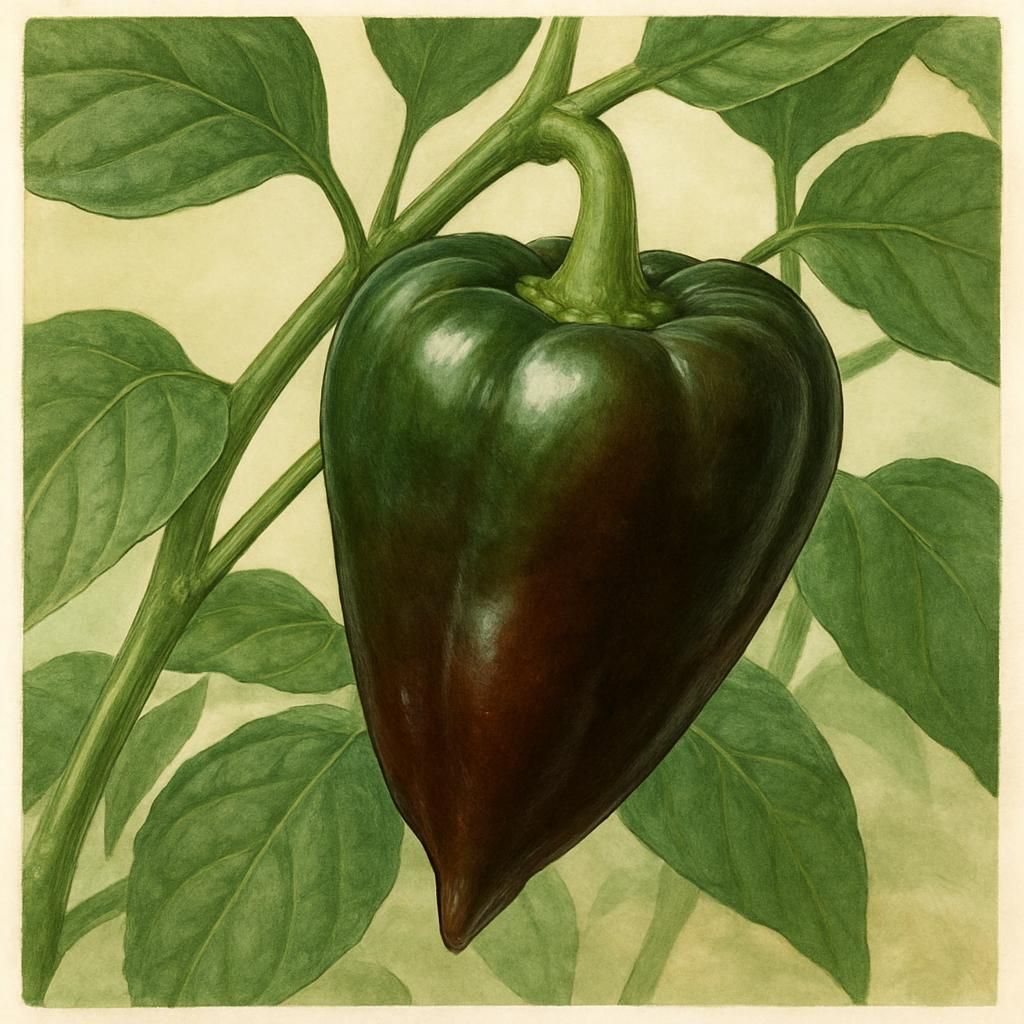
Introduction to Ancho Gigantea Pepper
Ancho Gigantea Pepper is a premium heirloom cultivar of Capsicum annuum developed for its oversized, deeply lobed pods that mature from dark green to a rich reddish-brown. Gardeners and commercial growers value the variety for its thick walls, mild heat (1,000–3,000 Scoville units), and the complex, raisin-like flavor that develops after proper drying. The peppers are a cornerstone ingredient in traditional Mexican cuisine, especially for making authentic mole sauces, stuffed chiles, and roasted salsas. Because the plants produce continuously over an extended season, a modest planting can supply both fresh market sales and preserved products for home kitchens.
Beyond culinary excellence, Ancho Gigantea offers strong agronomic traits. The sturdy, upright plants reach 24–36 inches tall and resist common foliar diseases when given adequate airflow. Fruit set remains reliable even during heat waves, and the thick pericarp helps pods resist cracking after heavy rain. Whether grown in raised beds, in-ground rows, or large containers, the variety rewards attentive management with heavy harvests that can exceed 30 peppers per plant under optimal conditions.
Botanical Profile of Ancho Gigantea Pepper
Ancho Gigantea belongs to the Solanaceae family and shares the same species as Bell Pepper and Jalapeño Pepper. The plant exhibits a compact, bushy habit with dark green, ovate leaves that provide excellent canopy cover. Flowers are small, white, and self-pollinating, though insect activity improves fruit set. The signature pods are heart-shaped, deeply indented, and measure 5–8 inches in length with a shoulder width of 3–4 inches. When fully ripe, the skin develops a glossy mahogany color and the flesh dries to a leathery texture ideal for grinding into ancho chile powder.
Soil, pH, and Climate Requirements for Ancho Gigantea Pepper
Successful production begins with fertile, well-drained soil that warms quickly in spring. The variety performs best in loamy or sandy loam textures amended with aged compost. Avoid heavy clay without extensive incorporation of organic matter. The following table summarizes the ideal growing conditions:
| Parameter | Ideal Range | Notes |
|---|---|---|
| Soil Type | Loamy to sandy loam | Good drainage prevents root rot |
| Soil pH | 6.2–7.0 | Slightly acidic to neutral |
| Soil Temperature | 70–85 °F (21–29 °C) | Critical for seed germination |
| Air Temperature Day | 75–90 °F (24–32 °C) | Optimal fruit set |
| Air Temperature Night | 60–70 °F (15–21 °C) | Avoid prolonged nights below 55 °F |
| Sunlight | Full sun, 8+ hours | Partial shade reduces yield |
| Spacing | 18–24 in (46–61 cm) between plants | 30–36 in (76–91 cm) between rows |
Step-by-Step Planting & Propagation
Start seeds indoors 8–10 weeks before the last expected frost. Sow ¼ inch deep in sterile seed-starting mix and maintain 80–85 °F bottom heat until germination (7–14 days). Once seedlings develop two true leaves, transplant into 4-inch pots and grow under 16-hour supplemental lighting. Harden off plants for 7–10 days before setting outdoors when soil reaches 70 °F. Plant at the same depth as the nursery pot, spacing 18–24 inches apart in rows 30–36 inches wide. Water thoroughly after transplanting and apply a light organic mulch to conserve moisture.
Care & Maintenance regimes for Ancho Gigantea Pepper
Consistent moisture and balanced nutrition drive both fruit size and flavor. Drip irrigation or soaker hoses deliver water directly to the root zone while keeping foliage dry. The table below outlines recommended schedules:
| Growth Stage | Watering Frequency | Fertilizer Type & Rate | Pruning Action |
|---|---|---|---|
| Transplant to Bloom | 1–1.5 in/week | Side-dress with ½ cup 5-5-5 per plant at week 3 | Remove lower leaves touching soil |
| Flowering to Fruit Set | 1.5–2 in/week | Apply fish emulsion (2 Tbsp/gal) every 14 days | Pinch first flowers to encourage branching |
| Fruit Ripening | 1 in/week | Switch to 2-4-6 potassium-rich formula monthly | Remove suckers below first major branch |
Stake plants in windy areas and monitor for nutrient deficiencies. Calcium foliar sprays at flowering help prevent blossom end rot.
Pests, Diseases & Organic Management
Common threats include Aphids, Spider Mites, and Flea Beetles. Scout weekly and release beneficial insects such as lady beetles or lacewings at the first sign of infestation. Neem oil or insecticidal soap applied in early morning provides effective knockdown while preserving pollinators. Fungal risks such as Powdery Mildew and Phytophthora are minimized by proper spacing, drip irrigation, and crop rotation. Remove and destroy infected foliage immediately; rotate with non-solanaceous crops every three years.
Harvesting, Curing & Optimal Storage
Harvest green Ancho Gigantea pods at 6–7 inches for fresh use or allow full color change for drying. Use sharp pruners to avoid stem damage. For drying, hang whole plants in a warm, shaded area with good airflow until pods are leathery and brittle (7–14 days). Store dried peppers in airtight glass jars away from light; they retain quality for up to 12 months. Fresh peppers keep 2–3 weeks refrigerated or can be roasted and frozen for longer preservation.
Companion Planting for Ancho Gigantea Pepper
Pair Ancho Gigantea with Tomato, Basil, and Marigold to deter pests and improve flavor. Avoid planting near Fennel or other members of the Apiaceae family that may inhibit growth. Interplanting with Cucumber or Lettuce provides living mulch and efficient use of space in small gardens.