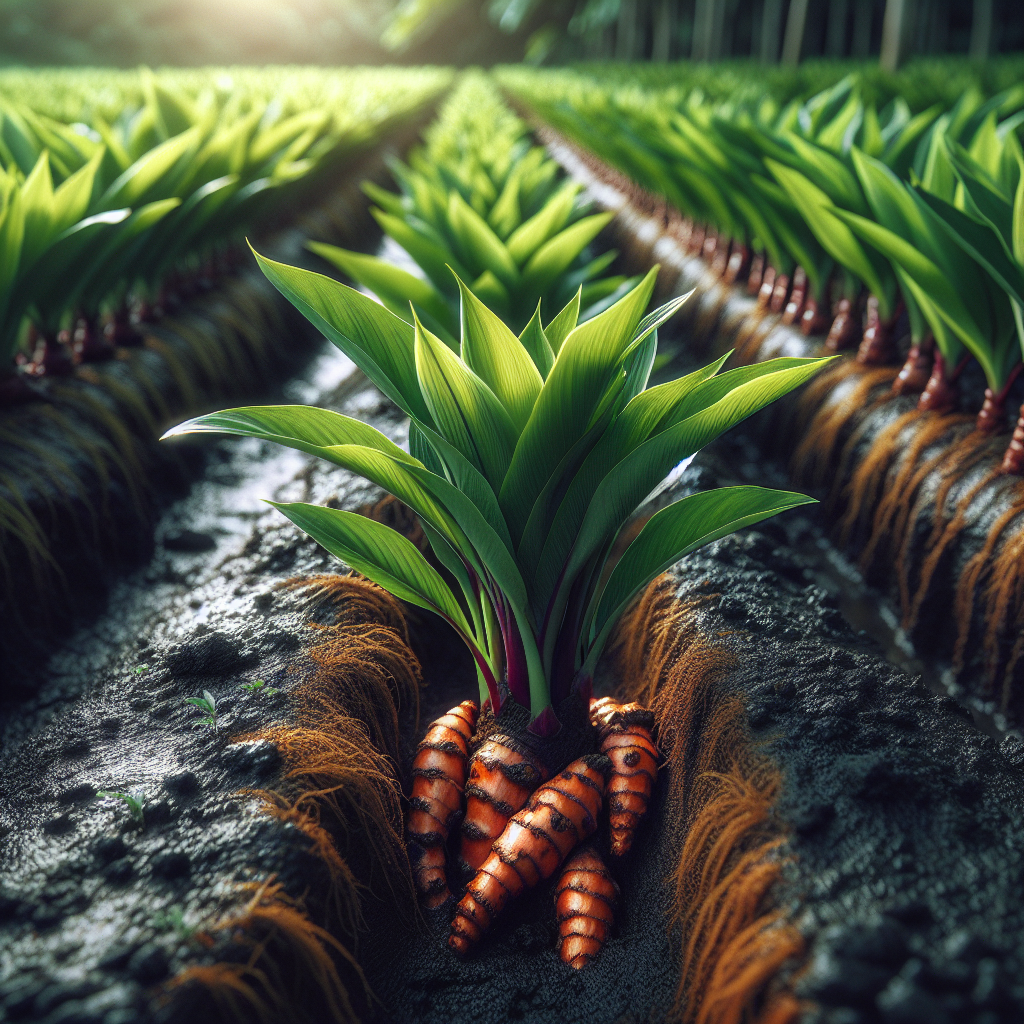
Introduction to Alleppey Turmeric
Originating from the coastal belt of Kerala, especially the Alappuzha (historically Alleppey) trade region, this turmeric type became globally recognized because of its unusually rich orange interior and comparatively high curcumin concentration. In spice markets, it has long been preferred where strong color extraction matters, and that single characteristic distinguishes it from many lighter yellow commercial turmeric types. While turmeric in general is grown widely across South and Southeast Asia, Alleppey selections developed a reputation for export quality, especially for oleoresin extraction, drying, and powder production.
For growers, the crop behaves as a tropical rhizomatous perennial that is usually cultivated as an annual. It has a long field duration, typically 7 to 9 months depending on climate, planting date, and whether the objective is fresh rhizome production or fully mature cured turmeric. The plant rewards patience: vigorous vegetative growth in the first half of the season determines how much energy is stored in underground rhizomes later. Compared with generic market turmeric, Alleppey Turmeric is especially worth managing carefully because poor soil aeration, waterlogging, or nutrient imbalance can dilute its quality advantages.
If you want a broader species-level background, see our Turmeric guide. For soil-building concepts that directly improve rhizome crops, the principles in soil health strategies are particularly relevant.
Botanical Profile of Alleppey Turmeric
This crop belongs to the ginger family, Zingiberaceae, the same family as Ginger and cardamom. It produces underground rhizomes rather than true roots as the harvested product. The visible root system consists of fibrous feeder roots emerging from the rhizome body, while the economically valuable portion is the thickened, branched rhizome itself.
Alleppey Turmeric forms pseudostems made from tightly wrapped leaf sheaths. Mature plants usually reach about 60 to 100 cm in height under field conditions, though very fertile soils and partial shade in humid tropics can push taller top growth. Leaves are broad, lanceolate, and medium to deep green, often 30 to 60 cm long. In vigorous stands, the canopy closes over the bed and suppresses many annual weeds by midseason.
The rhizome system has two main parts: the central or mother rhizome and the lateral fingers. For planting material, healthy fingers with at least one strong viable bud are commonly used, though some growers prefer split mother rhizomes for more robust establishment. Alleppey types are distinguished by deep orange flesh, relatively intense staining power, and high pigment value. Dry matter percentage, fiber level, and curcumin concentration can vary by strain, soil fertility, harvest timing, and curing method.
Turmeric rarely flowers consistently in commercial settings, and flowering is not required for production. Since it is vegetatively propagated, varietal purity depends entirely on rhizome selection. Over many generations, poorly selected planting stock can accumulate disease pressure, nematode infestation, and low-vigor clones, so seed rhizome renewal is a serious management issue rather than a minor detail.
Soil, pH, and Climate Requirements for Alleppey Turmeric
The ideal soil is a loose, friable, organic-matter-rich loam or sandy clay loam with excellent drainage and high moisture-holding capacity. That combination may sound contradictory, but it is central to successful turmeric production: the soil must stay evenly moist without becoming anaerobic. The crop performs poorly in compacted subsoil, heavy puddled clay, or any field where rainwater stands longer than 24 hours. In waterlogged soil, oxygen diffusion declines rapidly, feeder roots suffocate, rhizome enlargement stalls, and soft rot pressure rises sharply.
A practical target is soil organic matter above 3%, with a crumb structure that lets you form a weak ball in the hand when moist but not a sticky mass. If a squeezed handful leaves water sheen or smears into a ribbon, drainage is too poor. Raised beds 15 to 30 cm high are highly beneficial in high-rainfall zones.
The preferred pH is mildly acidic to near neutral, roughly 5.5 to 7.0, with an optimum around 6.0 to 6.8. Below pH 5.2, nutrient availability becomes less balanced and calcium, magnesium, and phosphorus efficiency often decline. Above pH 7.5, micronutrient issues, especially iron and zinc lock-up, can appear. If soil is strongly acidic, incorporate agricultural lime or dolomite several weeks before planting based on soil test results. If alkaline, improve with compost, green manures, and elemental sulfur where appropriate.
Climate requirements are distinctly tropical to subtropical. Best growth occurs between 20 and 35°C, with ideal canopy development around 25 to 30°C. Growth slows below 18°C and essentially stops with cold stress; frost is lethal to foliage and highly damaging to rhizomes. The crop benefits from 1500 to 2500 mm annual rainfall when well distributed, but heavy rainfall is only an advantage if drainage is excellent. In low-rainfall regions, drip or furrow irrigation can substitute effectively.
Turmeric tolerates light filtered shade, especially in very hot regions, but for maximum rhizome yield it generally prefers bright light with some protection from severe midday desiccation. Under tree-based systems, about 20 to 30% filtered shade can work well if root competition is limited. Excessive shade reduces tillering, leaf area efficiency, and final rhizome bulk.
Step-by-Step Planting & Propagation
Start with disease-free, true-to-type seed rhizomes from a reliable source. Choose plump, mature rhizome fingers or small mother rhizome pieces weighing roughly 20 to 35 g each, each with at least one healthy bud. Avoid shriveled, cut, moldy, or blackened pieces. Rhizomes intended for planting should be cured but not overdried.
Before planting, many experienced growers pre-sprout the rhizomes in a shaded, ventilated place. Spread them in a single layer over sand, cocopeat, or dry leaf mulch and keep conditions slightly humid, not wet. Once buds swell and begin to sprout, establishment in the field is more uniform. A biological dip in Trichoderma-based suspension or a light wood-ash and compost coating can help suppress early rot organisms in organic systems.
Field preparation should be deep and thorough. Plow or fork the soil to at least 20 to 30 cm, break compaction, and incorporate abundant organic matter. Well-rotted farmyard manure or compost at 20 to 30 tons per hectare is common in commercial systems. Shape broad raised beds 1 to 1.2 m wide with drainage channels between them, especially in monsoonal climates.
Planting is usually timed with the onset of rains or just before reliable irrigation can be provided. In tropical monsoon agriculture, late spring to early monsoon is typical. Place rhizomes 5 to 7 cm deep in moist soil, buds facing upward or sideways, not buried excessively deep. A common spacing is 30 x 20 cm to 45 x 25 cm depending on fertility, irrigation, and desired rhizome size. Wider spacing improves airflow and can reduce foliar disease pressure; closer spacing increases canopy closure and weed suppression but may reduce individual rhizome size.
After planting, cover lightly with soil and then mulch immediately. A 5 to 8 cm mulch layer of dried leaves, straw, or partially decomposed organic residue is highly effective. Mulch moderates soil temperature, suppresses weed emergence, reduces rain splash, and keeps surface feeder roots active. In high-rainfall areas, avoid dense matting mulches that trap too much moisture directly over the planting piece.
Germination and emergence can take 2 to 6 weeks depending on temperature and pre-sprouting. Do not over-irrigate during this stage. The planted rhizome should sit in moist, aerated soil; if kept saturated before active shoot growth, rot losses rise sharply.
Care & Maintenance regimes for Alleppey Turmeric
Moisture management is the single most important day-to-day skill in turmeric production. The root zone should remain consistently moist to roughly field capacity during active vegetative growth, but never continuously saturated. In practical terms, soil at 10 to 15 cm depth should feel cool and moist, and when squeezed should hold shape briefly without dripping. If the top 3 to 5 cm becomes powdery and dry between irrigations, growth may slow; if the bed smells sour, feels sticky, or stays glossy-wet for days, oxygen stress is likely occurring.
During early establishment, water lightly and evenly. Once plants have 3 to 5 leaves and active tillering begins, water demand rises substantially. In dry weather, many soils require irrigation every 3 to 7 days, though frequency depends on texture, mulch depth, and evaporative demand. Sandy loams need smaller, more frequent irrigations; heavier loams need deeper, less frequent ones. Drip irrigation is particularly well suited because it keeps moisture steady while reducing prolonged leaf wetness.
Signs of underwatering include leaf edge rolling during the cooler morning hours, dull or gray-green foliage, reduced new shoot emergence, and stunted pseudostems. Signs of overwatering include yellowing lower leaves despite moist soil, soft crown tissue, foul-smelling soil, easy pseudostem pull-out, and eventual rhizome decay.
Nutrient demand is significant because the crop produces both abundant foliage and storage rhizomes. Nitrogen supports leaf area and canopy duration, phosphorus supports early rooting and energy metabolism, and potassium is critical for rhizome filling, plant water regulation, and disease resilience. In organic systems, base applications of compost, vermicompost, neem cake, and well-decomposed manure are common, followed by one to three side-dressings during the season. If using compost alone, ensure adequate potassium sources such as wood ash used carefully, sulfate of potash in conventional systems, or balanced mineral amendments based on soil testing.
A practical feeding rhythm is: strong pre-plant organic incorporation, then top-dress at 45 to 60 days after planting, and again around 90 to 120 days when rhizome bulking accelerates. Earthing up at these times is beneficial. Pull loose soil around the plant base to protect developing rhizomes from exposure, improve anchorage, and encourage expansion in a friable mound.
Weed control matters most during the first 8 to 12 weeks before canopy closure. Mulching does much of the work. Hand weeding should be shallow to avoid damaging feeder roots and young rhizome branches near the surface. Avoid aggressive hoeing once the crop is established.
In very intense sun with hot drying winds, temporary shade netting during establishment can improve stand uniformity. In humid shade systems, by contrast, excessive canopy density may need thinning of overstory plants to improve airflow.
Pests, Diseases & Organic Management
The most serious disease problem is rhizome rot, commonly associated with Pythium spp. Early symptoms include yellowing and wilting of central shoots, water-soaked collar tissues, and soft, foul-smelling rhizomes. This disease is strongly favored by poor drainage, infected seed rhizomes, and continuous turmeric cropping. Prevention is far more effective than rescue. Use raised beds, clean planting stock, crop rotation of at least 2 to 3 years away from turmeric or other susceptible rhizomatous crops, and biological treatments such as Trichoderma-enriched compost.
leaf blotch and leaf spot can also occur under prolonged humidity. These appear as brown to tan lesions that may enlarge and coalesce, reducing photosynthetic area. Improve air circulation, avoid overhead irrigation late in the day, maintain balanced nutrition, and remove heavily affected debris after harvest. Copper-based organic sprays may be used cautiously where legally permitted, but they should not replace sanitation and drainage correction.
shoot borer is an important insect pest in some regions. Larvae bore into pseudostems, causing yellowing of the central shoot and dead-heart symptoms. Monitoring is essential: inspect the base of shoots for bore holes and frass. Remove and destroy infested shoots early. Neem-based products, pheromone-supported monitoring where available, and habitat management for beneficial insects are useful components of organic suppression.
scale insects and mites may appear in drier or stressed plantings, especially where airflow is poor and plants are nutritionally imbalanced. Strong, unstressed plants are less vulnerable. Washing planting stock, maintaining humidity balance, and using horticultural soap or neem under low-burn conditions can help.
root-knot nematodes may reduce vigor, distort roots, and predispose plants to secondary disease. Rotation with non-host or suppressive crops and soil organic matter improvement are crucial. Incorporating Clover as a rotation or border soil-building plant may improve soil structure and biology, though it should not substitute for proper rotational planning.
Organic management for turmeric works best as a system: clean seed rhizomes, rotation, mulching, drainage, biological inoculants, and careful irrigation. Once a bed becomes chronically wet and pathogen-laden, inputs alone rarely restore productivity in the same season.
Harvesting, Curing & Optimal Storage
Harvest timing depends on market goal. Fresh green turmeric can be dug earlier, often 6 to 7 months after planting, when rhizomes are developed but still tender and aromatic. For dry turmeric, wait until full maturity, usually 7 to 9 months, when leaves and pseudostems yellow and begin drying naturally. Premature harvest reduces dry recovery and color concentration; excessively delayed harvest in wet soil can increase rot and quality loss.
To harvest, cut back dried tops and loosen soil carefully with a fork or digging tool, lifting entire clumps without slicing through rhizomes. Separate mother rhizomes from fingers, and immediately sort out damaged, diseased, or undersized material. Keep seed rhizomes for the next season separate from market rhizomes from the beginning.
Curing is a decisive quality step. Fresh rhizomes are first washed thoroughly to remove soil. For traditional dry turmeric, the rhizomes are then boiled or steamed until the interior is cooked. Proper curing gelatinizes starch, reduces raw odor, and improves drying uniformity and final color. Undercooking leaves a brittle, chalky interior; overcooking can dull color and damage aroma. A practical indicator is that a pointed stick passes through larger rhizomes with moderate resistance, not raw hardness.
After boiling, dry the rhizomes in thin layers under clean sun or in a controlled dryer until moisture is reduced to about 8 to 10%. At this stage they become hard, horn-like, and lighter in weight. Drying too slowly risks mold; drying directly on dirty ground reduces market value and sanitation. Polishing may be done mechanically or by rubbing to improve appearance, though excessive polishing can reduce protective outer layers.
For storage, fully dried turmeric must be kept cool, dry, dark, and rodent-proof. Relative humidity should ideally remain below 65%. In humid climates, sealed food-grade containers or lined sacks in a ventilated store are preferable. If stored too moist, rhizomes reabsorb water, soften, and mold. Fresh seed rhizomes for replanting require different handling: store in a cool, airy, shaded place with enough humidity to prevent shriveling but not enough moisture to induce rot. Periodic inspection is mandatory.
Companion Planting for Alleppey Turmeric
This crop fits best with companion species that either provide light partial shade, improve soil cover, or diversify the field without aggressively competing for the same shallow root-zone resources. The best companions are typically those suited to humid tropical conditions and compatible with regular mulching and organic matter addition.
Banana is one of the most useful companions in tropical systems. It can provide filtered afternoon shade, reduce wind stress, and create a favorable humid microclimate. However, spacing must be generous because banana is a heavy feeder and can strongly compete for water and potassium if crowded.
Cardamom is compatible in shaded spice gardens where humidity is high and soils are rich in organic matter. The two crops share some broad environmental preferences, but disease hygiene and airflow remain essential because dense mixed plantings can trap excessive moisture.
Black Pepper can be integrated in multistory spice systems, especially where it climbs live standards while turmeric occupies the lower layer. This arrangement works best when soil fertility is excellent and irrigation is dependable.
Clover is more useful as an off-season cover or edge planting than as a dense in-row companion in tropical turmeric beds. It can contribute organic matter, protect bare soil, and help moderate erosion in paths or rotation blocks. In all companion systems, avoid plants that create heavy root competition directly over turmeric rows or require frequent deep cultivation that would damage shallow rhizomes.