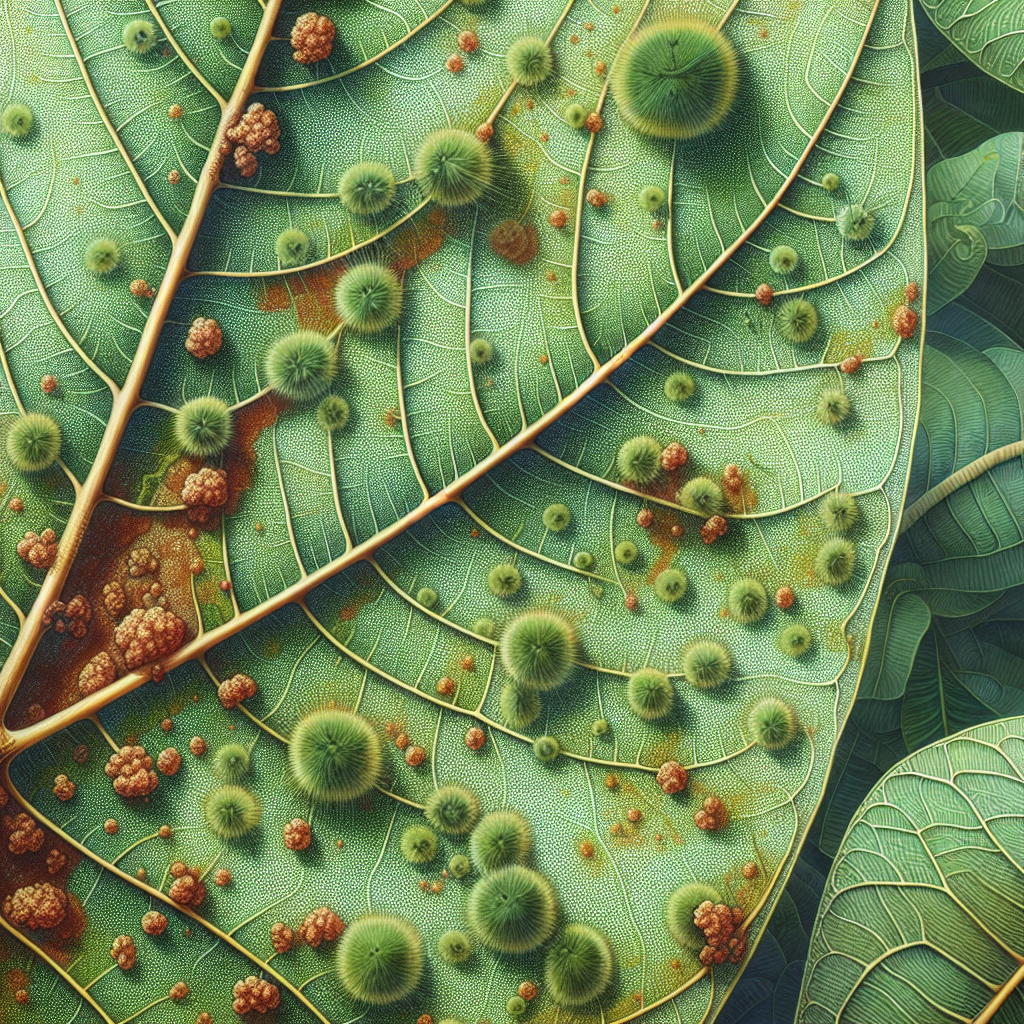
Introduction to Algal leaf and twig spots
Algal leaf and twig spots, scientifically known as algal leaf spot or green spot disease, is caused by the parasitic alga Cephaleuros virescens. This pathogen thrives in warm, humid environments, making it a common issue in tropical and subtropical agriculture. Unlike fungal or bacterial diseases, this algal infection produces characteristic olive-green to rusty-red spots that can spread across leaves, twigs, and sometimes fruits, leading to significant aesthetic and physiological damage.
First identified in the early 20th century, algal leaf spot affects a wide range of crops, particularly those with dense canopies that trap moisture. The disease is not systemic but can reduce photosynthetic capacity by up to 30% in severe cases, impacting yield and quality. Farmers often mistake it for leaf spot diseases, but its algal nature requires specific diagnostic and management approaches. Early detection is crucial, as untreated infections can persist for years, especially on stressed plants.
This guide provides professional-grade diagnostic criteria, lifecycle insights, organic control strategies, and prevention tactics tailored for small to medium-scale farms. By understanding environmental triggers and implementing integrated management, growers can minimize losses without relying on synthetic chemicals. Regular scouting and cultural adjustments form the backbone of successful control.
Identifying Symptoms & Damage
Recognizing algal leaf and twig spots begins with its hallmark appearance: small, raised, velvety spots that start olive-green and mature to rusty-brown or reddish hues. On leaves, spots measure 1-5 mm in diameter, often clustered along veins or margins. Under magnification, the surface reveals fine, hair-like filaments (sporangiophores) confirming the algal identity.
Twigs show similar spots, which may girdle young stems, causing dieback. In advanced stages, leaf spots coalesce, leading to necrosis, premature defoliation, and twig cracking. Fruits like mango or avocado develop sunken, corky lesions that reduce marketability. Damage is primarily cosmetic but escalates in high humidity, where weakened tissues invite powdery mildew or anthracnose.
Yield impacts vary: tea plantations report 10-20% leaf loss, while citrus groves see fruit blemishes lowering grade by 15%. Differentiate from fungal spots by the lack of concentric rings and presence of green crusts in wet conditions. Use a hand lens for diagnosis; scrape spots to reveal reddish algal haustoria embedded in plant tissue. Symptoms worsen on nitrogen-deficient plants, mimicking nutrient deficiencies.
Lifecycle and Progression of Algal leaf and twig spots
Cephaleuros virescens is a foliicolous alga with a complex lifecycle adapted to humid tropics. It spreads via wind-blown sporangiospores, which germinate in free water on plant surfaces. Infection occurs through stomata or wounds, with haustoria penetrating epidermal cells for nutrients. The pathogen forms tetrasporangia and gametangia on upright filaments, producing flagellated zoospores that splash during rain.
Lifecycle spans 2-4 weeks per generation, with multiple cycles yearly in wet seasons. Dry periods induce dormant sclerotia on bark. Progression starts with pinpoint green specks, expanding to 1 cm spots over 7-10 days. Twigs infected early show raised galls; severe cases lead to cortical necrosis. Unlike fungi, algae photosynthesize, persisting on leaves year-round.
Overwintering occurs on fallen debris or alternate hosts like weeds. High spore viability (up to 6 months) underscores sanitation's importance. In tea crops, progression correlates with monsoon onset, peaking by mid-rainy season.
Environmental Triggers & Risk Factors
Warm temperatures (20-30°C) and relative humidity above 80% are prime triggers, with leaf wetness >48 hours accelerating spread. Poor air circulation in dense canopies traps moisture, favoring infection. Regions like Southeast Asia, Florida, and Queensland report highest incidence.
Risk factors include overhead irrigation, excessive nitrogen promoting succulent growth, and acid soils (pH <6). Stressed plants from drought or root rot are susceptible. Monocultures amplify spread; intercropping reduces microclimate humidity. Climate change extends wet seasons, increasing outbreaks. For Hass Avocado, coastal fog banks create ideal conditions.
Organic Control & Treatment Plans
Organic management emphasizes cultural, biological, and minimal chemical interventions. Prune infected twigs (20-30% canopy removal) during dry periods to improve airflow; dispose debris away from fields. Apply copper-based fungicides (e.g., Bordeaux mixture, 1-2% weekly for 4 sprays) as preventives, OMRI-listed for organics. Efficacy reaches 70-85% with good coverage.
Biological controls include Trichoderma spp. sprays (10^9 CFU/ml) to outcompete algae. Bicarbonates (sodium or potassium, 1 tsp/gal) raise leaf pH, inhibiting growth; apply biweekly. Improve nutrition with balanced fertilizers; potassium boosts resistance. Test Why Misidentifying Plants Costs Small Farms Thousands - And How AI Camera Diagnosis Fixes It Fast for rapid spot checks.
Integrated plan: Scout weekly; prune at <5% incidence; spray copper at 10%; follow with bicarbonate. Rotate modes to prevent resistance. In nurseries, quarantine new plants.
Preventing Algal leaf and twig spots in the Future
Prevention hinges on site selection: choose well-drained, sunny locations with airflow. Space plants 20-30% wider than standard to reduce humidity. Use drip irrigation; mulch to suppress splash. Apply lime to raise soil pH to 6.5-7.0.
Resistant varieties like certain tea clones (e.g., TV-17) show tolerance. Interplant with thyme or marigold for airflow. Monitor weather; preempt sprays before rains. Annual pruning removes overwintering sites. Soil solarization in off-seasons kills surface propagules. Long-term, foster biodiversity to disrupt lifecycle.
Crops Most Affected by Algal leaf and twig spots
Tropical perennials top the list: tea (global losses ~$100M/year), mango, avocado (Hass Avocado), guava, citrus (orange, lemon). Magnolias, oaks ornamental. In Asia, dragon fruit and banana report rising cases. Others: coffee, cocoa, litchi. Broad host range (>200 species) demands vigilant scouting.