Introduction to Aji Rocoto (Yellow)
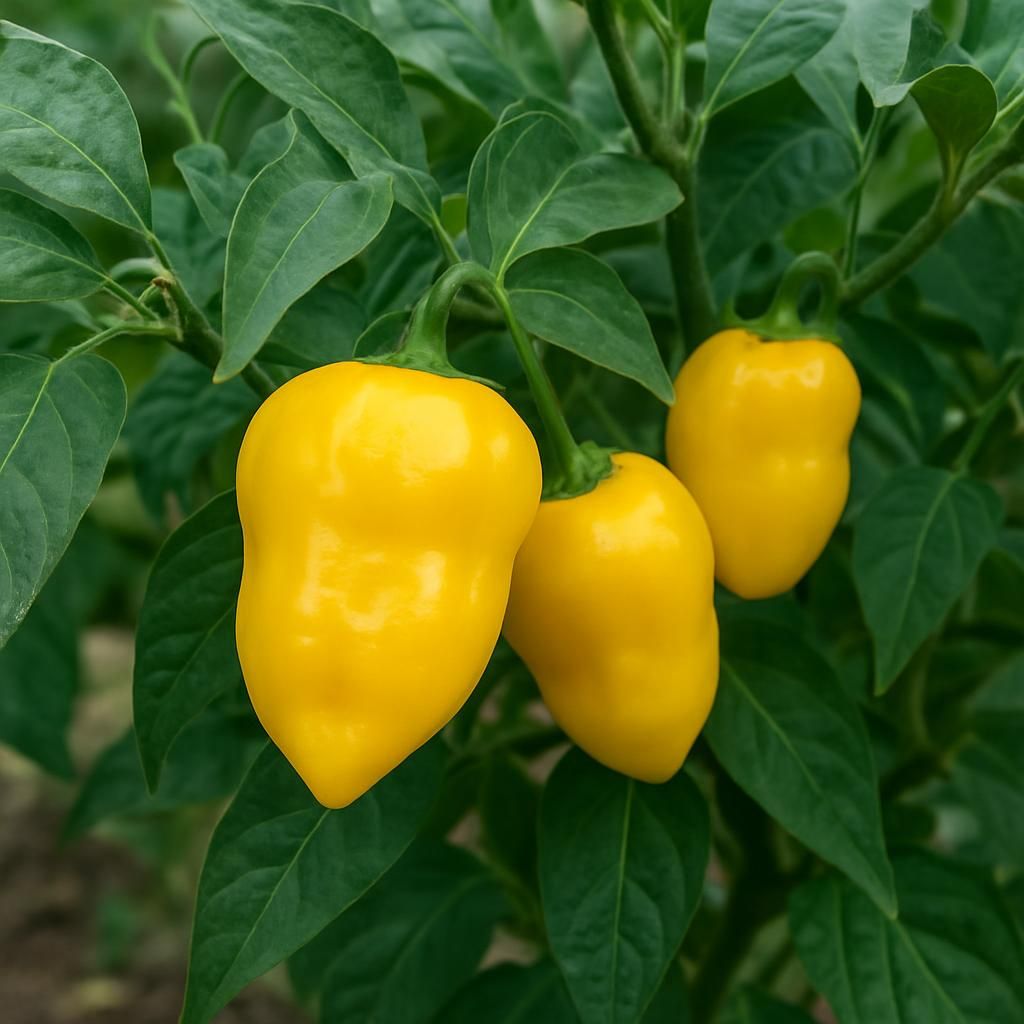
Aji Rocoto (Yellow) is a distinctive member of the Capsicum pubescens species, known for its vibrant golden-yellow fruit, thick crunchy walls, and complex fruity heat that ranges from 30,000–50,000 Scoville Heat Units. Native to the Andean highlands, this variety has been cultivated for centuries in cool, misty mountain climates where other peppers struggle. Its black seeds and hairy leaves distinguish it from common C. annuum types, making it both a botanical curiosity and a prized culinary pepper. Growers value its disease resistance, perennial habit in frost-free zones, and ability to produce heavy crops over multiple seasons when properly managed.
Botanical Profile of Aji Rocoto (Yellow)
Aji Rocoto (Yellow) belongs to the nightshade family (Solanaceae) and is characterized by its pubescent (hairy) stems and leaves, purple-tinged flowers, and distinctive black seeds. Plants typically reach 1.2–1.8 m (4–6 ft) in height with a bushy, multi-branched habit. The fruit is apple- to pear-shaped, 5–8 cm long, and turns from dark green to bright yellow at maturity. Unlike many peppers, rocoto plants are frost-sensitive but can live 3–5 years in suitable climates, behaving as short-lived perennials. The thick, juicy flesh contains relatively few seeds, delivering a crisp bite prized in fresh salsas and ceviches.
Soil, pH, and Climate Requirements for Aji Rocoto (Yellow)
Aji Rocoto (Yellow) performs best in well-drained, fertile loam with high organic matter content. It prefers cool temperatures and will set fruit poorly above 28 °C (82 °F). The following table summarizes ideal growing conditions:
| Parameter | Ideal Range | Notes |
|---|---|---|
| Soil Type | Loamy, well-drained | Add 20–30 % compost or aged manure |
| Soil pH | 6.2–6.8 | Slightly acidic; test and amend annually |
| Day Temperature | 18–24 °C (64–75 °F) | Optimal fruit set occurs in this range |
| Night Temperature | 10–15 °C (50–59 °F) | Cooler nights improve flavor and color |
| Altitude | 1,500–3,000 m (4,900–9,800 ft) | Mimics native Andean habitat |
| Frost Tolerance | None | Protect below 5 °C (41 °F) |
| Sunlight | Full sun (6–8 hours) | Afternoon shade beneficial in hot climates |
Step-by-Step Planting & Propagation
Start seeds indoors 8–10 weeks before the last expected frost. Soak seeds for 24 hours to improve germination, then sow 6 mm (¼ inch) deep in sterile seed-starting mix at 24–26 °C (75–79 °F). Germination typically occurs in 14–21 days. Transplant seedlings into 15 cm (6 inch) pots once they have two true leaves. Harden off plants for 7–10 days before moving outdoors when soil temperature reaches at least 18 °C (64 °F). Space plants 60–75 cm (24–30 inches) apart in rows 90–120 cm (36–48 inches) wide. In frost-free zones, established plants can be pruned back and overwintered as perennials. Grafting onto vigorous rootstocks such as Tomato or Eggplant can extend lifespan and improve disease resistance.
Care & Maintenance regimes for Aji Rocoto (Yellow)
Consistent moisture, balanced nutrition, and strategic pruning are essential for high yields. The table below outlines recommended schedules:
| Growth Stage | Watering Schedule | Fertilizer Schedule | Pruning Schedule |
|---|---|---|---|
| Seedling (0–4 wks) | Keep evenly moist; mist daily | Dilute fish emulsion (¼ strength) weekly | None |
| Vegetative (4–8 wks) | 2–3 cm (0.8–1.2 in) per week | High-nitrogen organic fertilizer every 2 wks | Pinch tips at 4–6 leaves to encourage branching |
| Flowering/Fruit Set | 3–4 cm (1.2–1.6 in) per week | Balanced NPK 5-5-5 or compost tea every 3 wks | Remove lower leaves; thin interior branches |
| Fruit Development | Deep soak 1–2× weekly | Potassium-rich fertilizer (e.g., kelp) monthly | Light tipping of vigorous shoots |
| Post-Harvest/Overwintering | Reduce to 1 cm (0.4 in) weekly | Low-nitrogen, slow-release every 6–8 wks | Cut back 30–50 % after final harvest |
Mulch with 5–8 cm (2–3 inches) of straw or wood chips to conserve moisture and suppress weeds. Monitor for magnesium deficiency (interveinal yellowing) and correct with Epsom salts if needed.
Pests, Diseases & Organic Management
Aji Rocoto (Yellow) is relatively resistant to many common pepper pests but can suffer from Aphids, Spider Mites, and Whiteflies under stress. Use yellow sticky traps and insecticidal soap as first-line defenses. Major diseases include Phytophthora root rot and Powdery Mildew. Improve drainage, avoid overhead irrigation, and apply neem oil or potassium bicarbonate preventively. Crop rotation with non-solanaceous plants every 3–4 years reduces soil-borne pathogen buildup. Beneficial insects such as lady beetles and lacewings provide natural aphid control.
Harvesting, Curing & Optimal Storage
Harvest fruit when fully yellow and firm, typically 90–110 days after transplant. Use pruning shears to cut stems, leaving a short calyx to prolong shelf life. Fresh rocotos store 2–3 weeks at 10–12 °C (50–54 °F) with 85–90 % humidity. For longer storage, pickle in vinegar brine or freeze whole after blanching. Dried and ground rocoto powder retains heat and flavor for up to 18 months when kept in airtight containers away from light.
Companion Planting for Aji Rocoto (Yellow)
Pair Aji Rocoto (Yellow) with Thai Basil, Marigold, and Nasturtium to deter pests and attract pollinators. Avoid planting near Fennel or other allelopathic herbs. Interplanting with Cucumber or Squash can provide light afternoon shade in hot climates while maximizing bed space. Clover as a living mulch fixes nitrogen and improves soil structure between rows.