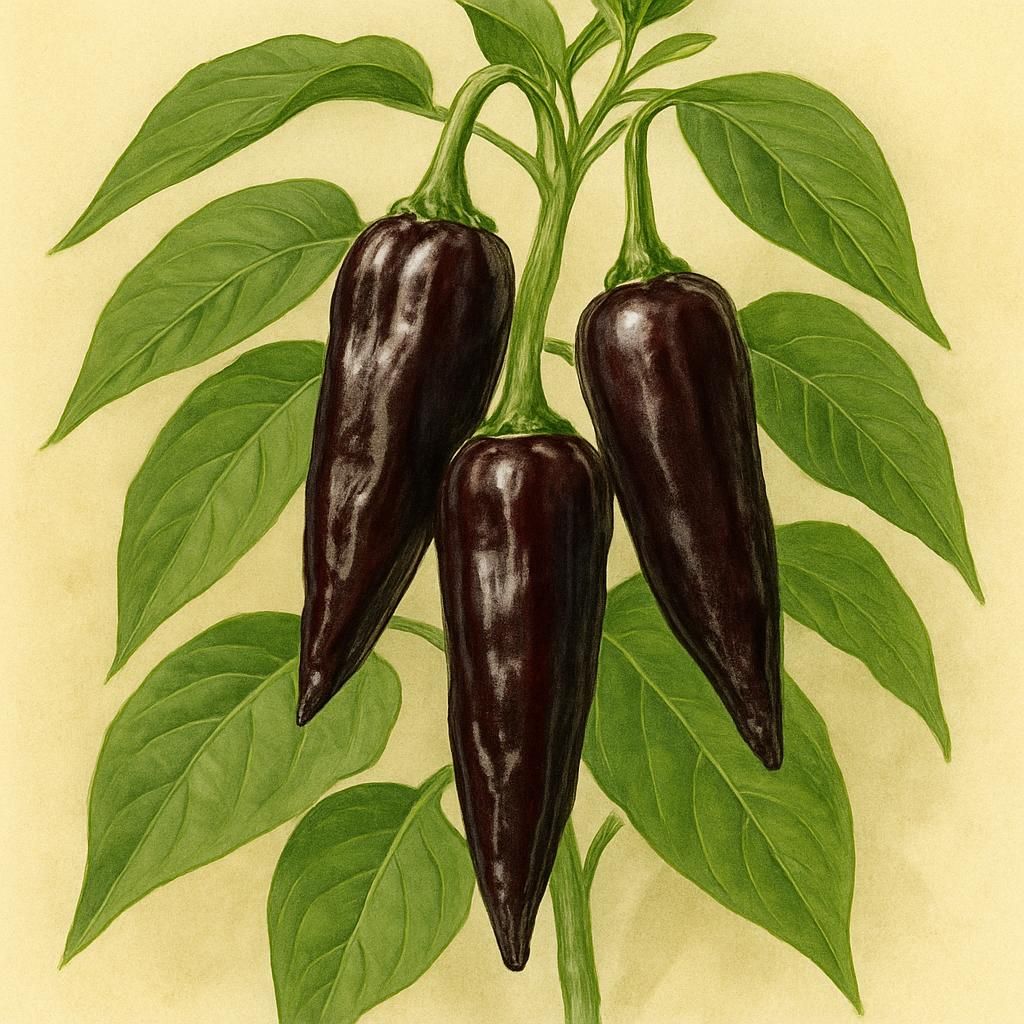
Introduction to Aji Panca (Dark Chili)
Aji Panca (Capsicum chinense) is a dark-skinned Peruvian chili pepper known for its mild-to-medium heat (8,000–15,000 Scoville units) and distinctive smoky, fruity flavor profile. Unlike brighter red chilies, Aji Panca develops a deep burgundy to near-black hue when fully ripe, making it a favorite in Peruvian cuisine for sauces, stews, and spice blends. The variety is prized by commercial growers and home gardeners alike for its reliable yields and versatility in both fresh and dried forms.
Botanical Profile of Aji Panca (Dark Chili)
Aji Panca belongs to the Solanaceae family and is botanically classified as Capsicum chinense, the same species as the hotter Habanero Pepper. Plants reach 60–90 cm in height with a bushy, semi-determinate growth habit. Leaves are dark green and ovate with slightly wrinkled surfaces. Flowers are small, white to pale cream, and typically self-pollinating, although insect activity can improve fruit set. Fruits are elongated, measuring 8–12 cm long and 2–3 cm wide, maturing from green to a glossy dark purple-black. The thick flesh and low seed count make Aji Panca ideal for both fresh market sales and drying into premium powders.
Soil, pH, and Climate Requirements for Aji Panca (Dark Chili)
Successful cultivation begins with well-drained, fertile soil rich in organic matter. Aji Panca performs best in loamy to sandy loam soils that retain moisture without becoming waterlogged. The crop demands consistent warmth and protection from frost.
| Parameter | Ideal Range | Notes |
|---|---|---|
| Soil Type | Sandy loam to loam | High organic matter improves yields |
| Soil pH | 6.0–6.8 | Slightly acidic to neutral |
| Temperature (Day) | 24–30 °C | Optimal fruit set occurs above 21 °C |
| Temperature (Night) | 18–22 °C | Below 15 °C reduces pollination |
| USDA Zones | 9–11 (or greenhouse in cooler zones) | Protect from frost |
| Sunlight | Full sun, 6–8 hours minimum | Supplemental lighting extends season |
| Soil EC | 1.5–2.5 mS/cm | Monitor salinity in container culture |
Step-by-Step Planting & Propagation
Start seeds indoors 8–10 weeks before the last expected frost. Sow seeds 0.5 cm deep in sterile seed-starting mix at 25–28 °C. Germination occurs in 7–14 days. Transplant seedlings outdoors once soil temperature reaches 18 °C and all danger of frost has passed. Space plants 45–60 cm apart in rows 75–90 cm wide to allow airflow and ease of harvest. For greenhouse production, use 10–15 L containers or well-prepared raised beds amended with aged compost. Harden off seedlings for 7–10 days prior to transplanting to reduce transplant shock.
Care & Maintenance regimes for Aji Panca (Dark Chili)
Consistent moisture and balanced nutrition are essential for high-quality fruit. Mulch with 5–7 cm of organic material to conserve water and suppress weeds. Stake or cage plants in windy areas to prevent lodging.
| Growth Stage | Watering Frequency | Fertilizer Schedule | Pruning Actions |
|---|---|---|---|
| Seedling (0–4 wks) | Keep evenly moist | Dilute fish emulsion every 10–14 days | Pinch growing tip at 4–6 true leaves |
| Vegetative | 2–3 times weekly | High-nitrogen organic fertilizer bi-weekly | Remove lower leaves touching soil |
| Flowering | Deep watering 2× weekly | Switch to phosphorus-rich bloom formula | Light tipping to encourage branching |
| Fruiting | 25–35 mm/week | Balanced NPK every 3 weeks; calcium foliar | Remove damaged or diseased branches |
| Late Season | Reduce to prevent rot | Cease nitrogen; maintain potassium | Clean up debris for overwintering prep |
Pests, Diseases & Organic Management
Common threats include Aphids, Spider Mites, Thrips, and Whiteflies. Monitor weekly with yellow sticky traps. Release beneficial insects such as lady beetles and lacewings for biological control. For fungal issues like Powdery Mildew and Anthracnose, maintain good airflow and apply neem oil or potassium bicarbonate sprays at first sign of infection. Rotate crops every 3–4 years and avoid planting near other Solanaceae to reduce Verticillium Wilt pressure.
Harvesting, Curing & Optimal Storage
Harvest Aji Panca when fruits reach full dark color and begin to soften slightly. Use clean pruners to cut stems, leaving a short peduncle attached. For fresh use, store at 7–10 °C with 85–90 % humidity for up to two weeks. For drying, spread fruits in single layers at 35–40 °C with good airflow until brittle (7–10 days). Store dried pods or ground powder in airtight, light-proof containers at 15–20 °C for 12–18 months. Vacuum sealing extends shelf life significantly.
Companion Planting for Aji Panca (Dark Chili)
Pair Aji Panca with nitrogen-fixing legumes such as Bush Beans and Peas to improve soil fertility. Aromatic herbs including Thai Basil and Rosemary deter pests while attracting pollinators. Marigolds and Nasturtium provide additional pest-repellent benefits. Avoid planting near fennel or dill, which can inhibit growth. The Economics of Basil: A Brutal Breakdown offers further insights on integrating high-value herbs with pepper systems for diversified farm income.