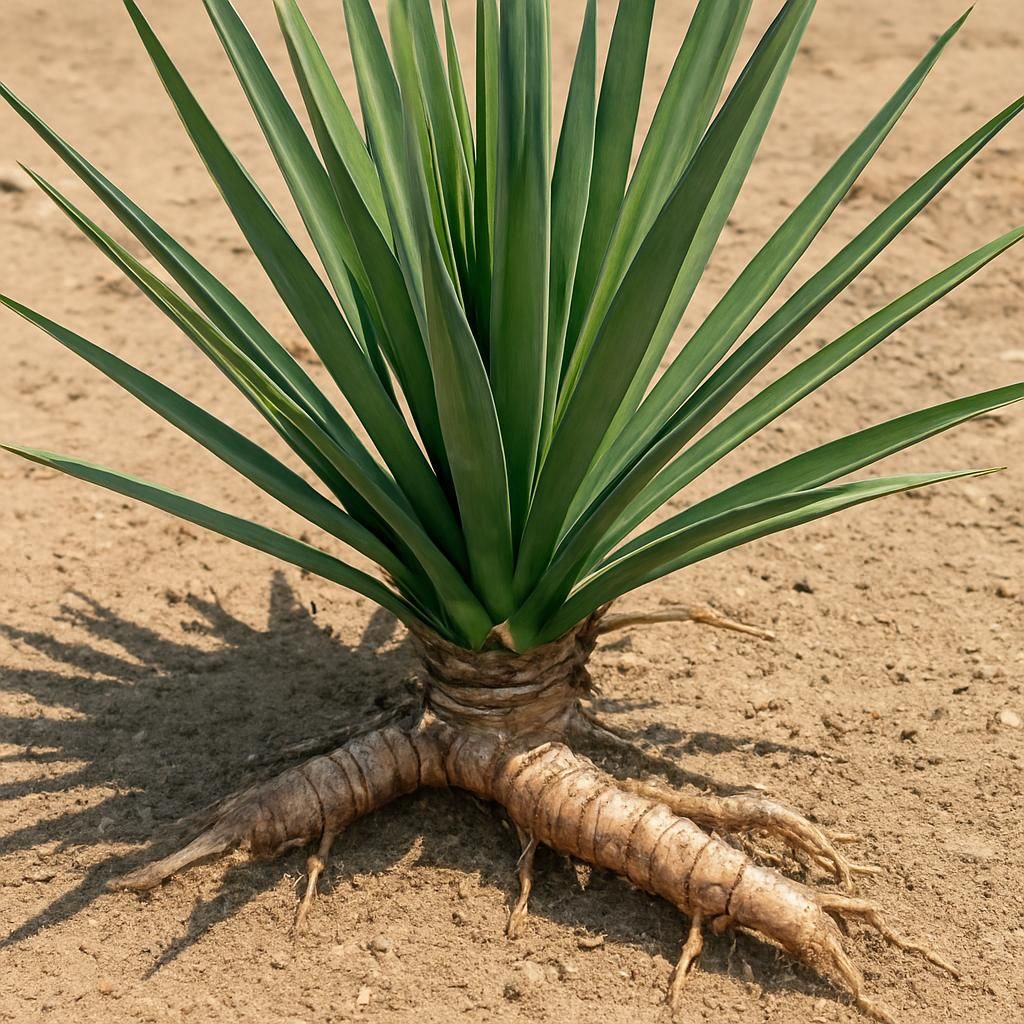
Introduction to Yucca
Yucca (Yucca spp.) is a versatile, evergreen perennial native to arid regions of North America, Central America, and parts of the Caribbean. Grown for its starchy rhizomes, tough leaves, and striking architectural form, yucca serves both culinary and industrial markets. The roots are processed into flour, starch, and traditional foods, while the leaves yield strong fiber used in rope, textiles, and paper. Commercial growers value yucca for its extreme drought tolerance, low input requirements, and ability to produce on marginal land.
Successful yucca cultivation hinges on matching site conditions to the plant’s desert-adapted physiology. Once established, plants require little water or fertilizer and can remain productive for 10–20 years. However, improper planting depth, excessive moisture, or poor drainage quickly leads to root rot and stand decline. This guide provides professional-grade, field-tested recommendations for soil management, propagation, irrigation scheduling, pest control, and harvest protocols.
Botanical Profile of Yucca
Yucca belongs to the Asparagaceae family and encompasses over 40 species. Common agricultural species include Yucca filamentosa, Yucca gloriosa, and Yucca schidigera. Plants form basal rosettes of sword-shaped, leathery leaves 30–120 cm long with sharp terminal spines. Mature plants produce tall panicles of creamy-white, bell-shaped flowers that are pollinated by yucca moths. The primary harvestable organ is the swollen underground rhizome or “root,” which stores carbohydrates and can reach 30–60 cm in length.
Yucca reproduces both sexually via seed and vegetatively through rhizome offsets (pups). Most commercial plantings use vegetative propagation to maintain genetic uniformity and accelerate establishment. The plant’s CAM photosynthesis pathway enables high water-use efficiency, making it suitable for regions receiving 250–600 mm annual rainfall.
Soil, pH, and Climate Requirements for Yucca
Yucca demands well-drained, sandy or sandy-loam soils with low fertility. Heavy clay or waterlogged sites must be avoided. The following table summarizes ideal conditions:
| Parameter | Ideal Range | Notes |
|---|---|---|
| Soil Type | Sandy loam to loamy sand | Minimum 60 % sand; avoid compacted clays |
| Soil pH | 6.0–7.5 | Slightly acidic to neutral; tolerates 5.5 |
| Organic Matter | 1–3 % | Low native fertility preferred |
| Annual Rainfall | 250–600 mm | Supplemental irrigation only during establishment |
| Temperature Range | 15–35 °C daytime | Frost hardy to –15 °C once established |
| Elevation | 0–1,800 m | Higher elevations reduce pest pressure |
| Spacing (field) | 1.5–2.0 m between rows; 1.0 m in-row | 5,000–6,700 plants/ha |
Step-by-Step Planting & Propagation
- Site selection: Choose a south-facing slope with full sun and excellent drainage. Conduct soil tests for pH, salinity, and nematodes.
- Land preparation: Deep rip to 40 cm, incorporate 5–10 t/ha well-rotted compost if organic matter is below 1 %. Form raised beds 20–30 cm high in heavy soils.
- Propagation material: Select healthy, disease-free rhizome sections 15–20 cm long with at least two buds. Alternatively, use 1-year-old nursery offsets.
- Planting time: In frost-free zones plant year-round; in cooler climates plant in spring when soil temperature exceeds 18 °C.
- Planting depth: Place rhizomes horizontally 8–10 cm deep. Backfill and firm soil to eliminate air pockets.
- Initial irrigation: Apply 10–15 L per plant immediately after planting, then reduce to encourage deep rooting.
- Mulching: Apply 5–7 cm of gravel or coarse bark mulch to suppress weeds and moderate soil temperature.
Care & Maintenance regimes for Yucca
Yucca requires minimal intervention once established. The table below outlines recommended schedules:
| Operation | Frequency / Rate | Timing | Method & Notes |
|---|---|---|---|
| Irrigation | 0–25 mm every 4–6 weeks | Year 1 only | Drip or micro-sprinkler; cease after establishment |
| Fertilizer (N-P-K) | 20-10-10 at 50 kg N/ha | Early spring | Side-dress only if leaf analysis indicates deficiency |
| Pruning | Remove dead leaves and spent flower stalks | Annually in late winter | Use sanitized shears; dispose of debris |
| Weed control | Hand weeding or shallow cultivation | As needed | Avoid deep tillage near rhizomes |
| Mulch renewal | Top up to 5 cm | Every 2 years | Maintain weed-free zone 30 cm radius |
Pests, Diseases & Organic Management
Major pests include scale insects, mealybugs, and root-knot nematodes. Scale and mealybugs are controlled with horticultural oil (1–2 % solution) applied at crawler stage. Nematode populations are suppressed by solarization and rotation with marigold. Fungal diseases such as root rot caused by Phytophthora and Pythium are prevented by strict drainage management and avoiding over-irrigation. Remove and destroy infected plants; replant with certified clean stock. Organic sprays of neem oil or Bacillus thuringiensis target occasional caterpillar pests.
Harvesting, Curing & Optimal Storage
Rhizomes reach harvestable size 18–36 months after planting. Dig carefully with a fork or mechanical lifter when foliage begins to yellow. Shake off soil, trim leaves to 10 cm stubs, and cure in a shaded, ventilated area at 20–25 °C for 7–10 days. Cured roots store 4–6 months at 10–15 °C and 60–70 % relative humidity. For longer storage, process into dried chips or flour. Monitor for storage beetles and maintain sanitation.
Companion Planting for Yucca
Yucca pairs well with drought-tolerant legumes such as cowpea and pigeon pea that fix nitrogen and provide light shade. Aromatic herbs including rosemary and thyme deter aphids and improve biodiversity. Avoid planting near moisture-loving crops like tomato or cucumber that may encourage fungal disease. Interplanting with nasturtium provides additional pest-trapping benefits while maintaining the low-water regime preferred by yucca.