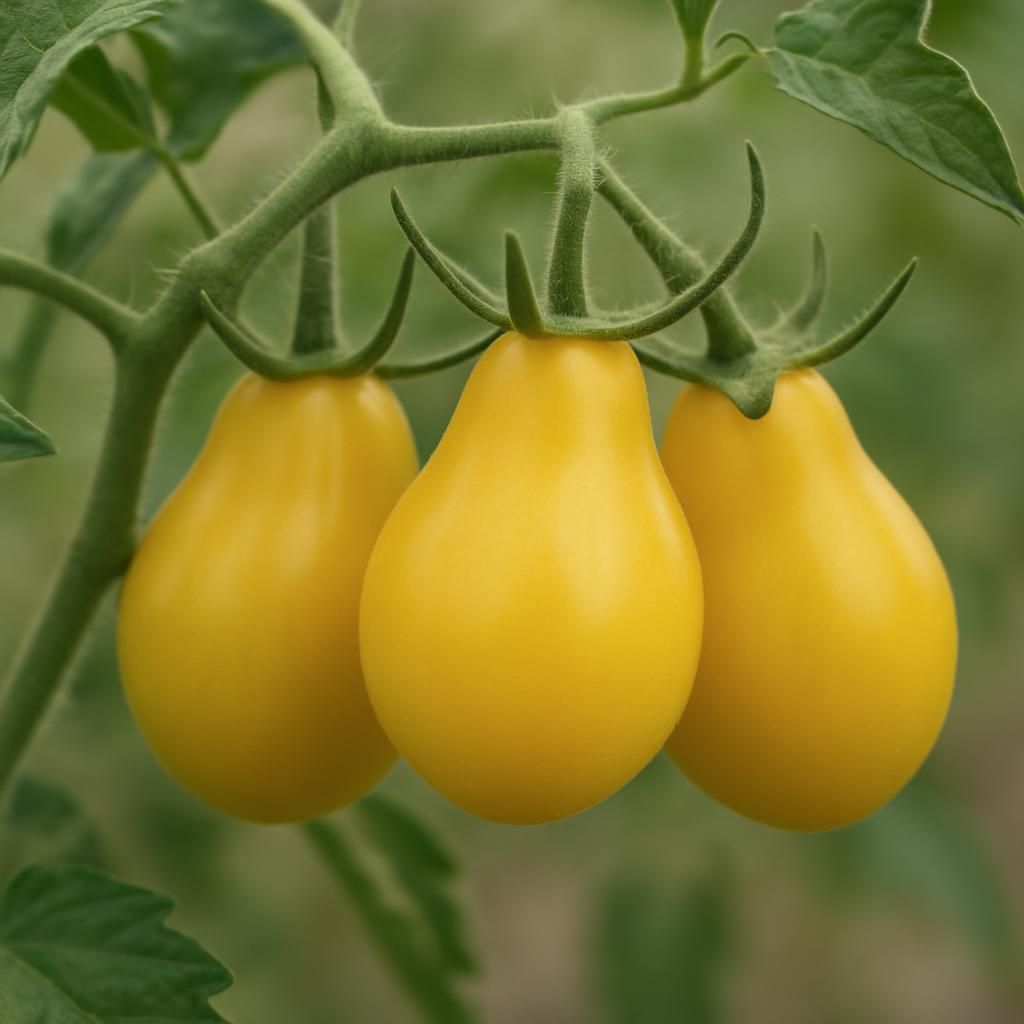
Introduction to Yellow Pear Tomato
Yellow Pear Tomato is a classic indeterminate heirloom variety celebrated for its distinctive pear-shaped, golden-yellow fruits and exceptionally sweet flavor. Originating in Europe and popularized in American gardens during the 19th century, this vigorous producer continues to be a favorite among gardeners and small-scale farmers seeking reliable, high-yielding crops with gourmet appeal. The plants produce clusters of 1-2 inch fruits that are perfect for fresh eating, salads, and pickling while offering outstanding visual contrast in market displays.
Botanical Profile of Yellow Pear Tomato
Yellow Pear Tomato belongs to the Solanaceae family and exhibits the classic indeterminate growth habit of many heirloom tomatoes. Plants reach 6-8 feet in height with sprawling vines that require sturdy support structures. The foliage consists of compound leaves with serrated margins and a vibrant green color. Small yellow flowers appear in clusters along the stems, developing into the signature pear-shaped fruits with thin skins and juicy, low-acid flesh containing few seeds.
Soil, pH, and Climate Requirements for Yellow Pear Tomato
Yellow Pear Tomato thrives in well-drained, fertile loam soils rich in organic matter. Consistent moisture and temperatures between 70-85°F (21-29°C) during the day promote optimal fruit set and development. The variety performs best in full sun locations receiving at least 8 hours of direct sunlight daily.
| Parameter | Ideal Range | Notes |
|---|---|---|
| Soil Type | Loamy, well-drained | Enrich with compost before planting |
| Soil pH | 6.2-6.8 | Slightly acidic conditions preferred |
| Day Temperature | 70-85°F (21-29°C) | Avoid prolonged exposure above 90°F |
| Night Temperature | 60-70°F (15-21°C) | Consistent nights reduce blossom drop |
| Sunlight | 8+ hours full sun | South-facing exposure ideal |
| Spacing | 24-36 inches between plants | Rows 4-5 feet apart |
Step-by-Step Planting & Propagation
Start seeds indoors 6-8 weeks before the last expected frost date. Sow seeds ¼ inch deep in sterile seed-starting mix and maintain soil temperature at 75-80°F (24-27°C) for rapid germination within 5-10 days. Transplant seedlings outdoors when soil temperatures reach 60°F (15°C) and all danger of frost has passed. Harden off plants for 7-10 days prior to transplanting. Install sturdy cages or trellises at planting time to support the vigorous vines. Space plants 24-36 inches apart in rows 4-5 feet wide, planting deeply to encourage additional root development along the buried stem.
Care & Maintenance regimes for Yellow Pear Tomato
Consistent watering, strategic fertilization, and regular pruning are essential for maximizing production of Yellow Pear Tomato. Mulch around plants to retain moisture and suppress weeds while maintaining even soil temperatures. Monitor plants weekly for signs of nutrient deficiency or water stress.
| Task | Frequency | Details |
|---|---|---|
| Watering | 1-2 inches per week | Deep watering at base; avoid wetting foliage |
| Fertilizer | Every 3-4 weeks | Balanced 10-10-10 or fish emulsion; side-dress with compost at flowering |
| Pruning | Weekly | Remove suckers below first flower cluster; maintain 1-2 main stems |
Pests, Diseases & Organic Management
Yellow Pear Tomato faces common tomato challenges including Aphids, Spider Mites, Hornworms, Early Blight, and Septoria Leaf Spot. Implement integrated pest management by introducing beneficial insects such as ladybugs and lacewings. Apply neem oil or insecticidal soap for aphid and mite control. Practice crop rotation and remove infected foliage promptly to reduce disease pressure. Mulching and proper spacing improve air circulation and minimize fungal issues.
Harvesting, Curing & Optimal Storage
Harvest Yellow Pear Tomato fruits when they reach full yellow color and slight softness at the blossom end. Pick regularly to encourage continuous production throughout the growing season. For storage, keep unwashed fruits at room temperature away from direct sunlight for up to one week. Excess harvest can be preserved through canning, drying, or freezing. The thin skins make these tomatoes excellent for quick sauces and fresh preparations.
Companion Planting for Yellow Pear Tomato
Pair Yellow Pear Tomato with Basil, Marigold, Nasturtium, and Garlic to deter pests and improve flavor. Avoid planting near Fennel or Walnut trees, which can inhibit tomato growth. Cucumber and Pepper make compatible neighbors in the same bed. Consider the strategic planning insights in The Overlooked Art of Seasonal Harvest Timing for Small Farm Profit to optimize your tomato harvest windows.