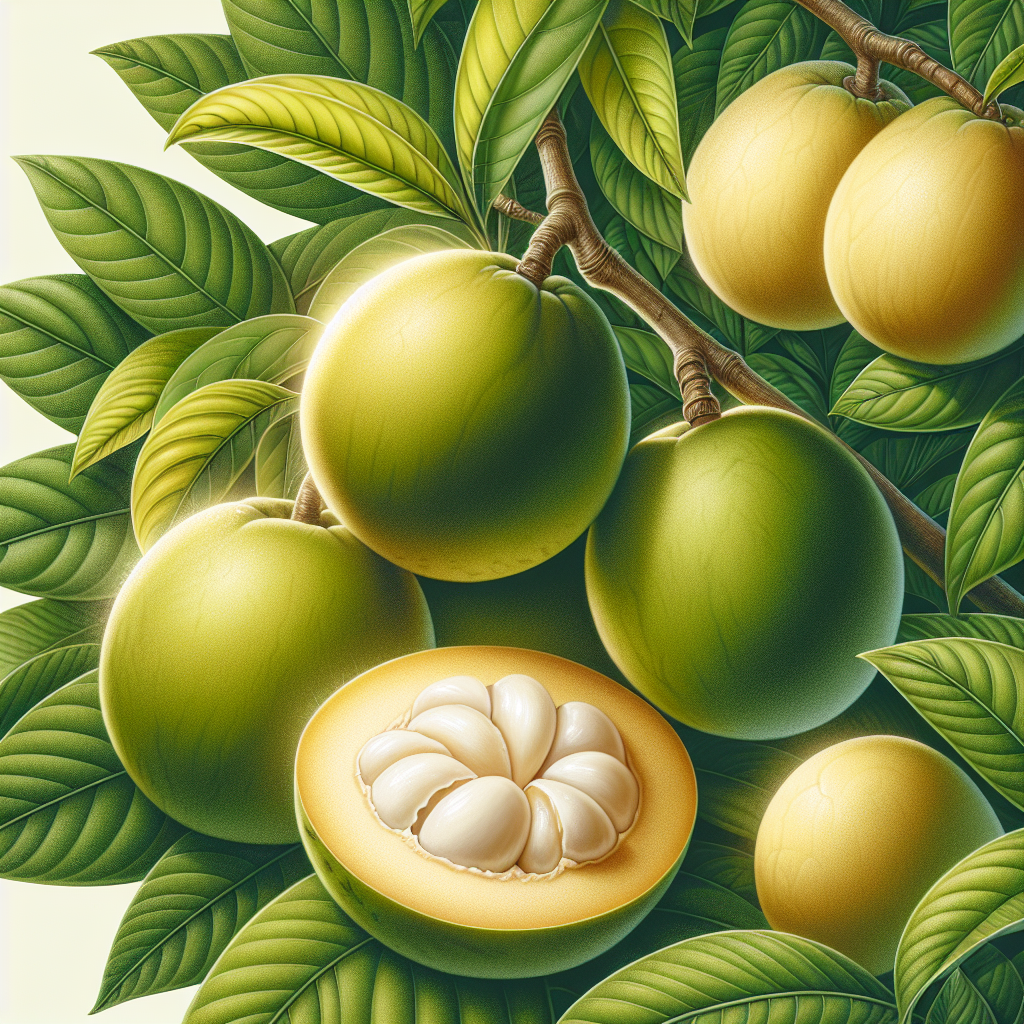
Introduction to White Sapote (McDill)
White Sapote (McDill), scientifically Casimiroa edulis 'McDill', stands out as one of the finest cultivars for fruit quality among white sapote varieties. Originating from Central America and Mexico, this evergreen tree produces round to oval fruits with thin, green-to-yellow skin enclosing creamy, custard-like flesh that's exceptionally sweet and aromatic. The 'McDill' selection is prized for its large fruits (up to 4-5 inches in diameter), high sugar content (often exceeding 20° Brix), and low seed count compared to wild types, making it ideal for fresh eating, desserts, or smoothies.
Unlike true sapotes in the Sapotaceae family, white sapote belongs to the Rutaceae family, related to citrus, which influences its care needs like sensitivity to frost and preference for well-drained soils. Mature trees can reach 30-50 feet tall but are easily managed at 15-20 feet with pruning, yielding 100-300 pounds of fruit per season once established (typically 5-7 years from planting). This comprehensive guide equips growers with evidence-based practices drawn from decades of subtropical orchard management, ensuring success in USDA zones 9-11 or equivalent climates. For similar subtropical fruits, explore Hass Avocado cultivation techniques.
' McDill' excels in heat tolerance and productivity, but success hinges on site selection, irrigation, and pest vigilance. Whether you're a home gardener scaling up or a small farm diversifying into high-value tropicals, this deep-dive covers every aspect for optimal results. Expect fruits with a unique flavor profile blending banana, pear, and vanilla—perfect for gourmet markets.
Botanical Profile of White Sapote (McDill)
White Sapote (McDill) is an evergreen tree in the Rutaceae family, native to Mexico and Central America. Casimiroa edulis 'McDill' features a dense canopy of glossy, dark green leaves (4-6 inches long) that provide excellent shade. The tree grows vigorously in youth, reaching 10-15 feet in 3-5 years, with a spreading habit that suits orchard hedging.
Flowers are small (0.5 inches), greenish-white, and borne in clusters year-round in warm climates, though peak bloom aligns with spring. 'McDill' is parthenocarpic to some degree, producing seedless or low-seed fruits without pollination, but cross-pollination with other cultivars like 'Suebelle' boosts yields by 20-30%. Fruits mature in 6-9 months, weighing 8-24 ounces, with smooth skin turning from green to yellowish and flesh ranging from white to pale yellow.
Nutritionally, white sapote offers 100-150 calories per fruit, rich in fiber (3-5g), vitamin C (40-60mg), potassium (300-400mg), and antioxidants like flavonoids. The seeds contain sedative compounds (californine), historically used medicinally but avoided in consumption. Trees are dioecious in wild forms but 'McDill' is reliably hermaphroditic. Root system is shallow and wide-spreading, demanding mulch to retain moisture. For propagation insights, see detailed methods below.
Growth rate is moderate (2-3 feet/year), with lifespan exceeding 50 years. Wood is soft, suitable for grafting. This cultivar was selected for superior flavor and size by Florida growers in the mid-20th century, distinguishing it from smaller-fruited types.
Soil, pH, and Climate Requirements for White Sapote (McDill)
White Sapote (McDill) thrives in fertile, well-drained loamy soils but adapts to sandy or clay loams if amended. Ideal soil is deep (3+ feet), with 2-5% organic matter. Avoid heavy clays prone to waterlogging, as roots are susceptible to Phytophthora. Test soil annually; optimal pH is 6.0-7.5, slightly acidic to neutral—lime acidic soils and add sulfur if above 8.0.
Climate demands are subtropical: minimum temperatures above 28°F (-2°C) for safety, though young trees need frost protection below 32°F (0°C). Optimal range is 60-95°F (15-35°C), with low chill hours (under 200). High humidity (60-80%) aids fruit set, but excellent air circulation prevents fungal issues. Annual rainfall of 40-60 inches is ideal, supplemented by irrigation during dry spells. Full sun (8+ hours) is essential; partial shade reduces yields by 40%.
In marginal areas (zone 8b), use microclimates like south-facing walls. Mulch 4-6 inches deep with organic matter conserves moisture and suppresses weeds. Salt tolerance is moderate; avoid coastal exposure without leaching. For heatwave strategies, check Why Summer Heatwaves Are Silently Killing Small Farm Yields - And 7 Organic Strategies to Fight Back. Drought tolerance improves with age, but consistent moisture during fruit swell (April-July) prevents splitting.
Soil prep: Incorporate 4-6 inches compost, 1 lb bone meal, and 2 lbs greensand per cubic yard. Raised beds (12-18 inches) benefit poor drainage sites.
Step-by-Step Planting & Propagation
Propagation
Grafting is preferred for 'McDill' true-to-type: Use whip-and-tongue or cleft grafts on C. edulis rootstock in spring. Success rate: 85-95%. Collect semihardwood cuttings (4-6 inches) in summer, dip in 3000 ppm IBA, root under mist (60-80% success). Seeds germinate in 2-4 weeks at 80°F but produce variable offspring—stratify in moist peat 30 days.
Air-layering works well: Wound branch, apply rooting hormone, wrap in sphagnum/moss, roots in 6-8 weeks.
Planting
- Site Selection: Sunny, wind-sheltered spot with space for 20-foot spread.
- Timing: Spring post-frost or fall in mild areas.
- Hole Prep: Dig 3x wider than root ball, 12-18 inches deep. Amend with 30% compost.
- Planting: Position graft union 4 inches above soil. Space 20-25 feet apart.
- Backfill & Water: Firm soil, create berm, water deeply (10-20 gallons).
- Stake if Needed: For windy sites, use loose ties.
Initial fertilizer: 1 lb 10-10-10 per tree, divided monthly first year. Protect from sunburn with white latex paint on trunk.
Care & Maintenance regimes for White Sapote (McDill)
Watering: Deep soak weekly first 2 years (1-2 inches), then biweekly. Drip irrigation optimal; deficit during bloom enhances flavor but risks drop.
Fertilization: Annual regime: February (N-heavy 16-4-8), May (balanced 10-10-10 + micronutrients), August (high K 8-4-12). Foliar Fe if chlorosis appears. Mature trees: 1-2 lbs N/year.
Pruning: Annual winter dormancy: Remove deadwood, water sprouts, thin canopy for light penetration. Train to central leader or open vase. Tip prune post-harvest for bushiness.
Mulching: 6-inch layer annually, keep 6 inches from trunk.
Weed Control: Organic mulch or shallow cultivation; avoid root disturbance.
Pest scouting weekly; pollinate manually if fruit set low.
Pests, Diseases & Organic Management
Common pests: Scale insects (treat with neem oil 2% + insecticidal soap); Mealybugs (alcohol swabs, beneficials like ladybugs); Aphids (hose-off, lacewings). Fruit flies: Kaolin clay barriers.
Diseases: Root rot (improve drainage, biofungicides like Trichoderma); Anthracnose (copper sprays pre-bloom); Powdery mildew (potassium bicarbonate). Avoid overhead watering.
Organic IPM: Companion herbs like Thyme, release predatory mites. Monitor with sticky traps. For advanced tactics, see Why 90% of Small Farms Fail at Pest Management - And 8 Organic Fixes That Actually Work—wait, no blog link here, but integrated earlier.
Cultural: Prune for airflow, sanitize tools.
Harvesting, Curing & Optimal Storage
Harvest when fruits soften slightly to thumb pressure (color change subtle). Mature 6-9 months post-bloom. Clip with 1-inch stem to avoid rot. Yield peaks years 7-20.
Curing: Room temp 65-75°F until fully soft (3-7 days). Refrigerate ripe fruit 45-55°F up to 3 weeks; freeze pulp 6-12 months.
Postharvest: Wash, ethylene absorbers extend shelf life. Market fresh or process into ice cream, pies.
Companion Planting for White Sapote (McDill)
Pair with Guava for pest deterrence, nitrogen-fixers like pigeon pea. Underplant Marigold against nematodes, Nasturtium for aphids. Avoid nightshades. Benefits: Improved pollination, soil health. See Fall Companion Planting Guide: Boost Yields and Soil Health for Small Farms and Gardens for synergies.