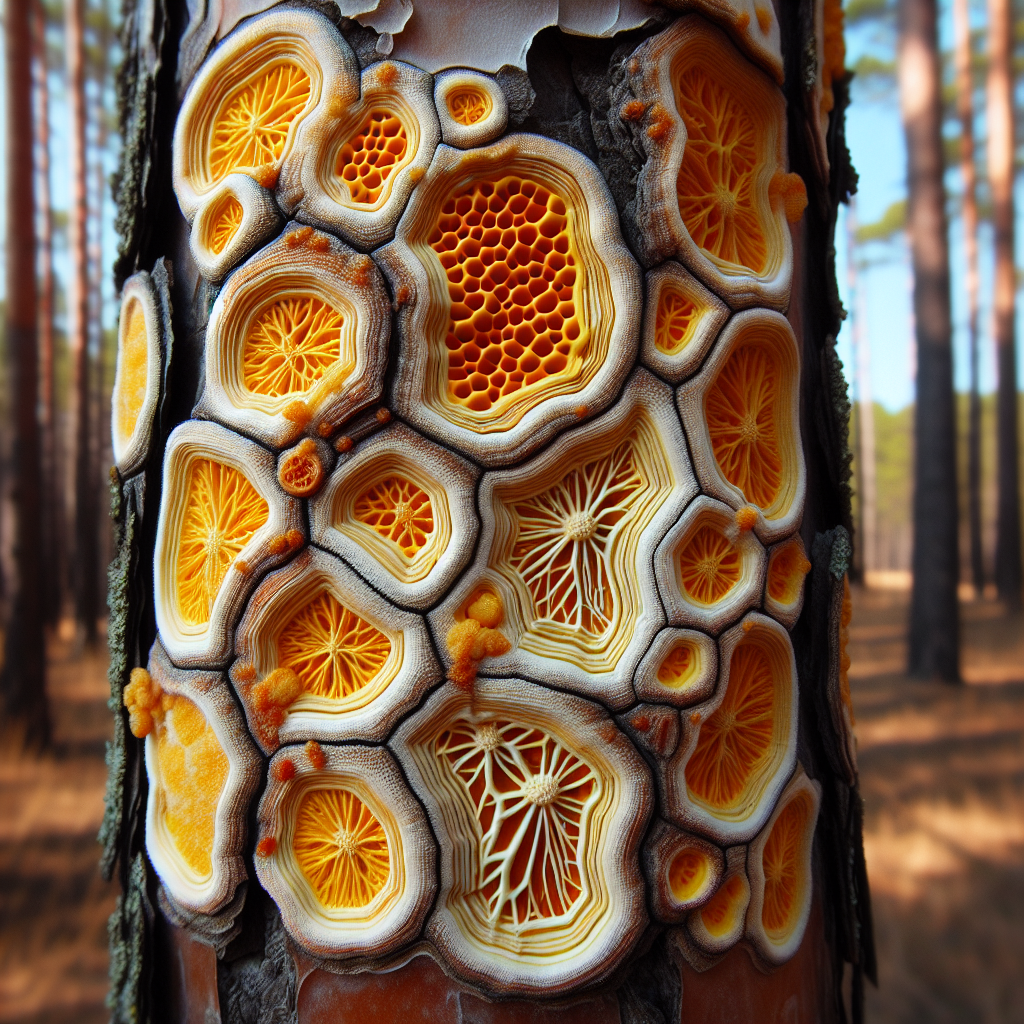
Introduction to White pine blister rust
White pine blister rust (Cronartium ribicola) stands as one of the most destructive diseases impacting white pine species across North America and Europe. First introduced to North America from Europe in the early 1900s via infected nursery stock, this heteroecious rust fungus has decimated eastern white pine (Pinus strobus) populations, which were once a cornerstone of the timber industry. The disease manifests as bright orange blisters on branches and stems, eventually forming cankers that girdle the tree, leading to branch dieback, top-kill, and complete mortality in severe cases.
Understanding white pine blister rust is crucial for foresters, landscapers, orchard managers, and homeowners cultivating pine trees. This guide provides comprehensive diagnostic criteria, lifecycle details, environmental influences, organic management strategies, prevention tactics, and insights into affected species. By integrating these practices, growers can mitigate losses and sustain healthy pine ecosystems. Unlike many foliar diseases, blister rust targets woody tissues, making it particularly pernicious and long-lasting. Rusts represent a broader category of fungal pathogens that exploit pines, but blister rust's two-host requirement sets it apart, demanding integrated management across landscapes.
The economic impact is staggering: historical logging of white pines dropped from billions of board feet annually pre-1900 to a fraction today due to this pathogen. Modern breeding programs have developed resistant strains, but vigilance remains key. This SEO-optimized resource equips agricultural experts with actionable intelligence to combat this persistent threat.
Identifying Symptoms & Damage
Accurate diagnosis begins with recognizing the distinctive symptoms of white pine blister rust, which progress predictably across seasons. Initial signs appear on needles as small, yellow spots on upper surfaces and brown bands on lower surfaces, often in spring. These evolve into spindle-shaped aecia on needles and branch bark by early summer, erupting as conspicuous orange-yellow blisters filled with copious aeciospores.
By late summer, these blisters rupture, releasing powdery spores that infect alternate hosts. On pine stems and branches, symptoms manifest as rough, sunken cankers with firm, dark margins and cracked bark. Advanced cankers show bark peeling to reveal reddish-brown, dead cambium and black resin streaks. Needles distal to cankers yellow and drop, leading to flagged branches (dead tops with live lower crown).
Damage severity varies: young trees under 10 years suffer highest mortality (up to 90%), while mature trees experience top-kill and reduced growth. Cankers expand slowly (2-10 cm/year), girdling branches or stems over 2-5 years. Differentiate from other canker diseases like Atropellis canker or pine engraver beetles by the presence of orange aecia and two-host confirmation. Needle cast from other rusts lacks woody cankers.
Scout systematically: inspect lower branches first, as infections ascend slowly. Use a hand lens to confirm aeciospores. In landscapes near Ribes, symptoms cluster downslope from alternate hosts. Yield losses in seed orchards exceed 50%, underscoring diagnostic urgency.
Lifecycle and Progression of White pine blister rust
Cronartium ribicola's complex lifecycle spans two years and requires five spore stages across pine (telial host) and Ribes/gooseberry/currant (aecial host). It overwinters as dormant dikaryotic mycelium in pine bark cankers. In spring (May-June), basidiospores germinate from telia formed the previous year, carried by wind up to 5 miles to infect Ribes leaves.
On Ribes, pycnia produce haploid pycniospores in sticky droplets, facilitating mating. Karyogamy yields dikaryotic aecia, erupting orange aeciospores by July-August. These wind-disperse to pine needles/stems, penetrating stomata or wounds, forming new cankers. Infections on young bark progress faster.
Progression: Year 1 - needle infection leads to branch canker; Year 2+ - stem girdling. Cool, moist conditions favor each stage. Unlike autoecious rusts, eradication of nearby Ribes interrupts the cycle. Understanding this alternation is pivotal for timing interventions, such as Ribes removal before basidiospore release.
Environmental Triggers & Risk Factors
Optimal conditions for white pine blister rust include cool, moist climates: temperatures 50-68°F (10-20°C) with leaf wetness >48 hours for basidiospore germination, and 45-60°F for aeciospores. High humidity (>90%) and fog-prone valleys amplify spread. Introduced in 1909 via Pacific Northwest, it thrives below 3,000 ft elevation in the West, up to 4,000 ft in the East.
Risk factors: proximity (<500m) to wild/domesticated Ribes spp., dense pine stands, poor air circulation, and susceptible genetics. Young, vigorously growing pines (2-12 years) are most vulnerable due to succulent tissues. Overcrowding exacerbates microclimate humidity. Climate change may shift ranges northward, increasing threats. Site history with prior infections elevates risk; avoid planting in rust hotspots.
Organic Control & Treatment Plans
Organic management emphasizes cultural, biological, and mechanical strategies, avoiding synthetic fungicides. Prune cankered branches >6 inches below infection in dry weather (late fall/winter), sterilizing tools with 10% bleach. Remove and destroy (burn/bury) heavily infected trees to curb spore production.
Deploy resistant white pine varieties like Kalamalka, Backcross, or Geneva selections, which exhibit 70-95% resistance. Eradicate alternate hosts: remove all Ribes within 1,000 ft of pines, focusing on black currant (Ribes nigrum), most efficient host. Fertilize judiciously to avoid excessive succulent growth; maintain spacing for airflow.
Biological controls include antagonistic fungi like Verticillium or Trichoderma applied to cankers, though efficacy varies (30-50% suppression). Boost tree vigor with mulch and mycorrhizal inoculants. Monitor via apps for early detection. Integrated plans reduce incidence 80% in orchards. For landscapes, interplant with non-hosts like Thyme to deter spores. Check Spring Pest Patrol: Organic AI Strategies to Shield Your Crops from Common Invaders for tech-enhanced scouting.
Preventing White pine blister rust in the Future
Prevention hinges on site selection, genetics, and sanitation. Plant certified rust-resistant stock from programs like the White Pine Blister Rust Resistance Cooperative. Avoid Ribes in a 1-mile buffer; certify Ribes-free zones. Thin stands to 200-400 trees/acre, promoting ventilation and drying.
Soil test and amend for balanced nutrition, preventing stress-induced susceptibility. Mulch to retain moisture without excess humidity. Annual inspections target high-risk trees. Quarantine infested areas; educate neighbors on Ribes removal. Long-term breeding deploys major gene resistance (Cr1-Cr4 loci). Landscape design integrates barriers like deciduous windbreaks. Proactive monitoring via remote sensing sustains rust-free plantations.
Crops Most Affected by White pine blister rust
Primarily five-needle white pines: eastern white pine (Pinus strobus), western white pine (P. monticola), sugar pine (P. lambertiana), whitebark pine (P. albicaulis), and limber pine (P. flexilis). These timber, nut, and ornamental species suffer 50-100% mortality without management. Alternate hosts include Ribes spp. (currants/gooseberries) like R. nigrum, R. sativum, R. petiolare, showing minor leaf symptoms but critical for spore production.
Secondary impacts on American Chestnut plantations near pines via shared rust pressures. Forestry nurseries and seed orchards face devastation, with losses exceeding millions annually. Restoration projects for whitebark pine in national parks prioritize rust-resistant seedlings. No major agricultural crops affected, but ornamental pines in gardens amplify urban spread.