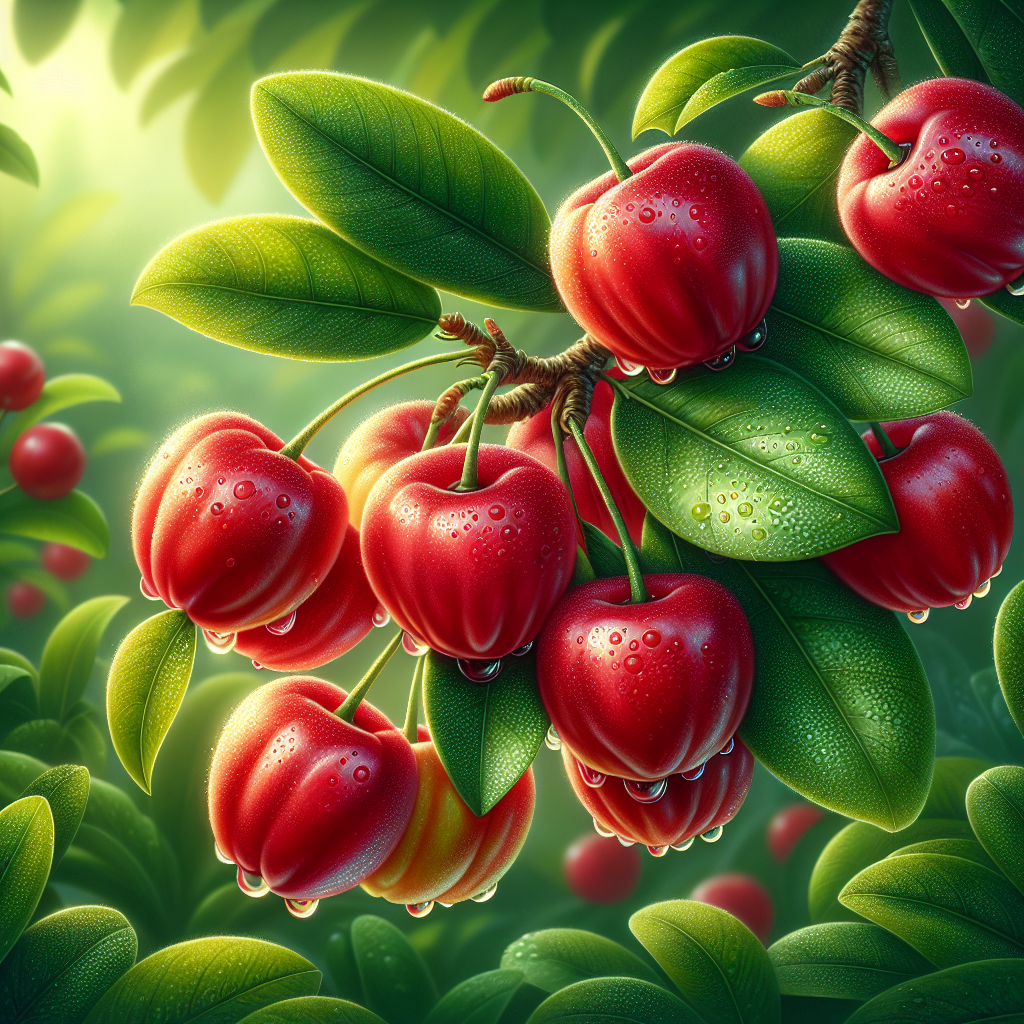
Introduction to West Indian Cherry (Acerola - B-17)
West Indian Cherry, scientifically known as Malpighia emarginata and often called Acerola or B-17 cherry, is a powerhouse of nutrition native to the Caribbean, Central America, and northern South America. This small, bushy shrub has gained global acclaim for its ruby-red berries that boast unparalleled vitamin C levels—often 1,000-4,500 mg per 100g fresh weight, dwarfing oranges at just 53 mg. The 'B-17' moniker refers to its natural amygdalin content, a compound some associate with health benefits, though scientific consensus emphasizes its antioxidant and immune-boosting properties.
Acerola thrives as a perennial in USDA zones 9-11, producing fruit year-round in ideal tropical conditions and offering multiple harvests per season. Its rapid growth (reaching 6-10 feet tall) and self-fertile nature make it beginner-friendly for small-scale farmers and home gardeners. Berries are harvested at peak ripeness for maximum vitamin retention, with yields up to 30 pounds per mature bush annually. Beyond fresh consumption, Acerola is processed into powders, juices, and extracts, commanding premium prices in health food markets. Guava (crop) shares similar tropical adaptability and nutritional profile, making it a complementary orchard addition.
This guide provides professional-grade cultivation advice, from propagation to pest management, ensuring optimal yields and fruit quality. Whether scaling for commercial viability or backyard bounty, Acerola's low maintenance and high returns position it as a top superfood crop.
Botanical Profile of West Indian Cherry (Acerola - B-17)
Acerola belongs to the Malpighiaceae family, characterized by its evergreen, multi-stemmed growth habit. Plants reach 3-15 feet in height and width, with dense, oval leaves (2-6 inches long) that are glossy green and slightly serrated. Pinkish-white flowers, resembling small hibiscus blooms, appear in clusters year-round, giving way to apple-sized (0.5-1 inch diameter) fruits.
Berries develop rapidly—full maturity in 3-4 weeks—with thin, waxy skin enclosing juicy, orange-red pulp studded with 3-5 small seeds. Flavor profiles range from tart to sweet, influenced by cultivar and ripeness. Popular varieties include 'Florida Sweet' (high-yield, sweet), 'B-17' strains (amygdalin-rich), and dwarf types like 'Nob Hill' for container growing.
Root systems are fibrous and shallow, extending 2-3 feet, promoting drought tolerance once established. Acerola is dioecious in wild forms but most cultivated clones are hermaphroditic or parthenocarpic, ensuring fruit set without pollinators. Phenologically, it flowers and fruits continuously in tropics, with peak production during wet seasons. Its C3 photosynthetic pathway supports vigorous growth under partial shade, mimicking understory habits in native rainforests.
Nutritionally, beyond vitamin C, Acerola delivers carotenoids (beta-carotene, lycopene), bioflavonoids, anthocyanins, and minerals like potassium and magnesium. Heat-sensitive vitamin C degrades post-harvest, so immediate processing is key for commercial ops.
Soil, pH, and Climate Requirements for West Indian Cherry (Acerola - B-17)
Acerola demands well-drained, fertile soils with pH 5.5-7.5, tolerating slight acidity like its pineapple companions. Sandy loams or volcanic soils mimic native habitats, preventing waterlogging that invites root rot. Incorporate 20-30% organic matter (compost, aged manure) pre-planting to boost microbial activity and cation exchange.
Optimal climate: 70-90°F (21-32°C) daytime, no frost. It withstands brief dips to 28°F (-2°C) but growth stalls below 50°F (10°C). Annual rainfall of 40-60 inches suits it, supplemented by drip irrigation during dry spells (1-2 inches/week). High humidity (60-80%) enhances flowering, but good airflow mitigates fungal risks. Full sun (6-8 hours) maximizes yields; light shade curbs leaf scorch in intense tropics.
Soil testing is essential—aim for 150-200 ppm N, 50-100 ppm P, 200-300 ppm K at planting. Mulch with 4-6 inches of organic material to retain moisture and suppress weeds. In marginal zones, use microclimates or high tunnels. For more on resilient tropical setups, check Why Summer Heatwaves Are Silently Killing Small Farm Yields - And 7 Organic Strategies to Fight Back.
Step-by-Step Planting & Propagation
Propagation: Seeds germinate in 2-4 weeks at 80-85°F, but cuttings (4-6 inch semi-hardwood) root fastest (90% success) in perlite:vermiculite under mist. Air-layering yields mature plants quickest for commercial scales.
- Site Prep: Select sunny, wind-sheltered spots. Dig holes 3x wider than root ball, 2 feet deep. Amend with compost and 10-4-10 fertilizer.
- Planting: Space 6-10 feet apart (hedgerows at 4 feet). Plant at soil grade in spring post-frost. Water deeply.
- Seed Starting: Sow fresh seeds ¼-inch deep in sterile mix. Bottom-heat, cover with plastic. Transplant at 6-12 inches.
- Cuttings: Dip in rooting hormone, pot in 4-inch containers. Harden off after 8-12 weeks.
Initial staking prevents wind damage. Expect first fruits in 6-12 months from cuttings, 1-2 years from seed.
Care & Maintenance regimes for West Indian Cherry (Acerola - B-17)
Watering: Consistent moisture without sogginess—drip systems ideal. Reduce in winter dormancy.
Fertilization: Balanced 10-10-10 monthly during growth; shift to high-potassium (e.g., 5-10-20) pre-fruiting. Foliar vitamin C sprays enhance quality.
Pruning: Annual shaping post-harvest: remove deadwood, thin canopy for light penetration. Train to single trunk or espalier.
Weeding/Mulching: Maintain weed-free zone; pine bark mulch excels.
Pollination: Self-fertile, but bees boost yields.
Monitor for nutrient deficiencies: yellow leaves signal iron/magnesium lack—chelates resolve.
Pests, Diseases & Organic Management
Pests: Aphids, mealybugs, fruit flies top threats. Neem oil, insecticidal soap, or ladybugs control. Netting protects ripening berries.
Diseases: Anthracnose, powdery mildew, Phytophthora. Copper fungicides, improved drainage, resistant varieties mitigate. Avoid overhead watering.
Organic IPM: Companion marigolds deter nematodes; beneficial nematodes target soil pests. For deeper strategies, see Why 90% of Small Farms Fail at Pest Management - And 8 Organic Fixes That Actually Work.
Harvesting, Curing & Optimal Storage
Harvest when fully red (3-4 weeks post-bloom), twisting clusters gently. Yields peak 2-3 times yearly. Cool immediately to 32-40°F for 3-7 day fresh storage; freeze or puree for longer.
Process into powder: Blanch, dehydrate at 120°F, mill. Vitamin C stable frozen up to 6 months. Market fresh, dried, or juiced.
Companion Planting for West Indian Cherry (Acerola - B-17)
Pair with Thai Basil for pest repulsion, lemon for nitrogen fixing, and legumes like peas for soil enrichment. Avoid nightshades to prevent disease crossover. Nasturtium traps aphids. This synergy boosts biodiversity and yields—details in Why Companion Planting Feels Like Guesswork for Small Farms - And How AI Makes It Foolproof.