Introduction to Wax Jambu (Black King Kong)
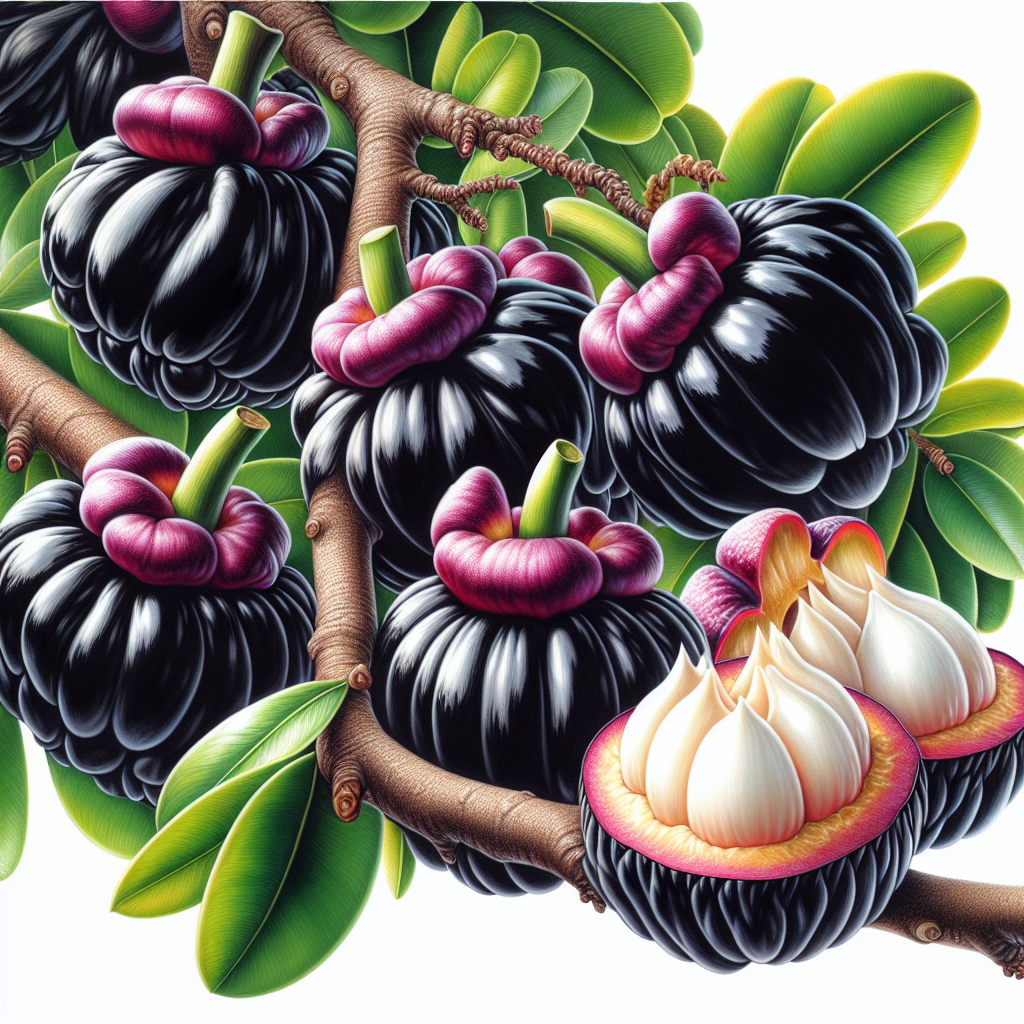
Wax Jambu, scientifically known as Syzygium samarangense 'Black King Kong', stands out as one of the most visually stunning and delicious cultivars in the jambu family. Native to Southeast Asia, this evergreen tree produces oversized, bell-shaped fruits that mature to a deep black-purple hue, contrasting dramatically against vibrant green foliage. Unlike common rose apple varieties, Black King Kong fruits are notably larger—often reaching 5-7 cm in diameter—with a waxy, edible skin that encases juicy, white flesh boasting a unique blend of apple crispness and subtle floral notes reminiscent of rosewater.
This tropical beauty is a favorite among small-scale farmers and home gardeners for its rapid growth, heavy fruiting, and ornamental appeal. Trees can bear fruit within 2-3 years from planting, yielding up to 50-100 kg per mature specimen annually under optimal conditions. The fruits are seedless or contain minimal, soft seeds, making them perfect for fresh eating, salads, or exotic desserts. Beyond its culinary value, Wax Jambu (Black King Kong) serves as an excellent shade tree and pollinator attractant, enhancing biodiversity in tropical orchards. For those in USDA zones 10-11 or equivalent humid subtropical regions, this crop offers high returns with relatively low input, though it demands protection from cool temperatures and occasional pests. Discover proven strategies in Why 90% of Small Farms Fail at Pest Management - And 8 Organic Fixes That Actually Work.
Grown widely in India, Indonesia, Taiwan, and increasingly in Florida and Hawaii, Black King Kong has gained popularity for its disease resistance compared to red jambu varieties. Its vigorous growth habit—reaching 6-10 meters tall if unpruned—makes it suitable for hedging or standalone specimens. Fruiting occurs year-round in equatorial zones but peaks during warm, wet seasons elsewhere, providing a reliable harvest window. Nutritionally, the fruits are low-calorie (about 40 kcal/100g), rich in vitamin C, fiber, and antioxidants, positioning them as a healthy snack alternative to sugary treats.
Botanical Profile of Wax Jambu (Black King Kong)
Belonging to the Myrtaceae family, Wax Jambu (Black King Kong) is a cultivar selected for its superior fruit size and color intensity. The tree features dense, glossy elliptical leaves (10-20 cm long) that emerge reddish-bronze before maturing to deep green, creating a lush canopy. New growth is particularly attractive, with crimson flushes adding ornamental value. Flowers are small, white, and borne in clusters, giving way to green fruits that ripen sequentially to glossy black.
Roots are shallow and fibrous, spreading widely to support rapid vegetative growth. Black King Kong is dioecious or self-fertile in many cases, though cross-pollination with other jambu varieties boosts yields. Wood is lightweight and termite-resistant, useful for crafts. Compared to standard wax jambu, this cultivar exhibits thicker fruit skin for better shelf life and higher brix levels (12-16°), enhancing sweetness without acidity. Phenologically, vegetative flush precedes flowering by 4-6 weeks, with fruit maturation taking 30-45 days post-petal drop.
Genetically, Black King Kong likely derives from natural mutations in Syzygium samarangense populations, selected in Taiwan for commercial traits. It tolerates light saline soils better than mangoes or papaya but requires consistent moisture. Leaf oil contains cineole and myrcene, contributing to pest repellence.
Soil, pH, and Climate Requirements for Wax Jambu (Black King Kong)
Wax Jambu (Black King Kong) flourishes in fertile, well-draining loamy soils with pH 5.5-7.0. Avoid heavy clays prone to waterlogging, which invite root rot. Incorporate 20-30% organic matter like composted coconut coir or aged manure to enhance aeration and nutrient retention. Sandy loams amended with biochar perform exceptionally, mimicking native volcanic soils.
Optimal climate mirrors tropical lowlands: temperatures 22-35°C daytime, not below 15°C nightly. Humidity above 70% promotes fruit set; prolonged dry spells reduce yields by 40%. Annual rainfall of 1500-2500 mm is ideal, supplemented by drip irrigation during deficits. Full sun (6-8 hours) is essential, though light shade tempers extreme heat. Windbreaks are crucial in exposed sites, as gales damage flowers and young fruits.
Soil testing every 6 months guides amendments: nitrogen for growth, phosphorus for roots/flowers, potassium for fruit quality. Micronutrients like zinc and boron prevent deficiencies evident as chlorosis or cracking. Mulch with 10 cm organic layers conserves moisture and suppresses weeds. In marginal climates, use high tunnels or frost cloth for winter protection. Refer to Soil Health Mastery: 5 Proven Strategies for Small Farms to Build Fertile Ground Without Breaking the Bank for detailed protocols.
Step-by-Step Planting & Propagation
Propagation: Air-layering yields 90% success in 6-8 weeks. Select 2-3 year-old branches (2 cm diameter), girdle 5 cm wide, apply rooting hormone (IBA 2000 ppm), wrap in moist sphagnum moss and plastic. Roots form readily due to cambial activity. Seed propagation is viable but produces variable offspring; stratify fresh seeds 2 weeks at 25°C.
Site Preparation: Dig 60x60x60 cm pits, fill with 50% topsoil + 30% compost + 20% sand + 200g superphosphate + 100g dolomite lime. Space trees 6-8 m apart for full canopies.
Planting: Best in early rainy season. Plant grafted saplings (1-1.5 m tall) at same depth as nursery pot. Stake firmly, water deeply (50L/tree). Apply 10-10-10 fertilizer at 500g/tree post-planting.
Early Care: Prune to central leader, mulch heavily. Irrigate weekly until established (6 months). Expect first fruits year 2.
Care & Maintenance regimes for Wax Jambu (Black King Kong)
Watering: Deep soak bi-weekly, maintaining even moisture. Drip systems deliver 40-60L/tree/week in dry periods. Overwatering invites phytophthora.
Fertilization: Annual schedule: Feb (N-P-K 16-8-24 @1kg/tree), Jun (bloom boost 10-30-20 @800g), Oct (fruit swell 6-30-30 @1.2kg). Foliar sprays of micronutrients monthly during growth.
Pruning: Annual post-harvest: remove deadwood, water sprouts, thin canopy for light penetration. Maintain 4-6 m height for harvest access.
Weed Control: Mulch + shallow cultivation. Cover crops like clover suppress competitors.
Pollination: Hand-pollinate if bees scarce; yields surge 25%.
Pests, Diseases & Organic Management
Pests: Fruit flies (fruit flies) puncture skins—use kaolin clay sprays and sanitation. Mealybugs cluster on shoots; neem oil + ladybugs control. Aphids on new growth: insecticidal soap. Scale insects respond to hort oil.
Diseases: Anthracnose causes fruit rot; copper fungicide pre-monsoon. Powdery mildew in humid shade: sulfur dust. Bacterial leaf spot: remove infected parts, improve air flow.
Organic IPM: Beneficials (predatory mites, parasitic wasps), reflective mulches, bagging fruits. Monitor weekly; intervene early for 95% control.
Harvesting, Curing & Optimal Storage
Harvest when fully black, firm, with slight give—twist or clip with shears. Yields peak 4-6 months post-pruning. Fruits store 2-3 weeks at 10-13°C, 85-90% RH. Room temp: 5-7 days. For market, wax lightly or hydrocool. Process into jams, juices; freeze pulp for 6 months.
Companion Planting for Wax Jambu (Black King Kong)
Pair with Thai basil for pest repulsion, marigold for nematodes, ginger for shade tolerance. Avoid potato (allelopathy). Legumes like pigeon pea fix N. Understory: pineapples, herbs. Learn more in Why Companion Planting Feels Like Guesswork for Small Farms - And How AI Makes It Foolproof.