Introduction to Vanilla (Planifolia - Madagascar)
Vanilla planifolia, commonly known as Bourbon vanilla when grown in Madagascar, is the most commercially important species of vanilla orchid worldwide. Native to Mesoamerica, it was introduced to the Indian Ocean islands in the 19th century where Madagascar rapidly became the global leader in production and quality. The region's volcanic soils, consistent humidity, and traditional hand-pollination techniques produce pods with superior vanillin levels and aromatic complexity. Today, Madagascar accounts for over 80% of global cured vanilla bean exports, making it the benchmark for flavor and market pricing.
Commercial growers face significant challenges including a 3–4 year maturation period before first harvest, labor-intensive pollination, and vulnerability to cyclones and fungal pathogens. However, well-managed plantations can achieve strong returns due to consistent international demand from the food, beverage, and fragrance industries. This guide provides professional-grade agronomic recommendations tailored specifically to Vanilla planifolia cultivation in Madagascar's key production zones.
Botanical Profile of Vanilla (Planifolia - Madagascar)
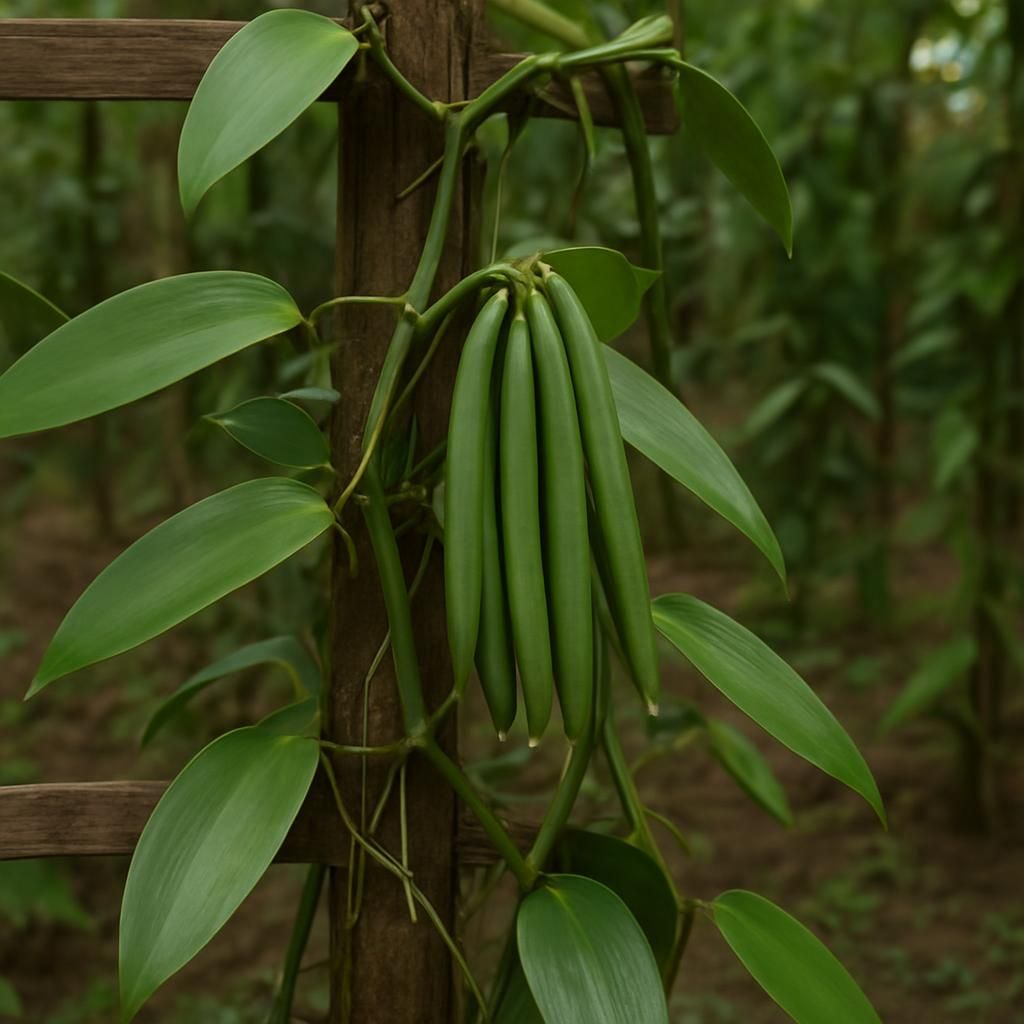
Vanilla planifolia is a perennial climbing orchid belonging to the Orchidaceae family. The vine produces long, fleshy stems that can reach 10–15 meters when supported by living tutor trees or trellises. Aerial roots emerge at each node to anchor the plant and absorb atmospheric moisture. Leaves are alternate, oblong-lanceolate, and dark green, measuring 10–20 cm in length.
The inflorescence consists of 20–30 pale yellow-green flowers that open sequentially over several weeks. Each flower lasts only one day and must be hand-pollinated in cultivation because the natural pollinator (Melipona bee) is absent outside its native range. Successful pollination results in elongated green pods that require 8–9 months to reach physiological maturity. Mature pods contain thousands of tiny black seeds embedded in a viscous matrix rich in aromatic precursors.
Soil, pH, and Climate Requirements for Vanilla (Planifolia - Madagascar)
Vanilla planifolia thrives in well-drained, organic-rich soils with excellent aeration. The plant is highly sensitive to waterlogging, which quickly leads to root rot. Ideal planting sites feature deep loamy or sandy-loam soils amended with substantial quantities of well-rotted leaf mold, coconut husk, or compost. Raised beds or mounds are recommended in areas with seasonal heavy rainfall.
| Parameter | Ideal Range | Notes |
|---|---|---|
| Soil Type | Loamy to sandy loam with high organic matter | Well-drained; avoid heavy clay |
| Soil pH | 6.0 – 7.0 | Slightly acidic to neutral |
| Temperature (Day) | 25 – 32 °C | Optimal growth and flowering |
| Temperature (Night) | 18 – 24 °C | Prevents flower drop |
| Relative Humidity | 75 – 85 % | Consistent misting or shade-house systems |
| Annual Rainfall | 1,500 – 2,500 mm | Evenly distributed; supplemental irrigation during dry spells |
| Light | 30 – 50 % shade | Dappled light under tutor trees or shade cloth |
| Elevation | 0 – 800 m | Lower elevations produce faster growth |
Step-by-Step Planting & Propagation
Propagation is almost exclusively achieved through stem cuttings taken from healthy, mature vines. Select 30–40 cm cuttings containing 4–6 nodes from the middle portion of vigorous stems. Remove lower leaves and plant cuttings at a 45-degree angle in prepared nursery beds or polybags filled with a sterile mix of leaf mold, sand, and coir. Maintain 70–80 % humidity and indirect light until new roots and shoots appear (typically 4–6 weeks).
Field planting should occur at the start of the rainy season. Prepare 60 cm × 60 cm × 60 cm planting holes spaced 2.5–3 m between rows and 1.5–2 m within rows. Incorporate 10–15 kg of well-decomposed organic matter per hole. Install living tutor trees such as Gliricidia or durable trellis systems before planting. Place cuttings so that 2–3 nodes are buried while the remaining stem is trained upward. Mulch heavily with leaf litter or coconut husk to retain moisture and suppress weeds.
Care & Maintenance regimes for Vanilla (Planifolia - Madagascar)
Consistent care during the first three years focuses on establishing a strong root system and training vines to the support structure. Regular weeding, mulching, and pruning of lower leaves improve airflow and reduce disease pressure. Once vines reach the top of the support, they are looped or bent downward to encourage lateral branching and flowering.
| Operation | Frequency | Details |
|---|---|---|
| Irrigation | 2–3 times weekly during dry season | Maintain even soil moisture; avoid waterlogging |
| Fertilizer | Every 4–6 weeks (growing season) | Apply balanced organic NPK (10-10-10) plus micronutrients; alternate with compost tea |
| Pruning | Twice yearly | Remove dead wood, lower leaves, and excess vegetative growth; loop vines at 1.8–2 m height |
| Mulching | Renew every 4–6 months | 5–10 cm layer of leaf mold or coconut husk around base |
| Training | Continuous | Tie new growth to tutor; bend vines when they reach support top |
Pests, Diseases & Organic Management
The most common pests include mealybugs, scale insects, and thrips. These sap-sucking insects weaken vines and transmit viruses. Regular monitoring and releases of predatory lady beetles or lacewings provide effective biological control. Neem oil and insecticidal soaps offer additional organic options when populations exceed thresholds.
Fungal diseases such as root rot caused by Phytophthora and Fusarium are the primary threats in humid environments. Preventive measures include excellent drainage, raised beds, and avoiding over-irrigation. Copper-based fungicides and beneficial Trichoderma applications can suppress soil-borne pathogens. Viral infections transmitted by aphids require immediate removal of infected plants and vector control.
Harvesting, Curing & Optimal Storage
Pods are harvested when they turn from dark green to light yellow at the distal end, typically 8–9 months after pollination. Harvesting occurs in the early morning when temperatures are lower. Each pod is cut with a sharp knife, leaving a short stem attached.
Traditional Bourbon curing involves four stages: killing (hot water dip or oven), sweating (wrapped in blankets for 24–48 hours), drying (alternating sun and shade for 2–3 weeks), and conditioning (storage in airtight boxes for 6–9 months). Proper curing develops the characteristic vanillin crystals and complex aroma. Finished beans should contain 25–35 % moisture and be stored in vacuum-sealed or airtight containers in a cool, dark place. High-quality cured vanilla can retain flavor for 12–18 months.
Companion Planting for Vanilla (Planifolia - Madagascar)
Vanilla benefits from carefully selected companion species that provide shade, improve soil biology, and deter pests. Living tutor trees such as Gliricidia fix nitrogen while creating the required dappled light environment. Coconut palms offer excellent vertical support and additional income when intercropped at wide spacing.
Understory companions including ginger and turmeric thrive in the same humid, shaded conditions and help maintain soil moisture. Aromatic herbs such as thyme and rosemary planted around the perimeter can reduce insect pressure through volatile compounds. Leguminous cover crops like clover improve soil nitrogen and structure between rows when managed as living mulch. Avoid planting heavy feeders or water-loving crops that compete excessively with vanilla vines.