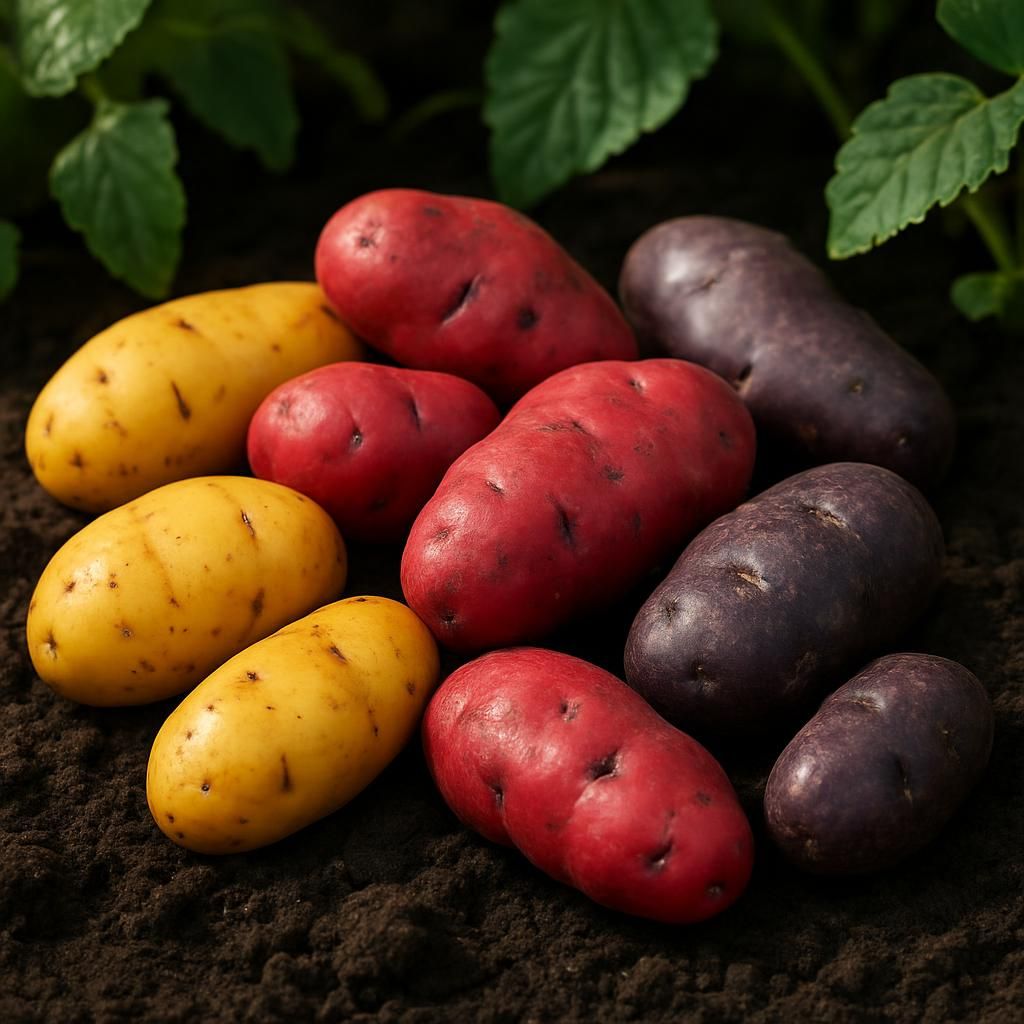
Introduction to Ulluco (Ullucus tuberosum)
Ulluco (Ullucus tuberosus) is a traditional root vegetable native to the high Andes of South America, where it has been cultivated for over 5,000 years alongside Potato and other Andean staples. The plant produces small, brilliantly colored tubers in shades of yellow, red, pink, and purple that are valued for their crisp texture and nutty flavor. In addition to the edible tubers, the leaves are consumed as a nutritious green vegetable.
Ulluco is gaining attention among specialty growers and home gardeners for its exceptional cold tolerance, nutritional density, and market potential as a gourmet or novelty crop. Its tubers contain high levels of complex carbohydrates, vitamin C, and antioxidants, making it a valuable addition to diets in temperate and high-elevation regions.
Botanical Profile of Ulluco (Ullucus tuberosum)
Ulluco belongs to the Basellaceae family and is a perennial herbaceous plant that grows as an annual in cultivation. The plant produces trailing or climbing stems that reach 30–60 cm in length with alternate, heart-shaped leaves. Small, inconspicuous flowers appear in clusters but rarely set seed under typical growing conditions.
The plant spreads via underground stolons that terminate in swollen tubers. These tubers vary from 2–8 cm in length and feature smooth, waxy skins. Because ulluco is vegetatively propagated, genetic diversity is preserved through careful selection of planting stock. The crop is closely related to other Andean tubers such as Maca and Oca but differs in its preference for slightly warmer soil temperatures during tuber formation.
Soil, pH, and Climate Requirements for Ulluco (Ullucus tuberosum)
Ulluco performs best in well-drained, fertile loamy soils rich in organic matter. The crop is highly sensitive to waterlogging, which quickly leads to tuber rot. It thrives in cool climates with daytime temperatures between 15–22 °C and can tolerate light frosts once established.
| Parameter | Ideal Range | Notes |
|---|---|---|
| Soil Type | Sandy loam to loam | High organic matter improves yield |
| Soil pH | 5.8 – 6.8 | Slightly acidic to neutral |
| Temperature (day) | 15 – 22 °C | Optimal tuber formation |
| Temperature (night) | 5 – 12 °C | Cooler nights improve quality |
| Frost Tolerance | Light frost (–2 °C) | Protect young shoots |
| Elevation | 2,500 – 4,000 m | Performs well at high altitude |
| Annual Rainfall | 600 – 1,200 mm | Even distribution preferred |
Step-by-Step Planting & Propagation
- Select healthy, disease-free tubers from the previous season’s harvest or purchase certified seed stock.
- Pre-sprout tubers in a cool, bright location for 2–3 weeks until sprouts are 1–2 cm long.
- Prepare planting beds by incorporating 5–8 cm of well-rotted compost or aged manure.
- Plant tubers 5–8 cm deep and 25–30 cm apart in rows spaced 60–75 cm apart.
- Maintain soil moisture at field capacity until shoots emerge (10–18 days).
- Once plants are 15 cm tall, apply a 5 cm layer of organic mulch to suppress weeds and conserve moisture.
Care & Maintenance regimes for Ulluco (Ullucus tuberosum)
Consistent moisture and moderate fertility are essential for high-quality tubers. Avoid high-nitrogen fertilizers after tuber initiation to prevent excessive foliage at the expense of tuber development.
| Growth Stage | Watering Schedule | Fertilizer Application | Pruning / Other Care |
|---|---|---|---|
| Establishment (0–4 wks) | Keep soil evenly moist (every 2–3 days) | 5-10-10 NPK at planting (40 g/m²) | Remove weeds; hill soil around stems |
| Vegetative (4–10 wks) | 25–30 mm/week; reduce if rainfall adequate | Side-dress with compost tea (2 L/m row) at week 6 | Pinch growing tips to encourage branching |
| Tuber Bulking (10–16 wks) | 20–25 mm/week; avoid water stress | Light potassium-rich feed (0-0-10) at week 12 | Monitor for pests; maintain mulch layer |
| Pre-harvest (16+ wks) | Reduce watering 2 weeks before harvest | None | Remove senescing foliage |
Pests, Diseases & Organic Management
Ulluco is relatively resistant to many common vegetable pests but can be affected by Aphids, Slugs, and Root-knot nematodes. Fungal issues such as Pythium and Rhizoctonia may occur in poorly drained soils.
Organic management begins with crop rotation and the use of disease-free planting material. Floating row covers protect young plants from aphids, while beer traps and diatomaceous earth control slugs. Soil solarization and the addition of beneficial nematodes help suppress root-knot nematodes. Copper-based sprays applied preventively can reduce the incidence of soil-borne fungal diseases.
Harvesting, Curing & Optimal Storage
Ulluco is typically ready for harvest 150–180 days after planting when foliage begins to yellow. Carefully dig tubers to avoid bruising. Remove excess soil and allow tubers to air-dry in a shaded, well-ventilated area for 3–5 days.
Store cured tubers in a cool (4–8 °C), dark, humid environment with good air circulation. Properly cured ulluco can remain marketable for 4–6 months. Avoid refrigeration below 4 °C, as chilling injury causes internal browning.
Companion Planting for Ulluco (Ullucus tuberosum)
Ulluco benefits from interplanting with nitrogen-fixing legumes such as Peas and Beans that improve soil fertility. Aromatic herbs including Thyme and Rosemary help deter aphids and other soft-bodied insects. Avoid planting near Potato to reduce shared pest and disease pressure.
For further reading on resilient cropping systems, see The Truth About Weather Patterns and Small Farm Resilience.