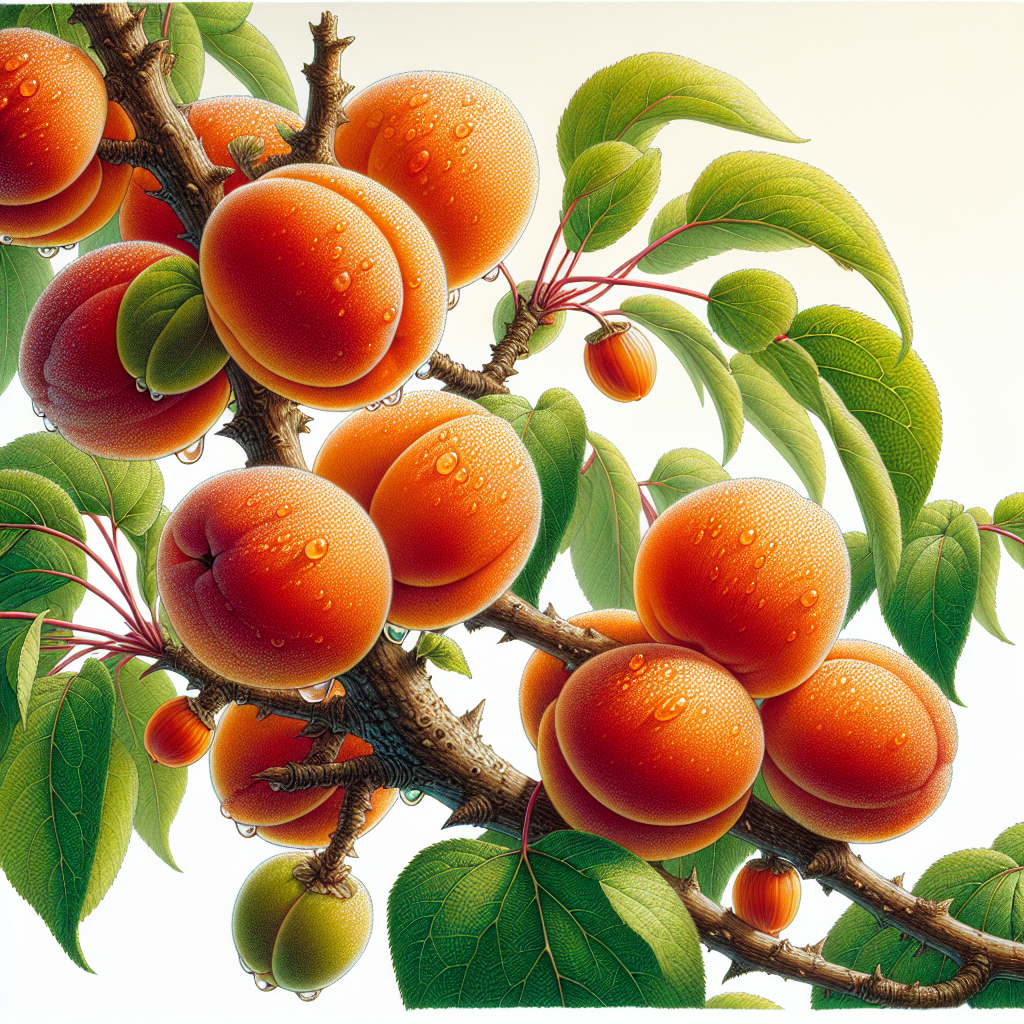
Introduction to Tropical Apricot (Dovyalis abyssinica x hebecarpa)
The Tropical Apricot, scientifically known as Dovyalis abyssinica × D. hebecarpa, represents a remarkable hybrid in the Flacourtiaceae family, blending the resilient mountain apricot from East Africa with the superior fruiting traits of the Ceylon gooseberry. This cross yields a vigorous, thorny shrub prized by small-scale farmers and home growers in USDA zones 9-11 for its prolific production of small, orange-red fruits bursting with tangy-sweet flavor and high vitamin C content. Unlike common temperate apricots (Prunus armeniaca), this tropical variety demands no winter chill hours, making it perfect for year-round cultivation in humid, frost-free regions like Florida, Hawaii, or coastal Queensland.
Farmers value Tropical Apricot for its dual-purpose nature: the fruits serve fresh eating, juicing, jams, or drying, while thorny branches deter intruders and provide living fences. Yields can reach 20-50 kg per mature bush annually under optimal conditions, with fruits averaging 2-3 cm in diameter, ripening in waves from late summer to fall. This guide delivers professional-grade, step-by-step advice to maximize productivity, drawing from agroforestry trials in Kenya and India where hybrids have shown 30% higher fruit set than parent species. For small farms battling heatwaves, integrating shade strategies early prevents fruit drop, ensuring consistent harvests. Mango (crop) growers often pair it successfully due to overlapping climates.
Botanical Profile of Tropical Apricot (Dovyalis abyssinica x hebecarpa)
Tropical Apricot is a semi-evergreen to deciduous shrub or small tree, reaching 3-6 meters in height with a spreading canopy and dense, sharp spines up to 5 cm long—essential for natural hedging. Leaves are alternate, ovate to lanceolate, 4-8 cm long, glossy green above and slightly hairy beneath, turning bronze in dry seasons. As a dioecious species, male and female flowers occur on separate plants; males produce small, yellowish clusters in leaf axils, while females develop into fuzzy, spherical fruits with 5-10 seeds embedded in juicy, acidic pulp.
The hybrid inherits D. abyssinica's cold tolerance down to 0°C brief dips and D. hebecarpa's larger, sweeter fruits (Brix 12-15°). Roots are deep and fibrous, aiding drought resistance, with nitrogen-fixing associations boosting soil fertility. Flowering aligns with short days (October-December in Southern Hemisphere), requiring 1 male per 8-10 females for pollination. Phenologically, vegetative growth peaks in wet seasons, fruit maturation takes 90-120 days post-bloom. Nutritionally, fruits offer 50-70 mg/100g vitamin C, surpassing oranges, plus antioxidants and fiber, positioning it as a superfood crop. In agroecosystems, it supports biodiversity by attracting bees and birds.
Soil, pH, and Climate Requirements for Tropical Apricot (Dovyalis abyssinica x hebecarpa)
Thriving in versatile soils, Tropical Apricot prefers well-drained loams or sandy loams with 20-30% organic matter to retain moisture without waterlogging. Avoid heavy clays prone to root rot. Optimal pH ranges 5.5-7.5; test annually and amend acidic soils with dolomite lime (1-2 kg/tree/year) or alkaline with sulfur (500g/tree). Incorporate composted manure at 5-10 kg per planting hole to enhance microbial activity and cation exchange capacity (CEC >15 meq/100g).
Climatically, it demands 22-32°C averages, with maximums to 38°C tolerated if humidity >60%. Annual rainfall of 800-1500 mm suits it best, supplemented by drip irrigation (20-40 L/tree/week in dry spells). Full sun (6-8 hours/day) promotes fruiting, but partial shade mitigates sunburn in intense tropics. Windbreaks using Guava (crop) reduce transpiration by 25%. Mulch with 10 cm organic layers conserves 30% soil moisture. In marginal zones, microclimates near water bodies extend viability; monitor for Phytophthora in wet feet. Soil Health Mastery: 5 Proven Strategies for Small Farms to Build Fertile Ground Without Breaking the Bank offers complementary tactics.
Step-by-Step Planting & Propagation
Propagation: Seeds from ripe hybrid fruits germinate 70-80% in 3-4 weeks at 25-30°C on sandy media; select from high-yield mothers, stratify 2 weeks at 10°C for vigor. Grafting (whip-and-tongue) onto D. abyssinica rootstock succeeds 85%, ensuring female scions. Air-layering mature branches yields plants in 8-10 weeks. Root cuttings (10-15 cm) in perlite root 60% under mist.
Site Prep: Space 4-5 m apart (200-400 trees/ha for hedges/orchards). Dig 60x60x60 cm holes, fill with 50% topsoil + 30% compost + 20% sand + 200g superphosphate + 100g gypsum. Plant post-rainy season, graft unions 10 cm above soil.
Planting: For dioecy, plant 1 male:10 females; mark clearly. Water deeply (50L/tree), stake loosely. Initial fertilizer: NPK 10-20-20 at 100g/tree, monthly first year. Prune at 1 m height to bush form. Expect fruiting year 2-3. Harden off container stock gradually.
Care & Maintenance regimes for Tropical Apricot (Dovyalis abyssinica x hebecarpa)
Irrigation: Drip systems deliver 40-60 L/week/tree post-establishment; deficit irrigate for sweeter fruit (reduce 20% pre-harvest). Mulch suppresses weeds, saving 25% water.
Fertilization: Annual regime: Spring NPK 15-15-15 (500g/tree), summer K-rich (0-0-50, 300g), micronutrients (Zn, Fe via foliar 2%). Foliar urea (2%) boosts set. Soil test guides; avoid excess N to prevent vegetative dominance.
Pruning: Annual winter cuts remove dead/thorny watersprouts, thin canopy for light penetration (20-30% removal). Train to 3-4 main scaffolds. Tip-pinch young shoots for bushiness.
Weed Control: Organic mulch + shallow cultivation; cover crops like Clover fix N.
Monitor growth; intercropping with legumes year 1 maximizes land use.
Pests, Diseases & Organic Management
Pests: Aphids cluster on new growth—blast with water, neem oil (0.5% weekly). Mealybugs on stems: alcohol swabs + ladybugs. Fruit flies puncture skins—baits (protein hydrolysate + malathion organic alt). Thrips cause scarring: spinosad sprays. Birds ravage ripe fruit—netting essential.
Diseases: Anthracnose (Colletotrichum) blackens fruits in wet weather—copper fungicide pre-bloom, prune airflow. Powdery mildew: sulfur dust. Root rot from overwatering—improve drainage, Trichoderma drench. Phylloxera-like galls rare; rogue affected.
Organic IPM: Companion Marigold repels nematodes; yellow sticky traps cut flies 70%. Scout weekly; thresholds: 5 aphids/leaf trigger action. Why 90% of Small Farms Fail at Pest Management - And 8 Organic Fixes That Actually Work details scalable protocols.
Harvesting, Curing & Optimal Storage
Harvest when fruits orange-red, slightly soft (90-120 days post-bloom); twist or clip clusters. Yield peaks years 4-10; pick every 3-5 days to avoid drop. Handle gently—fruits bruise easily.
Curing: Air-dry shade 2-3 days to concentrate sugars, reduce spoilage 40%.
Storage: Fresh: 10-15°C, 85-90% RH, 2-3 weeks. Processed: Juice/puree freezes 12 months; jams shelf-stable. Dry slices at 60°C 6-8 hours for snacks. Market as 'kitembe' or 'ugubba' hybrids for premium pricing.
Companion Planting for Tropical Apricot (Dovyalis abyssinica x hebecarpa)
Leverage polycultures for synergy. Nitrogen-fixers Pigeon pea (1m spacing) enrich soil, suppress weeds. Thai Basil deters flies, attracts pollinators. Shade-loving Ginger under canopy utilizes space. Avoid legumes prone to shared root pests. Nasturtium traps aphids. Tall Banana windbreaks protect young plants. Benefits: 15-20% yield boost, biodiversity. Space intercrops 1-2m from trunks; rotate annually. Why Companion Planting Feels Like Guesswork for Small Farms - And How AI Makes It Foolproof